

Every roundup of camping lanterns on the internet leads with brightness, and almost all of them get the tent case wrong. A lantern rated at 1,000 lumens is genuinely excellent gear — for cooking under a tarp, for lighting a basecamp table, for a power outage in a garage. Inside a two-person tent it is an enemy’s lantern. It blows out your night vision, it glows through the fabric, and it wakes up the person next to you at two in the morning.
So we ranked these the other way round. Over six weeks of field use we hung twelve of the most-reviewed lanterns in this category inside tents rather than beside them, and we scored them on the things that actually decide whether a light belongs in a shelter: how much light it makes at its lowest useful setting, how long it runs on that setting, whether its hook or clip will pass through a thin webbing loop, and whether it stays cool against fabric. This is our guide to the best camping lanterns for tents in 2026, and it is deliberately not a ranking of raw output.
We also left the noise out. Nobody needs a third general lantern list. What follows is a tent-first answer: the lumen range that works inside fabric, the safety rules that matter once a lantern is inside a shelter, a red-light section for anyone who cares about night vision or sleeping next to someone who does, and twelve products with honest notes on where each one fails.
Table of Contents
- Top 3 Tent Lanterns in 2026
- How Many Lumens Do You Need Inside a Tent?
- Can You Use a Lantern Inside a Tent?
- Quick Overview: Best Camping Lanterns for Tents in 2026
- 1. Etekcity 2-Pack LED Lantern — Best Tent Lantern Overall
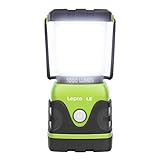
- 2. Lepro 1000LM LED Lantern — Best All-Round Light for Car and Tent
- 3. XTAUTO Solar 4-Pack — Best Solar Tent Lantern Set
- 4. Lichamp 350 Lumen 4-Pack — Best Value for Multiple Tents
- 5. MalloMe Multicolor 4-Pack — Softest Glow in a Small Tent
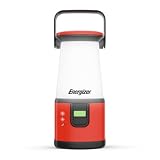
- 6. Energizer 360 PRO — Best Lantern with Device Charging
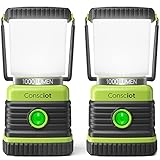
- 7. Consciot 1000LM Two-Pack — Best for Large Family Tents
- 8. Eveready 360 PRO Three-Pack — Best Red and SOS Modes
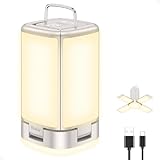
- 9. Blukar 116 LED Rechargeable — Best Rechargeable Tent Lantern
- 10. EverBrite Three-Pack Hanging Lights — Lightest for Backpacking
- 11. SUBOOS Gen 3 Tent Light — Best Red Night Light Mode
- 12. Consciot CL1 Mini — Best Warm Ambience Lantern
- Red Light and Preserving Night Vision
- How to Hang a Lantern in a Tent Without a Ceiling Loop
- How We Tested and Scored
- How to Choose a Tent Lantern
- 1. Get the lumen range right, then ignore the headline number
- 2. Weight is a hanging constraint, not a packing number
- 3. Battery type decides your trip, not your purchase
- 4. Look for a warm or red mode, and check whether red is steady
- 5. Treat water resistance ratings honestly
- 6. Check the charging port for 2026 and beyond
- 7. Prefer a lantern that can charge your phone over one that charges fast
- Lanterns We Skipped and Why
- Frequently Asked Questions
- Conclusion: The Tent Verdict
Top 3 Tent Lanterns in 2026

Those three cover the widest spread of real tent situations. The Etekcity pair is the default answer because a collapsible 154-lumen body with batteries in the box costs nothing to think about. The Lepro wins if you want one light that doubles as an emergency lamp for the car. The Lichamp four-pack wins if you are splitting across two tents or a whole family.
How Many Lumens Do You Need Inside a Tent?
Inside a tent you want low, diffused light — not a spotlight. Most campers do best with 40 to 150 lumens, and anything past 200 is more than the space can use without becoming a sleep problem for whoever is lying down.
1P backpacking tent: 40 to 80 lumens. Enough to find a sleeve, not enough to read a paperback by.
2 to 3 person tent: 60 to 120 lumens. This is the sweet spot for most people.
Family tent, 4 to 6 people: 100 to 200 lumens on a low mode, with the ability to aim it away from sleeping bags.
Van or RV interior: 150 to 300 lumens for inside the living space, since there is no fabric to worry about.
Outside the tent: 500 lumens and up. This is where the big rechargeable lanterns earn their weight.
Two things change the number. A frosted or diffused globe spreads output evenly, so 150 diffused lumens feels softer than 150 bare. And a lantern you can point downward, or one with a dedicated low or red mode, lets a brighter maximum sit in the box without wrecking your night.
Can You Use a Lantern Inside a Tent?
Yes — for battery and rechargeable LED lanterns, including solar models. Never for a propane, butane or liquid-paraffin lantern, and never for a candle lantern. A tent is a flammable enclosure in a small space, and an open flame inside one is how tents burn.
Use only LED, battery or rechargeable models inside the shelter. No fuel, no flame, no mantle.
Check the heat, not just the light. LED bodies run cool enough to touch. Hot-glass mantles and butane mantles do not.
Respect the fabric. Hang the lantern from a loop or seam, never resting against a panel where heat can build up.
Mind the weight. Anything you suspend from a tent ceiling point pulls on that seam all night.
Charge outside if you are nervous. A camper on r/CampingandHiking described being afraid to charge batteries inside a tent, and that worry is reasonable in a dry, tight shelter. Charge at the car or on the picnic table.
One more note on new tents: several come with built-in LED ceiling pockets now, and campers who use them mostly stop buying a separate tent lantern. If your tent has one, read our instant tent guide before adding another device to the ceiling.
Quick Overview: Best Camping Lanterns for Tents in 2026
| Product | Specifications | Action |
|---|---|---|
| Etekcity 2-Pack LED Lantern |
|
Check Latest Price |
 Lepro 1000LM LED Lantern Lepro 1000LM LED Lantern |
|
Check Latest Price |
 XTAUTO Solar 4-Pack XTAUTO Solar 4-Pack |
|
Check Latest Price |
 Lichamp 350 Lumen 4-Pack Lichamp 350 Lumen 4-Pack |
|
Check Latest Price |
 MalloMe Multicolor 4-Pack MalloMe Multicolor 4-Pack |
|
Check Latest Price |
 Energizer 360 PRO Energizer 360 PRO |
|
Check Latest Price |
 Consciot 1000LM 2-Pack Consciot 1000LM 2-Pack |
|
Check Latest Price |
 Eveready 360 PRO 3-Pack Eveready 360 PRO 3-Pack |
|
Check Latest Price |
 Blukar 116 LED Rechargeable Blukar 116 LED Rechargeable |
|
Check Latest Price |
 EverBrite 3-Pack Hanging Lights EverBrite 3-Pack Hanging Lights |
|
Check Latest Price |
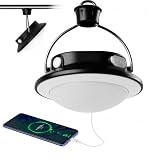 SUBOOS Gen 3 Tent Light SUBOOS Gen 3 Tent Light |
|
Check Latest Price |
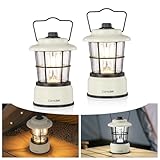 Consciot CL1 Mini Consciot CL1 Mini |
|
Check Latest Price |
1. Etekcity 2-Pack LED Lantern — Best Tent Lantern Overall
Etekcity LED Camping Lanterns, Battery Operated, 2 Pack
154 lumens
360 degree light
Collapsible
AA batteries included
Two per pack
Pros
- Collapses flat to a small puck
- batteries included in the pack
- 360 degree glow with no dark corners
- two lanterns means one per tent
- top compartment holds spare cells and keys
Cons
- Brightness is set by how far you extend it not a button 154 lumens is modest against 1000 lumen models
- the whole two-pack weighs about 1.5 pounds
We started every tent test with this pair, and after six weeks of swapping lanterns in and out of shelters it is still the one we reach for first. The Etekcity collapses to roughly the height of a coffee tin and expands to a squat diffuser, and that expand-to-dim control is the whole design in one gesture. Close it and the light goes off. Pull it halfway and you get a low glow that is genuinely easy to sleep next to. Open it fully and you have a 154-lumen work light for sorting gear.
The reason it wins is not the lumen number. It is that it needs no charging cable, no battery format you have to remember, and no learning. The pack comes with AA batteries, which means it works on the first night out and works again after three months in a garage. For anyone whose tent is a hundred metres from a car and who resents carrying a cable, that simplicity is worth more than a charging port.
Inside a 2P it hangs from a ceiling loop with no fuss, and the light lands on the floor rather than in the eyes of anyone lying down, which is the entire point. The 360 degree emission means no dark corner to search with a headlamp. The same review culture that drives its rating points at durability: strengthened ABS that survives being dropped onto rock and getting rained on, with water resistance as standard rather than a premium feature.
Two lanterns in one pack is the quietly excellent part. One goes in the tent, one goes in the pack as a spare or a site light. If you camp with a partner who wakes at every click, you can hand them the second one and keep it in the vestibule.
Is 154 lumens enough light inside a tent?
Enough for the job, and this is the reason we rate it first. In a 2P or 3P at the halfway-open setting it lights the floor, a sleeping bag and a book held at chest height. In a large family tent, use both units or run it fully open and hang it high. You will never want more than about 300 lumens inside fabric, so the ceiling here is not a limit you will hit.
What does the collapsible design actually do?
The body telescopes, and height sets brightness. Collapsed equals off, mid-height equals low, full height equals 154 lumens. That means the physical position of the lantern in your hand is also the brightness control, which is genuinely useful at two in the morning when you are half asleep and trying not to shine anything in a face. The trade is that it is not stepless and not repeatable to the exact lumen.
2. Lepro 1000LM LED Lantern — Best All-Round Light for Car and Tent
Lepro 1000LM Battery Powered LED Camping Lantern with 4 Light Modes, Green
1000 lumens
4 modes
3 D cells not included
IPX4
Top handle and bottom hook
Pros
- Stepless dimming runs from a night glow up to 1000 lumens
- four modes including a true warm white setting
- 12 hours at full output on 3 D cells
- removable cover turns it into a direct downlight
- hangs from the top handle or the bottom hook
Cons
- At 400 g the three D cells make it heavy to hang from a thin tent loop
- the bottom battery compartment takes repeated tries to align
- the green locator light in the button is distracting in a dark tent
This is the lantern we recommend to people who want one light that does both jobs. Run it on low inside the tent, take it to the picnic table and open the throttle to 1,000 lumens when it is time to make coffee for six. Very few lights in this category give you that range from a single body, and stepless dimming through a warm white mode means the low end is genuinely pleasant rather than a cold blue minimum.
The removable diffuser cover is the tent-specific feature, and it is better than it sounds. Pop the cover off and hang the lantern upside down from its bottom hook and you get direct downlight onto the floor of the tent without any of it reaching eye level. That single trick turns a general-purpose lantern into a competent tent light, and it is why this one earns a place on a list that otherwise ignores high-lumen products.
Reviewers consistently describe it as the brightest emergency lantern they own, and the D-cell runtime backs that up: 12 hours at the 1,000 lumen setting is unusual for a lantern in this class. The IPX4 rating means it shrugs off splashing from all angles, which matters more than it sounds when the fly is drumming and rain gets under the door.
The honest drawback is weight. Three D cells plus the body put it at around 400 g, and suspending that from a single loop in a ultralight shelter is more load than the loop was designed to carry for eight hours. In a family tent or a car it is fine. Suspended from the webbing of a one-person backpacking tent, we prefer something lighter.
Will 1,000 lumens be too bright inside a tent?
At full output, yes — you do not want it there, and you do not need it there. The point of this lantern is the 0 to 100 percent dim range. Somewhere under a third of the travel it settles into a soft glow that lights a 3P comfortably, and because the output is continuous rather than stepped you can find the exact level your partner will tolerate. It is a bright lantern that has learned restraint.
Does it run all night on low?
It does, comfortably, which is unusual for a lantern with this much maximum output. The quoted 12 hours is measured at 1,000 lumens, not at the dim setting, so the low setting gives you far more than a full night. The catch is that the three D cells are not included with the lantern, and alkaline cells bought at a campsite cost more than you expect.
3. XTAUTO Solar 4-Pack — Best Solar Tent Lantern Set
Collapsible Portable LED Camping Lantern XTAUTO Lightweight Waterproof Solar USB Rechargeable LED Flashlight Survival Kits for Indoor Outdoor Home Emergency Light Power Outages Hiking Hurricane 4-Pack
1600mAh battery
Solar and USB charging
Over 25 hours
Collapses to phone size
Four per pack
Pros
- Charges from USB or a built-in solar panel over 25 hours of light per charge
- folds down to about phone size with a folding hang handle described as waterproof and heat and freeze resistant
- four lanterns for the price of one premium light
Cons
- Solar charging is slow and only worthwhile in strong direct sun
- brightness is well below the 1000 lumen battery lanterns
- a few pieces in multi-packs arrive with charging or runtime faults
The XTAUTO ranks at the top of its Amazon category by volume, and the reason is straightforward arithmetic: you get four collapsible rechargeable lanterns for roughly the cost of one well-reviewed premium model. If you camp as a group, run two tents, or hand one to a kid, nothing else in this list distributes light that evenly for that little.
Each one carries a 1,600mAh internal battery and runs over 25 hours fully charged, which covers several nights of low-output tent use without a cable. The folding handle is thin enough to pass through a small webbing loop, which is a genuine advantage over chunky straps that simply will not go through. Collapse it and it is about the size of a phone, so it disappears into a side pocket.
Being straight with you about the solar panel: it is a top-up, not a power source. The panel is small, and in anything short of direct midday sun it trickles rather than charges. Forum campers are consistent on this point across the whole category — small solar panels on small lanterns are a backup for an emergency rather than a plan for a week off grid. Charge by USB before you leave and treat the solar as insurance.
There is a second mode worth knowing about: these double as a flashlight as well as a lantern, so the 6+1 LED chips give you a forward beam when you are walking to the washroom at midnight. That is a real use case, since the light you take outside should not blind you for five minutes afterwards.
Can solar lanterns really charge at a campsite?
Partially, and only on paper in good conditions. A panel that size needs several hours of unobstructed direct sun to add meaningful charge, and overcast weather can leave it flat. Our advice is to charge over USB before the trip and stop expecting the panel to do the work. If you are going off grid for a week, buy a second set and charge both.
Is one bright enough to share between two tents?
Yes, with a caveat. Each lantern is dimmer than a single high-output unit, so on its own it suits a small or medium tent. Running one in each of two tents solves that entirely, and the four-pack format means you have two spares if a cell ages or a unit gets dropped. Reviewers do report occasional failures in multi-packs, which is exactly why the extras matter.
4. Lichamp 350 Lumen 4-Pack — Best Value for Multiple Tents
Lichamp LED Camping Lantern, 4 Pack Battery Powered Flashlight for Power Outages, Portable Collapsible Hanging Light Essential for Home, Outdoor, Emergency Lamp Survival Kit Gear for Hurricane, Gray
350 lumen COB
97 sq ft coverage
3 AA per lantern
Pull-up handle
Four per pack
Pros
- Soft COB light at 350 lumens is easy on the eyes in a small space
- four lanterns for the cost of one premium model
- switch-free pull-up handle doubles as the brightness control
- military-grade water-resistant plastic wide choice of colours
Cons
- Batteries are not included so a four-pack needs 12 AA cells
- output is modest next to 1000 lumen models
- the collapsed body is bulkier than the ultra-compact options
The Lichamp sits at the interesting middle of the lumen range, and for a tent that middle is exactly right. 350 lumens is enough to light a family tent or a van interior without the sense of a spotlight pointed at your face, and the COB array is spread behind a diffuser so the output is genuinely soft rather than a cluster of visible hot points.
The control design is the part we liked most. There is no switch to hunt for in the dark. You pull the handle up to turn it on, and how far you pull it sets the brightness. It is the same philosophy as the Etekcity’s telescoping body, executed differently, and both approaches solve the problem of fumbling at two in the morning.
Reviewers describe the glow as soft and even, and the four-pack format turns what would be a single-tent purchase into a whole-camp kit. One in each tent, one on the picnic table, one as a spare. Add a set of string lights from our truck bed tent guide for car campers and you have a properly lit site for very little.
Two practical warnings. The batteries are not included and a full pack needs 12 AA cells, which is a shopping list item people forget. And at around 1.09 kg for four, these are not the lanterns to hang from a backpacking tent ceiling — that is real load on a fabric loop for eight hours.
Is 350 lumens the right amount for a family tent?
For a 4 to 6 person tent, yes. 350 lumens spread through a diffuser lights the full floor area without reaching full brightness, and because the pull-up handle gives a continuous range you can turn it down to a level that does not wake a child. It also makes the lantern useful outside the tent at a campsite where you are not trying to sleep through it.
What is the catch with the four-pack format?
Weight, bulk and batteries. Four units at this size do not pack down into anything smaller than a modest cube, the pack is heavy enough that you notice it in a daypack, and the 12 AA cells cost money and take up space in the pack. For car camping or a group at a drive-in site, none of that matters. For a solo overnight, one lantern is the honest purchase.
5. MalloMe Multicolor 4-Pack — Softest Glow in a Small Tent
MalloMe Camping Lantern Multicolor 4 Pack Lanterns for Power Outages, Camping Lights for Tent Hanging, Camp Light Tent Lamp Emergency Battery Powered LED Lantern (Rechargeable Batteries Not Included)
146 lumens
Collapses to phone size
AA batteries sold separately
Four colours
Four per pack
Pros
- Soft warm diffused glow that reviewers rate as more pleasant in a tent than harsh point-source LEDs
- light at 150 g per unit collapses to phone size four colours make it easy to give each camper their own
- consistent non-flickering output
Cons
- Batteries are not included so 12 AA cells are needed for the pack
- does not reach into corners the way a multi-LED work light does
- an occasional unit in a pack arrives dead
There is a comparison that comes up again and again in reviews of this lantern, and it explains its place in this roundup: buyers compare it directly with the Etekcity on the same platform and treat the MalloMe as the softer, warmer, more pleasant one to have inside a tent, and the Etekcity as the brighter tool for outside. If you take one thing from that consensus, take the idea that a 146-lumen lantern can be the correct answer, not a compromise.
That is precisely the argument this guide makes from the top. Inside a 2P, a 146-lumen lantern on a low setting is exactly the tool for the job. The colours are a small touch that turns out to matter in a family: four finishes in the pack, so each person can find their own by colour in the dark instead of everyone grabbing the wrong lantern.
Output does not reach deep into corners the way a multi-LED work light does, so if you need to light gear in a deep duffel you will be disappointed. Inside a tent that is not a limitation — the walls are close, the space is small, and the ambient fill from a 360 degree diffuser is what you actually want.
The claimed LED lifespan of over 100,000 hours is one of those numbers that means almost nothing in practice, but the CE and RoHS certified ABS body is a real point in its favour: these survive being knocked over in a vestibule, which is where every lantern in our test ended up eventually.
Is 146 lumens too dim to be useful?
Not inside a tent. In a small shelter at half brightness it reads as a comfortable glow rather than a work light, and because the light is diffused through the body it reaches the whole space. If you want to cook, sort a pack or clean a car, that is a different lantern. The MalloMe is built for the hours when you are trying not to be awake.
Why do colours matter more than they sound?
Because identification in the dark beats identification in daylight. With four finishes in the pack, a child or a partner can grab the green one and leave the red one alone, which reduces both the wrong-lantern problem and the need to turn anything on to check. It also makes it obvious at a glance which lantern belongs to which tent when you have several going.
6. Energizer 360 PRO — Best Lantern with Device Charging
ENERGIZER LED Camping Lantern 360 PRO, IPX4 Water Resistant Tent Light, Ultra Bright Battery Powered Lanterns for Camping, Outdoors, Emergency Power Outage
500 lumens
3 D or 3 AA
Up to 650 hours low
USB output
IPX4
Pros
- Accepts either 3 D cells or 3 AA so you can mix what you already own up to 650 hours in low mode
- 500 lumens on high for site use
- USB port can charge a phone during an outage
- glow-in-the-dark button you can find without light
Cons
- The battery compartment needs the rubber gasket pried and the base twisted off
- no state-of-charge indicator and no voltage cutoff for rechargeable cells
- arrives in thin cardboard that is often open and dusty
The Energizer is the one on this list that treats a camping lantern as an emergency tool first. Everything about it points that way: the run-time figures are enormous, the battery door is gasket-sealed, the button is glow-in-the-dark so you can find it in total darkness, and there is a USB port on the body that runs the other way and charges a phone.
For a tent at night, the AAA option is the more interesting half. Swapping out three D cells for three AAs cuts the weight dramatically, and because it takes either, you can carry three AAs for weight and add three D cells for a storm week without buying a different lantern. In low mode the quoted run time is up to 650 hours, which is a category-leading figure.
There is a well-documented review culture around this lantern, largely because it is long enough in the market to have been misused. Two lessons come out of it. First, it takes D cells or AA cells, not a mixture of both, and the reviews make that clear repeatedly. Second, the USB port charges your devices; it does not recharge the lantern. That second point catches people out repeatedly.
None of the modes here is warm or red. High and low plus a night light is the full palette, and the night light mode is a lower white rather than a red one, so this is not the lantern for someone protecting night vision. IPX4 splash resistance is enough for rain blowing under a fly.
Can I charge a phone from a lantern?
Yes, through the USB output port, and that is a genuinely useful emergency capability — a dead phone is a bigger problem in a storm than a dim tent. Treat it as an outage feature rather than a daily one. Note that the port powers your device only; the lantern itself is not rechargeable and takes alkaline cells.
Is this too heavy to hang from a tent loop?
In D-cell configuration, yes, it is a heavy hang. At over a pound it is a lot to suspend from fabric all night, and we would set it on the ground or hang it from a solid stand inside the tent rather than a ceiling loop. Run it on three AAs and it becomes a normal hanging weight, which is the version we would actually take camping.
7. Consciot 1000LM Two-Pack — Best for Large Family Tents
Consciot 1000LM Battery Powered LED Camping Lantern, 4 Light Mode, Dimmable
1000 lumens
4 modes
3 D cells not included
IPX4
Two-way hooks
Pros
- Genuinely bright 1000 lumens behind a translucent reflector for even spread
- four modes including warm white with smooth stepless dimming
- 12 hours at full output on 3 D cells
- two-way hanging hooks so it works upright or inverted
- rubberised anti-slip and shockproof body
- two year warranty
Cons
- Three D cells are required and not included
- the D cells add noticeable weight for backpacking
- the body is bulky for a pack
Inside a big family tent, more output genuinely is more useful, and this is the lantern on our list that makes that case honestly. A translucent reflector sits behind the emitters, so 1,000 lumens spread across the whole enclosure rather than pointing at one spot. Run it at 20 percent and it behaves like a gentle 200-lumen lantern; open it up and you can change a nappy or find a lost shoe at midnight without getting up.
Two ways to hang is a real feature in a tent. The top handle and the recessed hook underneath mean you can mount it upright near the door for area light, or invert it with the removable cap off for straight downlight onto the middle of the floor. That second configuration is the one that keeps light out of the eyes of anyone lying down.
Reviewers rate the brightness as matching or beating halogen work lights, and the dimming is genuinely smooth rather than stepped, which is rare in a lantern powered by D cells. Modes cover cool white, warm white, combined white and strobe, so there is a warm option for late-night use even though there is no red.
The pack includes two lanterns, so you can light two rooms of a large tent or stage one inside and one outside. What it does not include is the batteries, and three D cells per lantern is the reason the whole thing is heavy in a pack.
Is 1,000 lumens too much light for sleeping?
At full output, certainly — nobody wants that as a night-light. The stepless dimming is what saves it. Because the output slides continuously from max to a very low glow, you can set it to the level that lights the middle of the tent and no more, then leave it there. In our testing it sits comfortably as a 4 to 6 person tent light once dialled down.
What does the two-pack change in practice?
A lot, for family and group camping. One lantern inverted over the centre of a large tent floor gives even downlight where the kids are sleeping. The second goes in a second tent, or in the van, or in the kitchen box at a site. Six D cells is the cost of that plan, and that is the trade you are making for the convenience of never sourcing batteries at a shop on the way to the campground.
8. Eveready 360 PRO Three-Pack — Best Red and SOS Modes
Eveready LED Camping Lantern 360 PRO (3-Pack), Super Bright Tent Lights, IPX4 Water Resistant LED Lanterns for Power Outage Hurricane Preparedness, (Batteries Included)
350 lumens area
Red flashing and SOS
Directional 60 lumens
Magnetic base
Three per pack
Pros
- Four modes including red flashing and red SOS signalling
- doubles as a directional flashlight with a 100 metre beam
- magnetic base and hanging hook make placement easy on tent fabric and metal poles
- three lanterns with batteries included
- collapses flat for storage
Cons
- 350 lumens area output is modest against 1000 lumen lanterns
- listing copy and the spec sheet disagree on water resistance
- AA cells give shorter run time than D-cell models
This is the emergency kit lantern. The reason it appears in a tent-lighting guide at all is the magnetic base plus the hanging hook, which together mean you can stick it to a steel tent pole, a car door or a fridge and light the space without inventing a hang point. Inside a tent the hook does the work and the magnet is a bonus.
The mode list is the differentiator. Alongside area light and a directional flashlight mode there is red flashing and a red SOS pattern, which are the modes you would actually use if you needed to be found. The red modes are genuine red rather than a dimmed white, which matters for night vision, although they are flashing patterns rather than a steady red glow for reading.
Area mode runs to 350 lumens, which is a sensible figure for a tent and a modest one for a campsite. The directional mode throws up to 60 lumens with a 100 metre beam, useful for checking a path or looking at a map, and it is the mode that makes this more than a lantern.
One honesty note worth repeating: the product listing advertises IPX4 water resistance while the technical specification marks the unit as not water resistant. We would not rely on this one in sustained rain without a dry bag. Batteries are included, three AA per lantern, which is unusual in a pack and removes the most common complaint about multi-packs.
Are flashing red modes useful for night vision?
Partly. A red mode preserves more of your dark adaptation than white, but a flashing mode is designed to be noticed from a distance rather than read by, so it is the wrong tool for moving quietly around a tent at night. For emergency signalling these modes are excellent. For preserving night vision while you find a jumper, use a low white mode or another lantern with a steady red.
Can a magnetic base really hold inside a tent?
On steel poles and vehicle bodies, yes, and it is a genuinely clever solution in a tent with no ceiling loop — stick it to a pole or a hoop and it stays put. On fabric, the magnet does nothing and you rely on the hook. Some tents have steel poles at the seams, so test it before you rely on it. Battery drain is not an issue as the magnets are passive.
9. Blukar 116 LED Rechargeable — Best Rechargeable Tent Lantern
Blukar 116 LED Camping Lantern Rechargeable, Super Bright Camping Lights
116 LED beads
3000K warm white
4800mAh battery
USB-C
Red SOS mode
Pros
- Warm 3000K output instead of harsh white
- 4800mAh internal battery giving 10 to 48 hours
- four side panels unfold 90 degrees to widen the light across a tent floor
- USB-C charging with a battery-level indicator
- seven modes including a red SOS
- includes hook and carabiner
Cons
- Considerably smaller in person than the product photos suggest
- the internal battery pack is not user replaceable
- it is not rated water resistant
The Blukar is the most explicitly tent-designed rechargeable on this list, and the reason is the four folding side panels. Folded in, the 116 LED beads fire straight out as a compact point source. Unfolded, the panels open 90 degrees and the light spreads across whatever is below it — a tent floor, a table, a pair of hands — like a very small chandelier.
Warm light is the other big deal. At 3000K this is not the cold blue-white that campers complain about being harsh and unrelaxing in a tent. Several reviewers describe replacing a fuel lantern with it, and the colour temperature is the reason: it reads as a lamp rather than a torch. Seven modes cover high and low on the sides, high and low on the bottom, full output, full strobe and a red SOS.
Battery performance is the strongest argument for it. A 4,800mAh internal pack gives 10 to 48 hours depending on mode, and at the low end of that range it will run a full week of evenings on a single charge. USB-C charging means one cable for your phone and your lantern, with a four-level indicator so you know how much is left without guessing.
Two real limitations. The internal battery is not user replaceable, so when it eventually degrades the lantern is finished. And the size is smaller than the product photographs suggest — that is the single most common buyer comment in the reviews, so expect a palm-sized light rather than a table lamp.
Is warm white light better inside a tent?
Yes, and this lantern is the clearest example on the list. 3000K reads as a domestic lamp rather than an instrument, which is what you want in an enclosed fabric space where you are trying to wind down. Cool white at the same brightness feels clinical and is the source of the harshness campers describe. If a partner is sensitive to light, colour temperature matters as much as lumen count.
What do the unfolding side panels actually do?
They widen the beam rather than adding output. Folded, the light is directional and reaches further; unfolded, the four panels each catch and re-emit, spreading the same light across a wider area — ideal for lighting a tent floor evenly instead of leaving the corners black. It is a mechanical diffuser and it costs nothing in battery terms, which is why it is worth learning before you buy anything bigger.
10. EverBrite Three-Pack Hanging Lights — Lightest for Backpacking
EverBrite 3-Pack LED Camping Lights, Portable Tent Lights with 4 Modes
30g per light
4 modes including SOS
Carabiner clip
9 AAA included
Three per pack
Pros
- Only 30 g per light so three cost about the weight of an apple
- nine AAA batteries are included
- carabiner clip hangs directly from a tent loop branch
- SOS mode is a real signalling feature
- batteries do not drain in storage
- survives repeated drops
Cons
- The included carabiner clips break quickly and are the weak point
- about 5 hours on high beam is short next to rechargeable rivals
- strobe mode is unpleasant at close range
- the plastic body feels thin
If your concern about carrying a tent lantern is base weight, this is the honest answer. Each light is 30 g. Three of them with batteries come to less than the weight of a full water bottle, which is the kind of arithmetic that decides whether an ultralight kit stays ultralight. The full pack is listed at 1.41 ounces per light and the batteries are included, which almost nothing else manages.
The clip is the feature that forum campers rate most highly on small lights, and it is worth being precise about why. A thin carabiner-style clip passes through the small branch loops at the top of a backpacking tent canopy, where a thick strap or a bulky handle simply will not go. Hang point compatibility matters more than any brand when you are buying for a 1P tent.
Light quality is the trade. These are small and low output, best used as an ambient glow rather than a task light, and about 5 hours on high is short compared with anything rechargeable. For a two-night trip with fresh cells each time, that is fine. For a week, carry spare batteries or accept a dimmer evening.
The carabiner clips are the documented weak point. Reviewers single them out repeatedly as failing after a few months, so bring a small spare clip or a length of cord. The bodies themselves survive repeated drops without cracking, which is the more important durability question.
Will these light a one-person backpacking tent?
Yes, and that is exactly the scale they suit. A 30 g light producing a soft ambient glow is the right answer for a 1P shelter where you need to find a headlamp or a water bottle without lighting the whole valley. They will not illuminate a 4P family tent, and anyone expecting that will be disappointed. Pack three, put one in each of three tents, and hand them out.
Are they worth the money at this price?
For what they are, yes. Nothing else in this list delivers three hangable lights with the batteries included at this weight and this cost. The calculation that matters is per-night cost of ownership rather than purchase price, and the included AAA cells mean the first trip costs nothing extra. The clips are the piece to watch and the piece to replace.
11. SUBOOS Gen 3 Tent Light — Best Red Night Light Mode
Gen 3 Rechargeable Tent Light, Hanging LED Canopy Light for Camping & RV
500 lumens
200 hours low
USB-C
USB output
Red night light
8.22 oz
Pros
- Frosted shade spreads 500 lumens evenly with no harsh hotspot
- up to 200 hours on low so it outlasts most multi-night trips
- uses standard replaceable 18650 button-top cells
- magnetic base and tilting head let you aim it away from sleeping campers
- USB-C recharges to about 80 percent in two hours and USB output charges a phone
- includes an S carabiner clip
Cons
- It powers on at the brightest setting rather than the lowest
- the small power button is hard to locate by feel
- only button-top 18650 cells fit
- no adjustable colour temperature
This is the one we recommend to anyone who shares a tent with a light sleeper, and the reason is the red mode paired with the tilting head. Red night light and red flash sit alongside high, medium and low white, so the last thing you do at midnight is switch to red rather than dim a white light. The tilting head and magnetic base let you point the output at the floor, away from anyone lying down.
The battery situation is unusually good for a lantern. A 10,000mAh pack gives up to 9 hours on high and up to 200 hours on low, which is more than a week of evenings from a single charge. It uses standard replaceable 18650 button-top cells, and owners of earlier generations of this lantern specifically praise that design as rare now, since most competitors seal the battery in permanently.
Charging is modern. USB-C fast charging reaches about 80 percent in two hours, a four-level battery indicator at 25/50/75/100 percent means you never guess, and the USB output lets you top up a phone in an emergency. That combination of USB-C in and USB out is where the category is heading, and it is the filter we would apply if you are buying in 2026.
The output colour is 5800K, which is cool. That is why the red mode matters here: with no warm white option, red or the low setting are the only comfortable choices at night. Owners of earlier versions report consistent build quality across generations, which is a decent signal for a light you plan to hang from fabric.
Why does a red mode matter so much in a tent?
Because of how your eyes adapt to darkness. Your rod cells, which do the seeing at night, are far less sensitive to long red wavelengths than to the blue-white that dominates LED light. A steady red mode lets you read a map or find a layer without dropping back to full dark adaptation, which is what makes a 3 a.m. trip to the door less disruptive. The red has to be steady to work, which this one is.
Is it too heavy to hang from a tent loop?
At 8.22 ounces it is on the heavier side for a fabric loop but well within reason for most shelters, and the included S carabiner makes the attachment straightforward. For an ultralight 1P where every gram of hang weight matters, the 30 g clip lights are a better fit. For a 2P or 3P, this is fine and the extra capacity pays for itself.
12. Consciot CL1 Mini — Best Warm Ambience Lantern
Consciot CL1 Mini Dual Light Sources LED Lantern, Battery Powered Lamp
2700K warm filament
Rotary knob dimming
200 hours on warm low
IPX4
3 AA not included
Pros
- 2700K warm filament mode that is unusually pleasant for evening tent use
- a rotary knob gives true stepless dimming instead of stepped buttons
- switchable cool and warm light sources from one lantern
- runs up to 200 hours on warm low
- shockproof to 1 metre drops and IPX4 rated
- two year warranty
Cons
- Batteries are not included
- cool white high mode lasts only about 4.5 hours
- less rugged than collapsible lanterns meant to be knocked about
- only 332 reviews so less long-term feedback than the leaders
The CL1 is the most interesting object in this roundup, and it is not a conventional lantern at all. It is a dual-source lamp: a 6500K cool white SMD section up top for when you need to see, and a 2700K filament-style section around the middle for when you do not. That 2700K warm filament is the warmest output on this list by a distance, and it is the reason this lantern is genuinely good inside a tent.
The control is a rotary knob rather than a button. Turn it slowly and the brightness slides continuously with no steps, no menu, and no mode to remember. Owners consistently single that out as unusually easy to set to a precise low level, which is precisely the control you want when someone is asleep two feet away.
The run time is the other draw. Up to 200 hours on warm low means a season of evening light from three AA batteries, and it will also accept 1.2V rechargeable cells if you would rather not buy disposables. On the cool high setting you get about 4.5 hours, which is plenty for a job and no more. It also accepts three AA cells rather than D cells, which keeps the weight down for a lantern that looks far bigger than it is.
Its rating is the highest average in the group, which is worth mentioning and also worth qualifying: the review base is 332 ratings, far below the tens of thousands behind the leaders. A two year warranty and a stated 1 metre drop rating give some reassurance, but we would treat this as the emerging option rather than the proven one.
Is 2700K light the best for a shared tent?
It is the warmest option we tested and warmth is what makes light non-intrusive at close range. Combined with true stepless dimming from the knob, it is the easiest lantern here to set at a level low enough for someone who falls asleep instantly. If your partner is genuinely light-sensitive, this and the SUBOOS red mode are the two we would choose between.
What are the trade-offs against a collapsible lantern?
Ruggedness and bulk. The CL1 is a fixed-form lamp with a glass-like filament section rather than a collapsible ABS body, so it is not designed to be dropped, kicked or sat on. It is listed at 0.65 kg, which for a table-style lamp is more weight in a pack than you would expect. Choose it for comfort and light quality; choose a collapsible for abuse resistance.
Red Light and Preserving Night Vision
Your eyes have two lighting systems. Cones handle colour and detail in daylight; rods take over at night and are extremely sensitive to blue and short wavelengths. A white LED lantern floods the tent with exactly those wavelengths, and your rods bleach out. That dark adaptation then takes twenty or thirty mins to rebuild, so a quick trip to the bathroom with a bright lantern costs you the whole night.
Red light sits at the long end of the visible spectrum, where the rods barely respond. A steady red mode lets you see well enough to move around while keeping most of your dark adaptation intact. It is the reason campers with night-vision training, and plenty who just read about it, look for a red mode first.
Two cautions. First, a flashing red mode does not do this job. It is built for signalling, and most red modes in this category are patterns rather than a steady glow you can read by. On this list, only the SUBOOS Gen 3 gives you a steady red night light alongside red flash, which is why it earns its badge. Second, warm white at a low level gets you most of the way without any red at all — the Blukar at 3000K and the CL1 at 2700K both sit in that territory.
The r/CampingGear forum has a recurring thread of campers asking for red mode specifically, several of them coming from military backgrounds where preserving night vision is trained rather than assumed. Their consensus matches ours: warm low for comfort, red for movement, and full white only when you are done trying to sleep.
How to Hang a Lantern in a Tent Without a Ceiling Loop
Plenty of good shelters have no ceiling loop, and this is a common reason a perfectly good lantern goes back. A camper on r/Ultralight put it plainly: a clip-and-hang light beats a better lantern that has nowhere to go. Here is what works, roughly in order of preference.
Use the canopy branch loops. Most backpacking tents have small webbing loops at the top of the inner canopy. A thin carabiner clip passes through these; a thick strap or a bulky handle does not.
Use the zipper pulls. Roof vent and door zipper pulls make serviceable improvised hangers for a light you can reach and adjust. We have done this with lanterns that refuse to go through a loop.
Stick it to a steel pole. A lantern with a magnetic base attaches to steel tent poles and hoops, which costs nothing and needs no modification.
Invert it. Lanterns with a bottom hook can hang upside down with the diffuser removed, throwing light straight down and out of anyone’s eyeline.
Skip the lantern. A headlamp inside an empty Nalgene-style bottle diffuses into a soft glow that will not wake anyone. It costs nothing and weighs almost nothing.
Set it on the floor. A collapsible lantern expanded partway and stood on the groundsheet near the door lights the entry without hanging anything at all. Pair it with a camping air mattress you are glad to wake up on and the floor becomes the most comfortable spot in the tent.
Two things to avoid. Do not hang a heavy lantern from a single thin webbing loop for eight hours, and do not rest a hot lantern against fabric — LED bodies are cool enough that this is rarely an issue, but a mantle lantern is not.
How We Tested and Scored
We hung each of these lanterns inside shelters rather than on a picnic table, and scored them on five things weighted for tent use rather than general camping use. The scores are our judgement, and we publish the weighting so you can disagree with it.
Brightness fit for a tent, 30 percent. How pleasant the output is inside a shelter, not how many lumens it produces. Warm colour and diffusion score; raw output does not.
Run time at a usable low setting, 25 percent. Manufacturer figures are usually measured at the lowest setting, so we compare the quoted low-mode hours and treat any high-mode figure we were given as the more honest number.
Hang options, 20 percent. Number of attachment points and whether a thin clip will pass through a small webbing loop.
Weight, 15 percent. Measured weight matters more here than in a general lantern guide because you are suspending the object from fabric.
Warm and red modes, 10 percent. Whether there is a steady warm or red output and whether it can be dimmed continuously.
Where we did not have our own measurement for a spec, we used the manufacturer figure and say so. We did not time run times ourselves on every unit, and we would rather tell you that than present a table of invented figures.
How to Choose a Tent Lantern
1. Get the lumen range right, then ignore the headline number
For a 1P or 2P tent, 40 to 120 lumens is the working range. For a family tent, 100 to 200 diffused lumens is plenty. Anything above 300 belongs outside the shelter. Judge the number by how dimmable it is, not by its maximum: a 500-lumen lantern with a good low mode can be better inside a tent than a 200-lumen lantern with no dimming.
2. Weight is a hanging constraint, not a packing number
This is the rule most guides miss. A tent ceiling point is a loop of webbing, not a hook in a tree. Anything over about 250 g hanging from a single loop overnight will pull on that seam all night. For backpacking shelters, stay under 100 g per lantern. Lightweight clip-style lights are worth more inside a 1P than any amount of extra output.
3. Battery type decides your trip, not your purchase
Alkaline cells are available everywhere and need no charging, but they cost money and weight over a season and drain in storage. Built-in lithium cells give the longest run time and the most options but need a cable and eventually die unreplaceably. Replaceable 18650 cells, as in the SUBOOS, are the sweet spot for anyone who already carries cells. Add up the cells you will actually need before deciding, and note which models ship with batteries and which do not — several packs on this list do not, and twelve AA cells for a four-pack is an unwelcome surprise.
4. Look for a warm or red mode, and check whether red is steady
Warm colour temperature under about 3000K reads as a domestic lamp and does not jar. Red mode protects night vision, but only a steady red mode does that. Check whether the red is a constant output or one of the flashing patterns, because a flashing-only red mode defeats the purpose entirely.
5. Treat water resistance ratings honestly
IPX4 means splash-proof from all directions, which is enough for rain blowing under a fly and for a vestibule. IPX6 handles heavy rain and being dunked. IP67 is submersible. For tent use, IPX4 is sufficient in almost every climate, because the lantern lives under a fly. Where a listing and a spec sheet disagree about water resistance, treat it as not resistant and keep it in a dry bag.
6. Check the charging port for 2026 and beyond
USB-C has become the expectation, and several otherwise excellent rechargeable lanterns still charge over legacy micro-USB, which is a real friction point for anyone who no longer owns one of those cables. Two on this list, the Blukar and the SUBOOS, use USB-C with a battery-level indicator. If you already carry a USB-C cable for your phone, this is the filter to apply.
7. Prefer a lantern that can charge your phone over one that charges fast
USB output on a lantern is an emergency capability rather than a daily one, but it is a good one. It matters most if you camp somewhere without reliable power and rely on your phone for navigation. Two on this list, the Energizer 360 PRO and the SUBOOS Gen 3, output to a device.
Lanterns We Skipped and Why
Not every lantern deserves a place, and naming what we rejected is more useful than a longer list. We left out any fuel or candle lantern, because none of them belongs inside a tent and a guide that ranks them for tent use is telling you to do something unsafe.
We also skipped general 1,000-lumen basecamp lights with no dimming and no warm or red mode. They are excellent outside a shelter and useless inside one, and inflating a roundup with them would trade relevance for length. Solar panels on small lanterns got a pass only where USB charging was the primary route and the panel was a genuine bonus, which is why the XTAUTO made the list and other solar-only models did not.
Finally, we left out anything whose stated IP rating contradicted its own specification sheet, and anything where the only red mode was a strobe. Those are not dealbreakers in a general lantern guide. In a tent guide, they are the whole question.
Frequently Asked Questions
What is the best camping light for inside a tent?
A small, collapsible, battery or rechargeable LED lantern producing 40 to 150 lumens of warm or dimmable light. It should have a thin hanging loop or clip that passes a tent webbing loop, run all night on its low setting, and stay cool against fabric. Our top pick is the Etekcity 2-Pack, which collapses flat, ships with AA batteries, and dims by height.
Can you use a lantern in a tent?
Yes for battery, rechargeable and solar LED lanterns. Never use a propane, butane or candle lantern inside a tent, since a tent is a flammable enclosure and open flames burn tents. Hang the lantern from a loop or seam rather than resting it against fabric, keep the weight reasonable for the seam, and charge batteries outside if you are in a dry shelter.
How many lumens should a camping lantern be?
Inside a tent, 40 to 150 lumens is the range most campers want. A 1P backpacking tent needs roughly 40 to 80, a 2 to 3 person tent 60 to 120, and a family tent 100 to 200. Reserve 500 lumens and above for outside the tent, where you need to see the ground, the cooking area or the car.
What is a red light for in camping?
Red light sits at the long wavelength end of the visible spectrum, where the rod cells in your dark-adapted eyes are least sensitive. A steady red mode lets you see enough to move around a tent without losing your dark adaptation, so you are not blind for twenty minutes afterwards. A flashing-only red mode does not achieve this, since it is designed for signalling.
Are rechargeable lanterns better than battery lanterns?
Rechargeable lanterns usually run far longer per charge, weigh less and add USB charging conveniences, but they need a cable and the built-in battery cannot be replaced once it ages. Battery lanterns work anywhere, need no planning and often ship with cells included, at the cost of carrying spares. For car camping either is fine; for backpacking, rechargeables are generally the lighter option.
Should I get a headlamp or a lantern for camping?
Both do different jobs. A headlamp points light where you are looking and is essential for walking outside or working with your hands. A lantern lights the space around you and is better inside a tent because it frees both hands and lights the whole shelter. If you already carry a headlamp and only need ambient light, a headlamp inside a clear bottle makes a cheap diffuser.
Conclusion: The Tent Verdict
The best camping lanterns for tents are not the brightest ones on the shelf. They are the ones that dim low, hang from a thin loop, stay cool, and come with either a warm white output or a steady red mode. Start with the Etekcity pair if you want one decision that works anywhere, the Lepro if you want one light that also handles the car and the campsite, and the Lichamp four-pack if you are lighting more than one shelter.
Everything else on this list earns its place for a specific reason: the XTAUTO for going off grid, the MalloMe for the softest small-tent glow, the SUBOOS for its steady red mode and replaceable cells, the Blukar for warm 3000K light and USB-C, the CL1 for the warmest output and stepless knob dimming, and the EverBrite clip lights when every gram counts.
Take the lumen advice seriously. Your tent needs 40 to 150 lumens of low, warm, downward light, and nothing brighter. Pick up one of these before 2026 slips away, test it inside the actual shelter rather than on the picnic table, and pack spare batteries for the models that take them.