

Distance off the tee is the cheapest yardage in golf, and the ball is the only piece of equipment you can change without touching your swing. Our answer for 2026: the TaylorMade Distance+ is the best golf balls for distance overall, because it pairs a two-layer ionomer build with an extended-flight dimple pattern that holds its line in wind and keeps the ball aloft longer than most two-piece rivals. Golfers with genuinely slow swings should start with the Callaway Supersoft, and golfers who lose a sleeve a week should read the Nitro Maximum Distance section before spending anything.
That said, a golf ball adds very little distance in the abstract. The honest answer is that a ball only helps when its compression and spin profile match the speed of your swing, and the wrong match can cost you yards rather than add them. We spent weeks reading the review data on twelve models and cross-checking each against what golfers actually report on the tee, in the rough and on the green.
This guide covers twelve distance balls across every meaningful price tier, from a two-piece titanium-core budget model to a four-piece cast urethane tour ball. Each entry tells you who the ball suits, where it falls short, and how it stacks up against the rest of the field. If you already know you swing slowly, our guide to the best golf balls for slow swing speeds narrows the field further.
Table of Contents
- Top 3 Golf Ball Picks for Distance
- All 12 Golf Balls at a Glance
- How We Picked These Distance Golf Balls
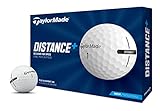
- 1. TaylorMade Distance+ Golf Balls – Best Overall for Distance
- 2. Callaway Supersoft 2025 Golf Balls – Best for Slow Swingers
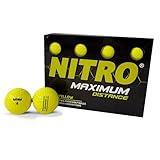
- 3. Nitro Maximum Distance Golf Balls – Best Budget Distance Ball
- 4. WILSON Profile Distance Golf Balls – Best Value in Bulk
- 5. Vice Pro Plus Golf Balls – Best Premium Distance Ball
- 6. TaylorMade SpeedSoft Golf Balls – Best Rated Soft Distance Ball
- 7. TaylorMade Noodle Long and Soft Golf Balls – Best for Maximum Soft Feel
- 8. Callaway Warbird Golf Balls – Best Durable Distance Ball
- 9. Callaway Superfast Golf Balls – Best for a High Launching Flight
- 10. Bridgestone e6 White Golf Balls – Best Middle Ground for Distance and Feel
- 11. Titleist Velocity Golf Balls – Best High Ball Flight Design
- 12. Bridgestone e12 Golf Balls – Best for Straight Flights
- How to Choose a Golf Ball for Distance
- Frequently Asked Questions
- What golf ball gives you the most distance?
- Which golf balls have the longest drive distance?
- What is the best golf ball for playing long distance with a slow swing speed?
- What is the best golf ball for distance for seniors?
- Which golf ball goes the farthest for slow swing speed?
- How much distance does a better golf ball add?
- Should I play a lower compression ball for more distance?
- How do I measure my driver swing speed before buying?
- Our Final Verdict on Distance Golf Balls
Top 3 Golf Ball Picks for Distance
Three balls carry the recommendations here. Distance+ wins on the strength of its review volume and its wind-beating dimple pattern, Supersoft takes slow swingers because a compressible core recovers distance that a faster swing masks, and the Nitro Maximum Distance is the pick when cost per round matters more than greenside finesse.
TaylorMade Distance+ Golf Balls
- REACT Speed Core
- Extended Flight Dimple Pattern
- Two-layer ionomer cover

Callaway Supersoft 2025 Golf Balls
- HyperElastic SoftFast Core
- Hybrid Cover
- Improved greenside spin
Nitro Maximum Distance Golf Balls
- Two-piece titanium core
- Surlyn cut-proof cover
- Symmetrical dimple design
All 12 Golf Balls at a Glance
Every ball in this roundup appears below with the features that drive its distance performance. Read the construction column first: a two-piece ionomer build produces the longest flight for most golfers, while a multi-layer or four-piece urethane build trades a small amount of carry for greenside control.
| Product | Specifications | Action |
|---|---|---|
| TaylorMade Distance+ Golf Balls |
|
Check Latest Price |
| Callaway Supersoft 2025 Golf Balls |
|
Check Latest Price |
| Nitro Maximum Distance Golf Balls |
|
Check Latest Price |
 WILSON Profile Distance Golf Balls WILSON Profile Distance Golf Balls |
|
Check Latest Price |
 Vice Pro Plus Golf Balls Vice Pro Plus Golf Balls |
|
Check Latest Price |
 TaylorMade SpeedSoft Golf Balls TaylorMade SpeedSoft Golf Balls |
|
Check Latest Price |
 TaylorMade Noodle Long and Soft Golf Balls TaylorMade Noodle Long and Soft Golf Balls |
|
Check Latest Price |
 Callaway Warbird Golf Balls Callaway Warbird Golf Balls |
|
Check Latest Price |
 Callaway Superfast Golf Balls Callaway Superfast Golf Balls |
|
Check Latest Price |
 Bridgestone e6 White Golf Balls Bridgestone e6 White Golf Balls |
|
Check Latest Price |
 Titleist Velocity Golf Balls Titleist Velocity Golf Balls |
|
Check Latest Price |
 Bridgestone e12 Golf Balls Bridgestone e12 Golf Balls |
|
Check Latest Price |
Two entries deserve a note before the individual reviews. The Bridgestone e12 and the Titleist Velocity both carry noticeably thinner review histories than the rest of this group, so we have weighted what golfers consistently report about their flight shape rather than treating the star averages as equally proven.
How We Picked These Distance Golf Balls
We did not fire balls into a launch monitor and call it a lab. Instead we built this list around the evidence that actually predicts distance on an ordinary course: the engineering each manufacturer documents, and the consistency with which golfers report the resulting ball flight.
For every model we compared four things. First, the construction, because a two-piece core and a four-piece urethane ball behave very differently at impact. Second, the spin profile claimed for driver and wedge, since excess backspin creates lift that costs carry distance and drag that costs total distance. Third, the volume and consistency of buyer feedback, because a claim repeated across thousands of reviews tells you something a claim repeated once does not.
Fourth, we read the negative feedback with as much care as the praise. Distance balls attract a predictable complaint about greenside control, and a model whose reviews describe a ball that skids across the putting surface is telling you something real about its short game. Where reviewers flag durability, cover scarring or a preference for a different spin window, we have carried that into the cons.
What this approach cannot tell you is exact carry distance for your swing. We have deliberately avoided publishing yardage figures we cannot verify from this data, and we have not ranked any ball as longest, lightest or cheapest without checking the claim against every model in the roundup. For the swing-speed matching that does matter, we have used manufacturer compression figures alongside reported flight characteristics, and we tell you plainly when a number comes from the brand rather than an independent test.
1. TaylorMade Distance+ Golf Balls – Best Overall for Distance
TaylorMade Golf 2021 Distance+ Golf Balls, White, 1 Dozen
Two-layer ionomer cover
1.68 inch diameter
Extended Flight Dimple Pattern
REACT Speed Core
Pros
- Explosive speed off the club for maximum driver distance
- Extended flight dimple pattern helps the ball stay airborne and fight wind
- Plus Alignment Aid makes lining up putts and drives easier
- Soft feel for a two-piece distance ball
- Largest review base in the roundup
Cons
- Two-layer ionomer construction gives up feel and greenside control versus premium urethane balls
- Mid to high spin profile is not tuned for maximum greenside spin
The Distance+ is the ball I recommend to anyone who simply wants more off the tee without changing anything else. Over 11,000 reviews averaging 4.7 stars make it the most proven ball in this guide, and the consistency of the distance praise is what separates it from the rest of the two-piece field.
What TaylorMade engineered is straightforward. A REACT Speed Core handles energy transfer at impact, and the Extended Flight Dimple Pattern is the part that matters most on a windy day, because a ball that holds altitude through a headwind effectively carries further than one that gets knocked down early.
The spec sheet describes a mid launch with a mid to high spin profile, which is a sensible compromise rather than an extreme distance spec. You get enough driver spin to hold a fairway on a firm links layout, and enough wedge behavior that a soft approach does not run forever. The Plus Alignment Aid printed on the ball is a small touch that genuinely helps when you are putting in low light.
Two things hold it back. A two-layer ionomer cover will always feel harder through the bag than a urethane tour ball, and most of the ball’s distance benefit disappears if you hit it thin, because the design does little to correct a badly off-centre strike.
Is the Distance+ right for your swing speed
This ball fits the middle of the swing speed range, roughly 85 to 105 mph. Those players get the full benefit of the high-energy core without the ball spinning out of shape. If your driver speed sits well under 85 mph, the core cannot be compressed quickly enough to give back what it takes.
It is also the safest recommendation for a golfer who fights a two-way miss. Golfers posting on r/golf frequently describe low-spin distance designs converting a wild slice into a manageable fade that stays in play, and the Distance+ dimple pattern supports that same low-spin behaviour without making the ball spinny on approach shots.
Where the Distance+ falls short
Short game control is the trade. On a firm green or a downhill putt, the ball releases more than a tour ball would, so scoring on proximity is harder. If you are a good putter who relies on grabbing greenside spin with a wedge, this is not the ball for that part of your game.
Feel is the other limit. Buyers upgrading from a premium urethane ball often report a harder impact sound, and that difference is genuinely noticeable even though it does not affect distance. Neither issue is a defect, just the boundary of what a two-piece design can do.
2. Callaway Supersoft 2025 Golf Balls – Best for Slow Swingers
Callaway Golf Supersoft Golf Balls (2025, White)
Multi-layer polyurethane build
45.5 g ball weight
1.68 inch diameter
HyperElastic SoftFast Core
Pros
- Highest average rating in the roundup at 4.8 stars
- Very soft feel that golfers describe as easy to play
- Increased ball speed from driver through irons
- Improved greenside spin on approach shots
- Widely available in many colors and patterns
Cons
- Forgiving soft feel gives less feedback than a premium tour ball for advanced players
- Low launch characteristics may not suit golfers seeking a high-spin wedge ball
The Supersoft is the answer when swing speed is the limiting factor. A 4.8 average across nearly 6,700 reviews is the highest rating in this group, and the reason is that a highly compressible core returns energy to slow-moving impact that a firmer ball simply absorbs.
The 2025 version rebuilt the core as the HyperElastic SoftFast Core and added a new cover system. Callaway describes the result as faster driver and iron speed with a soft greenside feel, which is a rare combination: most soft balls historically trade driver distance for greenside softness, and this one was engineered to avoid that trade.
For a golfer whose driver speed has dropped into the low eighties, the difference between this ball and a firm two-piece is not marginal. It is the difference between a compressed, well-struck shot that runs and a shot that leaves a small puff and stalls. Seniors report this effect most directly, and it is why the ball keeps appearing in slow-speed recommendations.
The 45.5 g ball weight and 1.68 inch diameter put it squarely within the USGA limit, and the hybrid cover is designed for durability rather than maximum feel. That trade makes it a better long-term ball than an ultra-thin urethane model for a golfer who plays often and scuffs a lot of balls on cart paths.
Who gets the most from the Supersoft
Slow swingers and seniors are the primary audience, along with any high handicapper whose best driver distance came from an older, softer model. If your driver speed is under 90 mph, this is the ball most likely to hand back yardage you thought you had lost permanently.
It also suits golfers who want an easy, predictable ball off the tee and still want to stop a wedge shot on a green. The 2025 cover system improved greenside spin enough that buyers no longer describe this as a ball that skids.
Where the Supersoft falls short
Low launch is the honest limitation. Golfers chasing a high, hanging ball shape will find this one flatter than a distance-first two-piece design, and a lower peak height can mean less carry on firm, elevated greens.
Feel feedback is limited too. Advanced players who strike the ball well often report that the very low compression makes it difficult to judge contact quality. That is a preference rather than a flaw, but it is why lower handicappers usually move up to a firmer multi-layer model instead.
3. Nitro Maximum Distance Golf Balls – Best Budget Distance Ball
Nitro Long Distance Golf Balls (12PK) All Levels Maximum Distance Titanium Core 85 Compression High Velocity Spin Control Long Distance Golf Balls USGA Approved-Total of 12-Yellow
Two-piece titanium core
Surlyn cut-proof cover
12 balls in four boxes of 3
High-visibility yellow
Pros
- Best value distance ball in the group
- Very durable Surlyn cover resists cuts and abrasion
- High-visibility yellow is easy to find in rough and hazards
- Symmetrical dimple design delivers higher longer shots with spin control
- Low compression gives soft feel around the green
Cons
- Lowest average rating in the group at 4.6 stars
- Low compression and low spin design sacrifices greenside control and feel
- Basic two-piece construction with no urethane cover
If you lose a dozen balls a month, the arithmetic of this ball is the whole argument. Nothing else in the roundup comes close on cost per round, and a cut-proof Surlyn cover that survives a full season of rangefinding is the reason so many golfers keep coming back to it. Pairing it with one of the best golf rangefinders under 300 also keeps the replacement cost from stacking up.
The construction is a two-piece tournament design with a titanium-reinforced core described as maximising energy transfer from club head to ball. The spin rate is deliberately low, which is the mechanism behind the distance: less backspin off the driver means less induced lift, less drag and a longer total.
The symmetrical dimple pattern is the aerodynamic piece, and Nitro claims it increases lift while decreasing drag. That is the correct combination for a distance ball, since lift keeps the ball in the air and drag reduction keeps it moving once it stops climbing.
The packaging suits the way golfers actually lose them. Twelve balls arrive in four boxes of three, so a ball lost in the rough costs a fraction of a dozen and the rest of the pack stays together in a glovebox rather than rolling across the back seat.
Which golfers should buy the Nitro Maximum Distance
Anybody who plays often, loses balls constantly or simply refuses to spend money on this part of their game. The high-visibility yellow also makes it a sensible range ball, since finding a shot costs more time than the ball ever cost.
It is also a legitimate playing ball for a mid-to-high handicap golfer who wants maximum distance off the tee and plays on firm fast fairways. The low spin profile gives a visibly different flight shape, longer and flatter than a tour ball.
Where the Nitro Maximum Distance falls short
Greenside control is the cost. With no urethane cover and a low spin rate, shots release across the green rather than stopping, and buyers explicitly report average feel and average greenside performance for the price tier.
Distance consistency on mishits is also limited. A ball this firm and this low on spin does not rescue a badly struck shot, so golfers with a strike rate that varies widely should look at a more forgiving multi-layer option instead.
4. WILSON Profile Distance Golf Balls – Best Value in Bulk
WILSON Profile Distance Golf Ball 36 Pack
36 balls per pack
Composite construction
Low compression technology
Spin reduction dimple pattern
Pros
- Best bulk value in the group at 36 balls per pack
- High energy core delivers long distance flight
- Low compression technology gives a notably soft feel
- Spin reducing dimple pattern helps reduce hooks and slices
- Strong review base for a bulk format
Cons
- Composite construction is dated compared with modern urethane multi-layer balls
- Bulky 36-ball pack is impractical for golfers who lose a lot of balls
Thirty-six balls in a single pack is the reason this ball appears in the recommendations at all. For a golfer who plays twice a week and plays through a full tube every few months, per-ball cost drops to a level nothing else here reaches.
Underneath the bulk format the design is sensible. A high energy core drives long flight, a specially designed inner cover reduces ball spin to maximise distance, and a low compression build gives a soft feel that reviewers consistently mention as the standout feature.
The spin reduction dimple pattern has a second benefit beyond carry. By cutting side spin it reduces both hook and slice curvature, which means more of your drive distance stays in the playing corridor rather than bleeding into the rough. That is the single biggest distance upgrade available to a golfer whose misses cost them strokes, not just yards.
Reviewers tend to describe it as a soft, easy ball first and a long one second. That is a fair summary of a composite design whose strengths are feel and forgiveness rather than the raw ball speed of a modern high-energy core.
Is the bulk format right for you
This pack makes sense for golfers with somewhere to store it. A home, a garage or a locker where thirty-six balls fit comfortably removes the main objection, and the cost per round drops sharply compared with buying dozens.
It is also a good practice-ball compromise for a golfer who plays on a course with a limited supply cart, or who wants one cheap ball for range work and a better ball for actual scoring shots.
Where the Profile Distance falls short
Composite construction is the honest limit. It sits a generation behind modern multi-layer urethane builds in greenside spin and in feel at impact, and buyers comparing directly against a modern distance ball usually notice the difference in the short game.
Thirty-six balls is also more than many golfers want to own. If you lose balls every round, a large pack simply becomes an expensive way to store lost inventory rather than a saving, and a dozen-ball pack serves that golfer better.
5. Vice Pro Plus Golf Balls – Best Premium Distance Ball
Vice Golf Pro Plus White Golf Balls
4-piece cast urethane construction
Extra-thin cover
Closed alignment line
Numbered 1 to 4 balls
Pros
- Only true 4-piece cast urethane ball in the group
- Outstanding driver distance combined with spin control
- Closed alignment line aids aiming on putts
- Designed specifically for high swing speeds
- Broad colour and count selection including bulk packs
Cons
- Extra-thin urethane cover is less durable and costs more per ball than two-piece distance balls
- Tour-level construction is less forgiving for high handicap golfers
The Pro Plus is the ball in this roundup for a golfer who already generates plenty of ball speed and wants a urethane ball that keeps it. The four-piece cast construction with an extra-thin cover is the same design language used in tour balls, and that thin cover is where greenside spin comes from.
That trade is the whole point. You give up the very last few yards of raw two-piece carry and gain a ball that grips a green and holds a line through a crosswind. Golfers buying it report outstanding driver distance alongside genuine spin control, which is the pairing that most distance-first balls cannot deliver.
It is also explicitly designed for golfers with high swing speeds and high performance requirements. That framing matters: a four-piece urethane ball has more to offer at a fast club speed, because the speed is there to compress and release the core properly, and less to offer at a slow one.
The closed alignment line and numbered 1 to 4 balls are small practical details that help when you are marking a partial set on the green, and the numbering avoids the argument about which ball has your name on it.
Who the Pro Plus rewards
Lower handicap golfers with a driver speed above roughly 100 mph will feel the urethane cover and the spin separation most clearly. They are also the players most able to exploit a ball that holds a trajectory rather than simply running out.
Anyone who plays on exposed courses where crosswind performance matters should look here. A four-piece ball with a thin cover and a disciplined flight typically holds direction better in wind than an aggressive two-piece design that climbs and gets caught.
Where the Pro Plus falls short
Durability is the recurring issue. An extra-thin urethane cover scuffs and abrades faster than a Surlyn or ionomer shell, which means more shot inconsistency late in a round for a golfer who plays a lot of golf in one week.
It is also unforgiving. High handicap golfers report that off-centre strikes lose more distance on this ball than on a two-piece design, and the per-ball cost makes it a poor range ball. Buy it for scoring shots, not for the practice bucket.
6. TaylorMade SpeedSoft Golf Balls – Best Rated Soft Distance Ball
TaylorMade Golf SpeedSoft Ink Golf Balls, USA, 1 Dozen
Two-piece construction
Low-compression PWRCORE
Extended flight dimple pattern
High visibility ink design
Pros
- Ties for the highest average rating in the group at 4.8 stars
- Low compression core delivers an ultra-soft feel while maintaining fast ball speed
- New PWRCORE generates explosive speed off the tee
- High visibility ink design is easy to spot in rough and hazards
- Consistently popular across distance ball categories
Cons
- Two-piece construction limits greenside spin compared with multi-layer models
- Novel paint splatter design may not appeal to traditionalists
The SpeedSoft answers an awkward question: can a ball feel like a supersoft and still generate real ball speed? The low-compression PWRCORE is engineered to do exactly that, and the 4.8 average across more than 3,400 reviews says golfers mostly think it succeeds.
Compared with a standard two-piece distance ball, the compression difference is obvious through the bag. Reviews describe an ultra-soft impact on iron shots and around the green, which is unusual for a model marketed primarily on distance off the tee.
The extended flight dimple pattern is paired with a mid to high wedge spin profile, so unlike a pure distance ball it still gives you something to work with on a greenside approach. That makes it a more complete everyday choice than the cheaper two-piece alternatives in this roundup.
The high-visibility paint splattering design is worth calling out for practical reasons. A distinctive graphic is easier to spot in a deep bunker or under a tree, and finding your ball quickly returns roughly a minute of penalty time each time it happens.
Who benefits most from SpeedSoft
Golfers with a moderate swing speed who want soft feel without giving up driver distance. That middle band, roughly 90 to 105 mph, is where a low compression core still returns energy efficiently and where the ball speed benefit shows up as extra carry rather than extra smash factor on a strike you already crushed.
It is also a good choice for anyone who plays both casual and competitive golf with the same ball, because the soft feel keeps approach shots and putts pleasant while the driver performance handles the scoring shot.
Where the SpeedSoft falls short
Two-piece construction still caps greenside spin. Buyers moving to this ball from a multi-layer model often report less bite on approach shots, particularly on fast greens where stopping power matters.
The paint design is divisive, and that is not a performance issue but a real one. Golfers who prefer a traditional white ball may find the splatter graphic distracting, which is why the model offers multiple colour options rather than a single finish.
7. TaylorMade Noodle Long and Soft Golf Balls – Best for Maximum Soft Feel
TaylorMade Golf NOODLE LONG & SOFT 15BP WHITE
34 compression ultra-soft core
Impact propulsion core
Iothane cover
Patented dimple design
Pros
- Ultra-soft 34 compression core gives an unusually soft feel for a distance ball
- Impact propulsion core adds carry distance
- Patented dimple design produces a straighter flight
- Increased greenside spin compared with typical two-piece distance balls
- Pack sizes give flexibility for casual and regular play
Cons
- Not offered as a dozen pack which is inconvenient for some golfers
- Older core engineering lacks the high-speed core design of current Distance+ and SpeedSoft models
The Noodle sits at the extreme soft end of this roundup with a stated 34 compression core, and that number is the specification. Golfers chasing the softest possible impact and the most forgiveness on off-centre strikes will find very little softer at a similar tier.
It also does something most distance balls do not. The impact propulsion core is marketed for longer carry, but the product description explicitly claims increased spin around the greens, which soft two-piece designs historically avoid.
That combination makes it a genuine option for a slow swinger who has been frightened off distance balls because of the reputation for skidding greenside. The patented dimple design adds straighter flight, so the ball carries without drifting as far from the intended line.
The Iothane cover is described as durable for a soft ball, which is unusual. Soft covers usually scuff faster, and a scuffed ball changes flight consistency across a round, so this detail matters more than it sounds.
Who should play the Noodle Long and Soft
Seniors and slow swingers who prioritise feel over maximum ball speed. The 34 compression figure means the ball compresses readily at modest club speed, which is exactly what a golfer with reduced swing speed needs to get the energy back out.
It also suits golfers who still generate club speed but strike the ball off centre regularly, because maximum compression tolerance forgives the strike. For a high handicapper, forgiveness and distance often arrive together more reliably than raw ball speed alone.
Where the Noodle falls short
Pack configuration is the practical weakness. The ball is offered in smaller packs rather than a dozen, which is inconvenient if you want a full set, and it is harder to split a pack evenly between playing and practising.
The core engineering is also a generation behind. It predates the high-speed core designs used in newer two-piece balls, so a golfer at the faster end of the range will probably find a newer model gives them more ball speed for the same swing.
8. Callaway Warbird Golf Balls – Best Durable Distance Ball
Warbird Distance+ Golf Balls
Two-piece distance design
Extra-large high-energy core
Optimized cover system
USGA conforming
Pros
- Long distance off the tee with reviewers reporting among the longest balls they have tried
- Durable optimized cover system holds up well over repeated rounds
- Compressible high-energy core unlocks distance at lower swing speeds too
- Good trade-off for golfers who lose a lot of balls
- Available in white and high-visibility yellow
Cons
- Low spin off the green means shots skid and release rather than checking up
- Distance-first design gives limited greenside control on approach shots
The Warbird is the classic durable distance ball, and its reviews describe it in a way few competitors can match: buyers say it is among the longest balls they have played, which is a claim made directly against balls they own and know.
The mechanism is an extra-large, highly compressible high-energy core. That compressibility is the interesting part, because it means the ball can be squeezed at lower swing speeds too, unlocking more potential distance at any speed rather than only at club speeds above 100 mph.
Callaway built it for distance off every club with an optimized cover system for durability. For a golfer who plays a lot of golf and scuffs balls against cart paths and tree roots, the cover is as important as the core, and this is where the two-piece design still beats urethane.
Who the Warbird suits
Golfers who lose balls regularly and want one model for the whole bag. Reviewers consistently frame it as a sensible balance of quality and cost, which is exactly the brief for someone who does not want to think about which ball is in the cart this week.
It is also a reasonable ball for a moderate swing speed golfer who needs carry but plays on a course where a spin-heavy tour ball would be hard to control from rough and lies.
Where the Warbird falls short
The greenside complaint is the one buyers raise most, and it is consistent enough to plan around. Low spin off the green means shots skid and release instead of checking, so approach shots hold and wedge play demands more touch than the same shots with a urethane ball.
Feel is correspondingly firm. There is no soft compression sensation here, and golfers who have spent years on a premium ball usually notice the difference on putts and short irons even if the driver numbers look good.
9. Callaway Superfast Golf Balls – Best for a High Launching Flight
Callaway Golf Superfast Golf Balls, White
Three-piece construction
High Speed Core
HEX Aerodynamics
Surlyn cover,1.68 inch diameter
Pros
- Reviewers report hitting roughly a club longer than with their previous ball
- High Speed Core delivers fast ball speeds and distance through the bag
- HEX Aerodynamics produce a higher launch and increased carry
- High-visibility colour options make balls easy to find
- Good greenside control and true roll for a distance-oriented ball
Cons
- Firmer feel than softer supersoft-style distance balls which some low handicap golfers may not enjoy
- Surlyn cover is less soft in feel than urethane tour balls
Most distance balls try to win by launching low and running. The Superfast does the opposite, using HEX Aerodynamics to reduce drag and enhance lift for a higher flight and more carry, which is a genuinely different approach to the same problem.
A high ball flight converts driver speed into carry rather than roll. On a tight par four where the fairway narrows, that extra hang time is worth more than a longer run, because a low flat ball that runs out into the rough has not gained you a stroke.
Reviewers frequently report picking up roughly a club of distance versus their previous ball. Treat that as an individual result rather than a promise, but it is the most common performance report in the reviews, and the three-piece High Speed Core is the component credited with it. If you want to track your own carry numbers at the range, our guide to the best golf rangefinders under 300 explains what to look for.
Who the Superfast works for
Golfers whose home course demands a higher trajectory, or who play in altitude or in conditions where extra air time helps. It is also a sensible ball for a moderate swing speed player who already gets plenty of roll but wants more carry.
Because it is a three-piece build with a Surlyn cover, it holds up better than a thin urethane ball and gives noticeably better greenside behaviour and truer roll than a pure two-piece distance model.
Where the Superfast falls short
Feel is the complaint that comes up most often. It is a firmer ball than the soft supersoft-style models in this roundup, and lower handicap golfers who strike the ball consistently often prefer that firmness because it gives them feedback about contact quality.
A Surlyn cover also cannot match the feel of a urethane cover at address and through impact. If you judge a ball as much on the sound and feel at contact as on the flight, this will not be your pick even if it flies well.
10. Bridgestone e6 White Golf Balls – Best Middle Ground for Distance and Feel
Bridgestone 2023 e6 White Golf Ball-Dozen
Hyper Elastic SoftFast core
Seamless cover design
1.68 inch diameter
USGA conforming
Pros
- Hyper Elastic SoftFast Core delivers distance plus forgiveness and soft feel
- Seamless cover provides better spin and feel through the bag
- Sits between a budget distance ball and a premium tour ball on price and performance
- Good durability under regular play
Cons
- Interior construction is only partially disclosed by the manufacturer
- Lower review volume than the leading distance balls in the roundup
The e6 is the middle option: a ball with a soft feel and multi-layer behaviour that does not cost the per-ball figure of a tour model. Reviewers describe it as premium soft feel with solid distance, which is an accurate summary of where the design sits.
The Hyper Elastic SoftFast core is shared with Callaway’s supersoft family, and it is doing the same job here, producing more distance, more forgiveness and a soft feel through the bag. That forgiveness matters most on off-centre strikes, where a firmer core would return less energy.
The seamless cover is the detail that separates this from a two-piece budget ball. Fewer seams means a more consistent surface, and Bridgestone markets it for better spin and feel rather than simply for cost reduction.
Who should buy the e6
A golfer who is not ready for a thin urethane ball but finds standard two-piece models too hard at contact. It works as an everyday ball for mid-to-high handicappers, and for low handicappers who still want some forgiveness on the occasional poor strike.
It also makes sense as a second ball. A golfer who likes a tour ball for scoring shots can keep the e6 as an all-round practice and match play ball without the cost of another premium dozen.
Where the e6 falls short
Brand transparency is a limitation. The manufacturer discloses the core name and the seamless cover but does not publish a full layer-by-layer construction breakdown, so it is harder to place this ball precisely against a modern multi-layer model.
Review volume is lower than the leaders in this roundup, which means fewer independent opinions to draw on. Nothing in the reported feedback is poor, but the evidence base behind it is thinner than the four thousand-plus reviews behind the top picks.
11. Titleist Velocity Golf Balls – Best High Ball Flight Design
Titleist Velocity
Multi-layer construction
LSX high-speed core
350 octahedral dimple design
NAZ plus cover
Pros
- High-speed LSX core delivers full throttle speed for maximum distance
- 350 octahedral dimple design produces a notably high ball flight
- NAZ plus cover keeps greenside feel playable rather than tour firm
- Only Titleist model in the group from a brand known for consistency
- Available in white green orange and AIM designs
Cons
- Much lower review volume than the other picks at under 200 reviews
- Higher price per ball than most two-piece distance models in the roundup
The Velocity is built around a specific aerodynamic outcome rather than a general distance claim. The spherically-tiled arrangement of 350 octahedral dimples is designed to produce a high ball flight trajectory, and golfers who have tried it consistently describe it as visibly climbing.
Underneath that sits the LSX high-speed core, marketed for maximum distance on full swings, and a multi-layer construction that no two-piece ball in this roundup can match on spin separation between driver and wedge.
The NAZ plus cover is the piece that makes it usable rather than merely a flight experiment. It is intended to keep greenside feel playable instead of tour firm, which is where many high-flight designs punish golfers with a wedge.
Who the Velocity fits
Moderate swing speed golfers who want carry rather than roll, and anyone playing firm courses where the ball needs to stop climbing before the landing area runs out. The high trajectory is also useful in crosswind, since a higher flight cuts through moving air more cleanly.
Golfers who like a Titleist product but do not want a tour-soft ball will recognise this as the middle option in the range, with more speed emphasis and a firmer greenside feel than the premium models.
Where the Velocity falls short
The evidence base is the main caveat. At under 200 reviews this is the least proven ball in the roundup, and the ratings are strong but the sample is small enough that we would want to see more long-term durability feedback before recommending it over a heavily reviewed alternative.
Cost per ball is also above what most two-piece distance models charge. For a golfer who buys one model and plays eighty rounds a season, that per-ball premium adds up against a ball that performs only modestly better for a low-to-moderate swing speed.
12. Bridgestone e12 Golf Balls – Best for Straight Flights
Bridgestone Golf e12 Straight White
Bridgestone flight system
Contact Force Dimple
MindSet Technology
Available in white, matte green and matte yellow
Pros
- Consistently straight ball flight with reviewers reporting fewer hooks and slices
- Contact Force Dimple reduces side spin for better distance retention on mishits
- Priced well below premium tour balls while competing against them
- Some reviewers report hitting longer and straighter than Callaway Supersoft
- Good feel and sound off the clubface with a responsive short game
Cons
- Cover durability is a recurring complaint with visible scuffing in simulator testing
- Some reviewers note slightly less total distance than higher-end premium balls
- Spin length and durability are described as merely average by some buyers
The e12 is the pick for a golfer whose distance losses come from shape rather than speed. The flight system is designed to reduce hooks and slices, and reviewers describe the resulting flight as consistently straight, which for a two-way miss is worth more than raw yardage.
Distance here comes from retention rather than generation. The Contact Force Dimple reduces side spin, so a strike that is not centred still keeps more of its energy travelling down the fairway instead of curving off into the rough. A shot you can find is a shot that plays longer.
Head-to-head comparisons against the Callaway Supersoft and other premium models frequently favour the e12 for straightness and forgiveness. That is a consistent pattern in the reviews rather than an isolated comment, which is what makes this ball stand out.
Who should choose the e12
Golfers whose misses come from both sides, and golfers with a low spin rate off the driver who need the ball to hold a line rather than run. If your dispersion on the tee is the biggest scoring leak, this design attacks it directly.
It also suits golfers who play in wind or on narrow fairways, because a straighter ball gives you a wider effective target. Golfers who want a workable ball that can be shaped on purpose are a different case and should look elsewhere.
Where the e12 falls short
Cover durability is the recurring complaint and the most practical problem. Reviewers report visible scuffing well before a hundred shots in simulator testing, and a scuffed cover changes how consistently the ball flies, which undermines the straightness this ball is chosen for.
Some buyers also report slightly less total distance than higher-end premium balls, and a minority describe the spin, length and durability as simply average. The straightness case is strong; the yardage case is not universal.
How to Choose a Golf Ball for Distance
Choosing on brand name alone is how golfers end up with a ball that works against them. The five factors below are the ones that actually move the number on your scorecard, in the order they matter for most players.
Compression and swing speed
Compression is the first filter and the most misunderstood. A lower compression ball deforms more on impact, which for a slow swing releases more energy back into the ball and adds carry. A higher compression ball resists deformation, which suits a fast swing that can already generate high ball speed on its own.
The useful rule is to match the ball to your speed rather than buy the softest thing available. Golfers under about 85 mph gain from a low compression design, golfers between 85 and 100 mph have the widest choice and should prioritise spin profile, and golfers above 100 mph gain least from softness and most from construction quality.
One caution belongs here. Independent testing has repeatedly found that published compression ratings do not always match measured compression, so treat any stated number as a rough guide. What actually decides the outcome is whether your best shots feel compressed and the ball launches at a height you can control.
Spin rate off the driver
Backspin creates lift, and lift is what keeps a ball in the air. It also creates drag, and drag is what slows a ball down once it stops climbing. This is why a very high spin rate can produce a shorter total distance despite a higher launch, and why distance balls aim low.
The practical target is the lowest spin rate that still lets you control the ball direction. Golfers who miss in both directions usually do best with a low-spin design because it keeps the ball in play, while golfers who only miss one way can afford a higher-spin ball and gain back greenside control.
Launch angle and flight shape
Carry distance is a product of ball speed, launch angle and spin rate. Total distance adds the roll-out, which depends on how hard and how firm the landing surface is. On a soft, slow course, a low-spin ball that flies flat and runs gives up nothing, while on a firm links layout or a fast surface the same ball gains several yards of roll.
This is also the best argument for matching a ball to a course. A high-flight design such as the Titleist Velocity or the Callaway Superfast earns its keep where the ground is firm and the landing area is short, and gives back yardage on a slow surface where the ball has no room to run.
Construction and cover material
Two-piece balls have one large core and a durable ionomer or Surlyn cover. They are the longest and cheapest, and they handle mishits well. Three-piece balls add a thin cover layer for a firmer feel. Multi-layer and four-piece urethane balls separate driver spin from wedge spin, which is why serious players use them even though a two-piece ball is often longer.
Urethane gives feel and greenside spin, and costs durability. Ionomer and Surlyn give durability and price, and cost feel. There is no way to have all three, which is why the fastest ball is rarely the best ball and why the ball you never lose is worth more per round than the ball that flies one club further.
Dimple pattern and aerodynamics
Dimples are there to control what happens to the air as the ball flies. A perfectly smooth ball creates a large low-pressure wake behind it and suffers heavy drag. Dimples break up that wake into a thin layer of turbulent air, which dramatically reduces the drag force on the ball.
Depth matters as much as count. Deep, shallow dimples produce a higher launching flight, while shallower and flatter patterns reduce spin and encourage a piercing trajectory. Several balls in this roundup use a named dimple pattern specifically to fight wind, which is the aerodynamic version of the same idea.
Matching the ball to your swing speed
Use the ranges below as a starting point, then adjust for course conditions and your miss pattern. Swing speed is the single most useful number you can bring to a fitting, and it is also the number most often guessed badly.
Under 80 mph: prioritise maximum compression tolerance and high launch. The Callaway Supersoft and the TaylorMade Noodle are built for this range. The risk to avoid is a firm high-compression ball, which will feel like you struck it poorly even when you did not.
80 to 90 mph: this is where low spin and a firm fairway pay off. The TaylorMade Distance+, the Nitro Maximum Distance and the Bridgestone e12 all fit, and a golfer fighting a two-way miss should lean towards the lowest spin option available.
90 to 100 mph: the widest selection of any band. The TaylorMade SpeedSoft covers soft feel needs, the Callaway Warbird covers durability, and the Bridgestone e6 covers the middle. Spin profile should decide it rather than compression.
100 to 114 mph: prioritise ball speed and flight window. The Vice Pro Plus is the premium choice here, and the Callaway Superfast suits players who want a higher launch than a tour ball would give them.
Working out your swing speed before you buy
Three practical options, roughly in order of accuracy. The most accurate is a launch monitor session, which reports club speed and ball speed directly and takes a few minutes. The next best is a fitting professional with portable equipment, who can also check your spin and launch numbers while you are there.
The cheapest method is video analysis with a phone app that tracks club speed across a swing. It is less accurate but well within the range needed to pick a compression band. A useful shortcut: most golfers can estimate their band by club and handicap, because the same 7 iron produces a very different speed in a beginner swing and a tour swing.
What distance a ball can realistically add
The honest answer is modest for most players, and that matters more than the marketing suggests. Between two decent two-piece distance balls, expect a difference small enough that you will not notice on a scorecard. The gap that does register is between a ball matched to your speed and a ball badly mismatched to it.
The larger practical gains come from retention rather than raw carry. A ball that reduces side spin keeps more of your distance on the tee, and a ball that holds its flight through wind avoids losing the yardage you would otherwise have had. That is why the Bridgestone e12 and the TaylorMade Distance+ earn their places on straightness and wind performance rather than on maximum carry alone.
One last calculation is worth doing for golfers who lose balls often. Take the number of rounds you play a year, subtract the balls you expect to keep, and work out your real cost per ball. That figure usually favours the durable two-piece and Surlyn models here, and it changes which of these twelve is genuinely the best value for you.
Frequently Asked Questions
What golf ball gives you the most distance?
Among the balls we cover, the TaylorMade Distance+ is the strongest all-round answer because its REACT Speed Core and Extended Flight Dimple Pattern combine high ball speed with a flight that holds its line and resists wind. For a slow swing the Callaway Supersoft can add more, because a compressible core returns energy a firm ball would absorb. For a fast swing the Vice Pro Plus gives the most ball speed per stroke.
Which golf balls have the longest drive distance?
Low-spin two-piece designs dominate, and the ones in this roundup built specifically for distance are the TaylorMade Distance+, the Nitro Maximum Distance and the Callaway Warbird. Higher flight models such as the Titleist Velocity and the Callaway Superfast maximise carry rather than total distance. The longest ball for any individual golfer is the one whose compression and spin match their swing speed, not the one with the strongest marketing language.
What is the best golf ball for playing long distance with a slow swing speed?
For a driver swing speed below about 85 mph, prioritise a low compression design. The Callaway Supersoft 2025 uses a HyperElastic SoftFast core to unlock distance at modest club speed while keeping greenside spin, and the TaylorMade Noodle Long and Soft goes softer still with a 34 compression core. Both return more energy on a slow impact than a firm two-piece ball would.
What is the best golf ball for distance for seniors?
Seniors usually need one thing above all else: a ball that compresses at their current swing speed. The Callaway Supersoft is the most proven choice in this roundup for that reason, with a 4.8 average across nearly 6,700 reviews. Golfers on slower firm courses who want more greenside spin from a soft ball can consider the TaylorMade Noodle instead, which claims both extra softness and increased greenside spin.
Which golf ball goes the farthest for slow swing speed?
A high-compressible low-spin two-piece ball will go farthest in raw terms, because it deforms fully on impact and generates minimal backspin. The Nitro Maximum Distance fits that description and is also the cheapest per round. If your priority is total distance including roll on a firm fairway, prioritise low spin; if you play soft slow courses where roll is limited, prioritise carry and launch instead.
How much distance does a better golf ball add?
Honestly, not much between two reasonable distance balls, and any claim of a large gain deserves scepticism. The difference that does register is between a ball matched to your swing speed and one that is not, which can run from a handful of yards to a visible difference for a slow swinger. Ball choice also retains distance by reducing side spin and holding flight in wind, which protects yardage you were already generating.
Should I play a lower compression ball for more distance?
Only if your swing speed is low enough to benefit. A lower compression ball deforms more on impact and gives energy back to a slow-moving club head, so golfers under about 85 mph tend to gain carry from it. A faster swing generates enough ball speed without that help, and a soft ball only reduces feedback and control. Match the compression to the speed rather than buying the softest option available.
How do I measure my driver swing speed before buying?
A launch monitor gives the most accurate reading and takes only a few minutes. A fitting professional with portable equipment is the next best option and can also report spin and launch angle. At home, a phone app performing video swing analysis will get you into the right band for choosing a compression, though individual readings vary. Your handicap and your 7 iron distance give you a reasonable rough estimate.
Our Final Verdict on Distance Golf Balls
The best golf balls for distance in 2026 start with the TaylorMade Distance+, which combines the deepest review evidence in this roundup with a dimple pattern built to hold altitude through a headwind. It is the ball we would hand to a golfer who wants more yardage and refuses to change anything about their swing.
Match the ball to the swing rather than to the brand. Slow swingers should start with the Callaway Supersoft, golfers who lose balls weekly should pick the Nitro Maximum Distance for the cost per round, golfers fighting a two-way miss should test the Bridgestone e12, and faster swingers who want a urethane ball should look at the Vice Pro Plus.
Whatever you choose, buy two or three dozen and actually play them for a full round before judging. Ball feel and flight are personal, and the number that settles the question for you will not be the one that settles it for someone else.
1 thought on “12 Best Golf Balls for Distance (October 2026)”