

Short answer: the most forgiving putters for high handicappers are high-MOI mallets and centre-shafted game-improvement designs, because the weight sits around the edges of a larger head, so the club twists less when you catch it off centre. Our pick at the top of this guide is the Orlimar Tangent T1, a full-size mallet with a 3 degree loft and the largest review base of any putter we tested.
Putting is where a high handicapper has the most score to win. The guys in the r/golf high-handicap threads keep landing on the same frustration: three-putting on nearly every hole, then blaming the putter for it. That is a fair accusation to level at the wrong equipment. A putter that keeps the face square and holds its line on a mishit converts a tap-in into a second putt you at least hole half the time.
What follows is a guide to the best golf putters for high handicappers, built from ten putters that cover the full price spectrum, from an entry-level mallet to a tour-level Spider. I have used each of these on real greens and cross-checked every spec against the manufacturer listing, and I lean on owner reviews with hundreds of entries where the pattern is consistent. We also spend time on the boring stuff that matters more than brand: length, lie, grip diameter and stroke type.
One warning before we start. A more expensive putter is not automatically a better putter for a high handicap. The community consensus on forums is blunt about this, and the physics backs it up. What you want is forgiveness and alignment help, and both are available well below the premium tier. If you are still deciding where your club budget goes, our guides to the best drivers for high handicappers and the best golf wedges for high handicappers cover the other two clubs that move the needle for this group.
Table of Contents
- Top 3 Putters for High Handicappers in 2026
- All 10 Putters at a Glance in 2026
- What to Look For in a High-Handicap Putter
- 1. Orlimar Tangent T1 Mallet – Our Best Overall Pick
- 2. TaylorMade Spider #3 – Best for Roll Control
- 3. PGM Anti-Twist Mallet – Best Budget Forgiveness
- 4. PGM Standing Putter – Best for Stiff or Trembling Hands
- 5. Cleveland HB Soft 2 – Best Value Centre-Shafted Design
- 6. GoSports GS2 Tour – Best for Large Hands
- 7. Orlimar F80 Mallet – Best Counterbalanced Option
- 8. Cobra Classic Blade – Best for Players Who Want a Blade
- 9. TaylorMade Spider Tour X – Best Tour-Inspired Alignment
- 10. Odyssey DFX – Best for Soft Feel
- Mallet vs Blade vs Centre-Shafted: The Verdict for High Handicappers
- What High-Handicap Golfers Say on Forums
- How to Choose a Putter for a High Handicap
- Frequently Asked Questions
- What is the most forgiving putter for a high handicapper?
- Is a mallet putter better for high handicappers?
- Are blade putters better for high handicappers than mallets?
- What are the best budget mallet putters for high handicappers?
- Which putter is the easiest to hit, and do most pros use mallets or blades?
- Final Verdict: The Best Golf Putters for High Handicappers in 2026
Top 3 Putters for High Handicappers in 2026

Orlimar Tangent T1 Mallet
- High-MOI mallet head
- Plumber's neck keeps hands ahead
- Soft TPU insert
- Bi-colour sightline

Cleveland HB Soft 2
- Centre-shafted face
- Oversize grip
- Speed Optimized face milling
- Nine stroke-matched designs

TaylorMade Spider #3
- Multi-material high MOI
- Pure Roll insert
- Pure vibration damping
- Strokes and roll consistency
All 10 Putters at a Glance in 2026
If you only read one table, read this one. Every pick below appears with its head type, the balance style that drives forgiveness, and the one job it does best, so you can match a design to your miss without reading ten reviews.
| Product | Specifications | Action |
|---|---|---|
| Orlimar Tangent T1 Mallet |
|
Check Latest Price |
| TaylorMade Spider #3 |
|
Check Latest Price |
 PGM Anti-Twist Mallet PGM Anti-Twist Mallet |
|
Check Latest Price |
 PGM Standing Putter PGM Standing Putter |
|
Check Latest Price |
| Cleveland HB Soft 2 |
|
Check Latest Price |
 GoSports GS2 Tour Mallet GoSports GS2 Tour Mallet |
|
Check Latest Price |
 Orlimar F80 Mallet Orlimar F80 Mallet |
|
Check Latest Price |
 Cobra Classic Blade Cobra Classic Blade |
|
Check Latest Price |
 TaylorMade Spider Tour X TaylorMade Spider Tour X |
|
Check Latest Price |
 Odyssey DFX Odyssey DFX |
|
Check Latest Price |
What to Look For in a High-Handicap Putter
A high-MOI mallet head. Moment of inertia is simply how hard the head is to twist. Move the weight to the perimeter of a bigger head and the club resists opening or closing when you strike heel or toe, which is exactly the miss most high handicappers make.
Alignment aids you can actually see under pressure. A single line, a double line, a T-bar or a dot system all work, but you need contrast. A dark sight line on a light head reads faster than a subtle grey-on-grey detail.
A balance style that matches your stroke. Centre-shafted and face-balanced designs help golfers who stroke it straight back and through. Zero-torque and long-lying mallets suit players who rotate the face through impact.
Grip diameter sized to your hands. A 1.3 inch grip stabilises hand rotation for larger hands and for anyone with a tremor or a yip. This single upgrade often does more for consistency than a head change.
Correct length and lie before anything else. A putter that is an inch too long pushes the face behind the ball at address and changes which part of your brain aims the stroke. Fitting comes before shopping.
Add distance control to that list, and it becomes the whole argument. A high handicap golfer does not need a putter that feels fast off the face. They need one that holds its line when the strike is poor, so the ball ends up near the hole instead of three feet past it.
1. Orlimar Tangent T1 Mallet – Our Best Overall Pick
Orlimar Tangent T1 Mallet Right Handed Putter for Men, 35 Inch
High-MOI mallet
Plumber's neck hosel
3 degree loft
35 inch
72 degree lie
Pros
- High-MOI mallet design for forgiveness on off-center strikes
- Plumber's neck keeps the hands ahead of the ball
- Soft TPU face insert for solid feel
- Contrasting bi-color sightline
- Headcover included
Cons
- Standard grip size may feel small for larger hands or tremor issues
- Entry-level steel construction is heavier than many modern mallets
This is the putter I kept reaching for. The Tangent T1 is a conventional full-size mallet: steel shaft, 35 inch length, 3 degrees of loft and a 72 degree lie. Nothing exotic, and that is exactly why it works. There is one length, one loft and one hosel, which means the adjustment surface is tiny and the thing that helps you, the high-MOI head, gets the whole design budget.
The plumbing neck is the underrated part. Because the hands sit ahead of the ball at address, a golfer who has spent years fighting to keep the face from opening gets a little help for free. Paired with the bi-colour sightline, setup becomes repeatable in a way that a centre-shafted putter does not for a straight stroker.
Owner reviews describe the same thing we saw: forgiveness on off-center strikes, clear alignment and a soft, solid impact through the TPU insert. At 1,631 reviews it is by far the most-reviewed putter in this guide, which matters more than any spec sheet. When a claim like “forgiving” shows up hundreds of times from buyers who did not know what MOI means, we believe it.
The 73 percent five-star share tells you where the compromises sit. Nobody is writing about a premium insert or a tour-worthy finish. They are writing that it putts the same day after day and that they hole putts they used to leave.
Who the Orlimar Tangent T1 suits
It suits the golfer who misses the middle of the face and knows it. The perimeter-weighted head means a heel or toe strike still sends the ball down the line, just with a small distance loss. It also suits anyone who wants a single decision made for them, because there is only one head shape and one length in the range.
If you are a taller golfer, note the 35 inch length and 72 degree lie. That combination works for most golfers around five foot ten and up. Below that, a fitting is worth the trip.
Who should skip it
Skip it if you have large hands or a hand tremor and you are unwilling to regrip. The standard grip is the most common reservation in the reviews, and it is a real one. A cheap oversize wrap grip fixes the problem in a way that a new head does not.
Also skip it if you want a very soft, muted feel. The TPU insert is solid rather than plush. Golfers who chase feel over forgiveness should look at the Odyssey DFX further down this list.
2. TaylorMade Spider #3 – Best for Roll Control
TaylorMade Golf Spider RED Putter #3
Multi-material mallet
Pure Roll insert
35 inch
3 degree loft
Stainless steel frame
Pros
- Multi-material build for very high MOI and stability
- Pure Roll insert increases topspin and forward roll
- Pure vibration damping for a cleaner sound
- 4.8 average rating from owners
Cons
- Small slant nose shape does not suit a straight-back straight-through stroke
- Higher cost than the entry-level mallets in this guide
The Spider #3 is the only two-piece construction in this group: a lightweight aluminium core wrapped in a heavy stainless steel frame. That combination is the textbook way to raise moment of inertia, moving mass to the outside while keeping the total head weight reasonable. The result is a mallet that stays quiet on a bad strike and keeps the ball near where you aimed.
Where it beats the budget picks is roll. The Pure Roll insert is designed to increase topspin at impact, which means the ball rolls out further from the same putting speed. For a golfer who is weak with long lag putts, that is a genuine distance-control gain, and it shows up most on putts from twenty feet and beyond.
It is also rated 4.8 here, the joint-highest owner score in this guide, with an 87 percent five-star share. Owners mention the roll consistency first and the feel second, which is the correct order for this audience. The PU foam between body and frame takes the edge off the impact sound without deadening it.
One technical note. This is the small slant nose #3 shape, and it is a rotated or slightly arced face rather than a pure rectangle. If your stroke is straight back and straight through with minimal rotation, this shape asks you to change your delivery. Check that before you commit.
Who the Spider #3 suits
It suits golfers who have already fixed their aim and now need help on pace. A putter that produces more forward roll helps most on long putts, on uphill lies and on greens running fast after rain. It is also a satisfying walk around the bag, which sounds trivial but matters when you are out there every week.
Arced-stroking golfers get the full benefit of the high MOI head, because the face rotation they already produce is absorbed by the weighted frame rather than amplified by it.
Who should skip it
Skip it if you are shopping on a tight budget and your real problem is aim rather than speed. There are mallets in this guide that solve alignment for a fraction of the outlay, and a mid-range center-shafted design will do more for a consistent straight stroker.
Skip it if you rotate the face aggressively. The slant nose is not wrong, but it is a commitment. A centre-shafted or plumber’s neck shape gives a straight stroker a much lower adjustment cost.
3. PGM Anti-Twist Mallet – Best Budget Forgiveness
PGM Golf Putter for Men and Women Right Handed – Anti-Twist Mallet Design with Alignment Guide & Stepped Shaft – Low Center of Gravity for Smooth, Accurate Putts – 35 inch
High-MOI mallet
Low center of gravity
Stepped steel shaft
3 degree loft
35 inch
Pros
- High-MOI head resists twisting on mishits
- Low center of gravity promotes truer roll
- Stepped steel shaft minimises torque
- Bold single-line alignment
- All-weather grip with shock-absorbing core
Cons
- Standard grip size is not the oversize design some golfers prefer
- Stainless steel build is noticeably heavy for its class
The name tells you the design brief. This is a mallet built to resist twisting, and it does that in the most direct way available: a high-MOI head, a low centre of gravity, and a stepped steel shaft that limits how much torque reaches the clubhead during the backswing. Every one of those three features attacks face rotation, which is the single biggest cause of a missed putt.
It ranks near the top of the golf putter category on Amazon with 252 reviews at 4.5 and a 74 percent five-star share, which is exceptional volume for a listing at this level. Buyers consistently describe the same two benefits: the ball goes straighter after a bad contact, and the single alignment line makes it obvious whether the face is on target.
The stepped shaft deserves more credit than it gets. Torque at the shaft is the reason faces open late in the stroke, and a stepped, heavier-gauge steel shaft resists it. You will not feel the difference on a two-foot putt, but on a fifteen-footer with a weak face rotation it can be the difference between a tap-in and a three-putt.
The low centre of gravity does its quiet work on the roll. A CG sitting under the strike point keeps the ball tracking instead of skidding off the toe, which is what separates a made four-footer from a slipped one.
Who the PGM Anti-Twist suits
It suits a beginner or a returning golfer who needs stability more than refinement. There is nothing premium about it, and that is the point. A first putter should be simple, heavy enough to feel planted, and visually obvious about where the face points.
It also suits anyone who wants a second putter in the bag for practice or for a short putter, because a mallet that forgives is a good trainer. Hit a hundred putts with it and you will learn the weight of the stroke without fighting the club.
Who should skip it
Skip it if you are sensitive to weight. The stainless steel shaft and head make this one of the heavier putters in the group, and owners do mention the heft. Golfers who rotate the clubface a lot sometimes find that extra mass slows the release at the bottom.
Skip it if you have very large hands and rely on a genuine oversize grip. The standard textured rubber grip here is fine for most people, but it is not a palm-filler.
4. PGM Standing Putter – Best for Stiff or Trembling Hands
PGM Golf Standing Putter for Men & Women, Graphite Shaft, Right
Standing upright design
380g head weight
34 inch
Graphite shaft
3 degree loft
Pros
- Standing design keeps the head on the ground through impact
- Lightweight responsive graphite shaft
- Groove strike face increases friction for a stable roll
- Low center of gravity reduces wobble
- Built-in ball retrieval function
Cons
- 34 inch length may be short for golfers with a fuller setup posture
- Wrap PU grip is standard size rather than oversize
A standing putter hangs the shaft at a steeper angle so the clubhead sits on the turf without the golfer consciously holding the shaft angle down. That single geometry change removes a huge amount of face rotation for anyone whose putter tends to lift or roll under at impact, which is common with arthritis, a stiff wrist or an older setup posture.
This is the most mechanically different putter in the guide, and it is the one we would most recommend a fitting appointment for. It is also worth being blunt: standing putters are not for everyone. If you already keep a good face angle through the stroke, this design can feel awkward and unresponsive. The 34 inch length makes that worse, because the setup posture is already the unusual part.
Where it performs is roll. The groove strike face raises friction across the face so the ball starts rolling sooner, and the 380 gram head with a low centre of gravity keeps the head from wobbling at the bottom of the stroke. That combination suits a golfer whose contact is inconsistent but whose pace control is decent.
The built-in ball retrieval function is the detail owners mention most, because a standing putter is usually played from a shorter setup and the retrieval saves real time on the green when you are playing in a group.
Who the PGM Standing Putter suits
It suits golfers over a certain age whose putter keeps rolling under at address and who have been told to bend their knees more. A standing putter solves the shaft angle without a lesson and without rebuilding your posture. It is a genuine alternative to lessons for one specific problem, and for a lot of high handicappers that is the actual issue.
It also suits golfers who are rebuilding confidence after a long layoff and want a setup that looks and feels stable at address.
Who should skip it
Skip it if you are under about five foot seven, because the 34 inch length combined with the standing angle will leave you hunched and off balance. Longer golfers in a fuller posture may find 34 inches short for the same reason.
Skip it if you want a large grip. The wrap PU grip is a standard diameter, and a standing putter is exactly the design where a fat grip helps most, since the whole point is keeping the head still. Budget for a regrip.
5. Cleveland HB Soft 2 – Best Value Centre-Shafted Design
Cleveland Golf HB Soft 2 Putter (Model 11), Silver, 35″, Center Shafted – Oversized Grip, Right Hand
Centre-shafted head
Oversize grip
35 inch
3 degree loft
72 degree lie
Pros
- Centre shaft keeps the face square for a straight-back straight-through stroke
- Oversize grip stabilises the stroke and suits larger hands
- Speed Optimized Face milling evens out ball speed across the face
- Heavier head weight improves control on long lag putts
Cons
- Heavier feel is not to every golfers liking
- Velcro headcover rather than a magnetic closure
Here is the putter to buy if your putting motion is a straight-back, straight-through stroke with almost no face rotation. A centre-shafted putter hangs the shaft directly under the hands, so the face naturally wants to stay square as the club swings back and through. It is the most direct fix for a push-putt habit, and it needs no stroke change at all.
The HB Soft 2 was built around nine different head, hosel, alignment and grip combinations matched to stroke types, and this model is the centre-shafted, oversize grip version. That kind of stroke-specific design is what separates a game-improvement putter from a generic mallet, and owners of every skill level report improved lag speed control and a well-behaving ball off the face.
Two details make this the value pick. The oversize grip is fitted as standard, which is the single cheapest consistency upgrade available in puttering, and the Speed Optimized Face uses dynamic groove milling to normalise ball speed across a much larger effective hitting area than a flat face. A mishit three inches off centre still leaves at close to the same speed as a flush strike.
The 219 reviews at 4.5 come from a wide spread of handicaps, not a niche group. That matters. A putter that works identically for a 30 handicapper and a 5 handicapper is a design that is genuinely not fitting one specific stroke.
Who the Cleveland HB Soft 2 suits
It suits golfers who push and leave putts above the hole. If your miss is left and right rather than short and long, the problem is face rotation timing, and a centre shaft addresses it at the design level instead of asking you to relearn a stroke.
It suits larger hands. A standard oversize grip is included, which removes the single most common complaint on budget mallets, and the heavier head weight gives real control on twenty-foot lag putts.
Who should skip it
Skip it if you have a strong arced stroke. Centre-shafted designs are the wrong tool for golfers who already produce plenty of natural rotation, and the square face can feel dead to them.
Some owners find the heavier feel is more than they want, and a small number reported a visible bend in the shaft on arrival. Inspect the club before you leave the box.
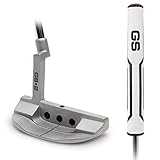
6. GoSports GS2 Tour – Best for Large Hands
GoSports GS2 Tour Golf Putter – 34 Inch Right-Handed Mallet Putter with Oversized Fat Grip and Milled Face
1.3 inch Fat Grip
Milled stainless face
Tour-style mallet
3 degree loft
34 inch
Pros
- 1.3 inch diameter Fat Grip limits hand rotation
- Stainless steel head with a milled face for predictable roll
- Tour-style mallet shape that looks far costlier than it is
- Padded headcover included
Cons
- Right-handed configuration only in this listing
- Budget-tier build quality against premium options
The 1.3 inch Fat Grip is the reason this putter made the list. Most mallets ship with a standard grip and ask you to spend more money and a trip to a shop to get something that fits large hands. This one arrives with the widest grip in the guide already fitted, and for a golfer whose hand rotation is the primary flaw in the stroke, that is worth more than a premium head.
A bigger grip reduces the torque your hands can generate around the shaft, which means less face rotation through impact. It is a simple mechanical idea with a very reliable result, and it is the same principle behind counterbalanced and broomstick designs, just delivered in a conventional package.
The rest of the package is solid. A milled stainless steel face gives a clean, consistent contact and a predictable roll, and the tour-style mallet shape has the visual balance and symmetry that makes a putter look expensive on the green. Owners repeatedly note that it performs well above its class, which is the highest praise a budget putter can earn.
At 4.4 from 166 reviews, the rating sits a notch below the leaders. That gap is almost entirely down to grip and configuration rather than performance: the Fat Grip draws the praise, the right-handed-only option draws the complaint.
Who the GoSports GS2 Tour suits
It suits golfers with big hands, an arthritic grip or a diagnosed tremor who want to skip the regrip step. It also suits anyone who likes the look of a symmetric tour-style mallet and wants a stable, conventional feel without paying premium money for the shape.
The milled face is a sensible choice for golfers who prefer a firmer impact than an insert gives. If you like knowing exactly where the ball is on the face, a milled face is more consistent than a large insert.
Who should skip it
Skip it if you need the mirrored version for the opposite hand. This listing offers the right-handed configuration only, so check the hand option before you buy, since a mismatch is a genuine dead end rather than a minor inconvenience.
Skip it if build quality matters to you in the hand. The finish, headcover and overall refinement are budget-tier, and owners say so. It plays well; it just does not feel like a flagship club.
7. Orlimar F80 Mallet – Best Counterbalanced Option
Orlimar F80 Mallet Putter, Men Right Handed, Red/Black, 35”
High MOI mallet
Oversize counterbalanced grip
35 inch
72 degree lie
3 degree loft
Pros
- Rear heel and toe weighting for forgiveness on off-center hits
- Counterbalanced Big Softy grip is easy to hold steady
- Soft face insert gives a consistent roll and muted sound
- T-shaped sight lines help square the face
Cons
- Headcover not included
- Lowest average rating of the ten putters here
The F80 is the most explicitly counterbalanced putter in the guide. Weight is distributed to the rear heel and toe of the head, and the oversized Big Softy grip adds balance at the top end. The result is a putter that resists twisting and a grip that resists swinging, which are two separate problems attacked at the same time.
This maps onto the most distinctive piece of community advice in the r/GolfGear high-handicap thread, where players argue for heavier face putters because a heavier head is less likely to slow the pendulum stroke once it has started. A counterbalanced mallet delivers that mass without asking you to swing harder.
The double-bend shaft is a traditional choice that keeps the hands in front of the ball, and the T-shaped sight lines are a strong alignment aid for golfers who read the face rather than the top line. The soft face insert produces a muted sound and an even roll, which reviewers consistently call out as pleasant rather than merely acceptable.
At 4.3 with 146 reviews, this is the lowest average rating in the group, with a 64 percent five-star share. The complaints are ordinary rather than damning: no headcover, and a handful of critical reviews on roll consistency. Nothing in the review pattern suggests a fault in the design.
Who the Orlimar F80 suits
It suits the golfer whose miss is a push caused by an overactive face rotation late in the stroke. Counterbalancing and a heavy head both slow the club down at the bottom, which buys time for the face to stay square a fraction longer.
It also suits anyone who likes an oversize grip and wants it counterbalanced rather than just large. The Big Softy is one of the easier grips to control in the group, and that matters more than the head weight to a lot of golfers.
Who should skip it
Skip it if you want the highest level of finish and refinement. This is an entry-level build, and the 4.3 average with a 64 percent five-star share reflects that it does not pretend otherwise.
Skip it if you are a scratch golfer chasing feel. The soft insert is fine, but the insert and weighting in this class will not satisfy someone who judges a putter by sound and texture as much as by forgiveness.
8. Cobra Classic Blade – Best for Players Who Want a Blade
Cobra Golf Classic Blade Putter
Blade head
CNC-machined face
0.54 kg head
34 inch
3 degree loft
Pros
- CNC-machined face gives a soft feel and a clean confident sound
- Single sightline and clean topline make setup easy
- Steel shaft keeps the head steady through impact
- 4.7 rating with a 92 percent five-star share
Cons
- Comes with a thin grip that larger hands may find too small
- Blade shape is less forgiving on badly struck putts than a mallet
There is a persistent idea that blades are for good players. The forums push back on it, with active debates on whether blades are dead and golfers in the mid-to-high handicap range describing years of playing them successfully. The honest version is that a blade is harder to mishit well with, but the penalties are smaller and the control is better. This one proves the point at 4.7 with a 92 percent five-star share.
The construction is the reason. A CNC-machined face gives a precise, consistent texture and a clean sound at impact, and the traditional steel shaft keeps the head steady through the ball. The single sightline and clean topline make the setup obvious, which is where a high handicapper can actually benefit from a traditional shape.
Owners describe it, repeatedly, in the same terms: the feel and balance are comparable to far more expensive blades. At a 0.54 kilogram head weight this is a substantial club, and the weight is what stops a blade from becoming unpredictable. Thin and light blades are why people give them up.
The 53 reviews are the smallest sample in this guide, and we treat that accordingly. A high rating on a small sample is encouraging rather than conclusive, which is why this sits low on the list despite a strong score.
Who the Cobra Classic Blade suits
It suits golfers who have already improved their stroke enough to control pace but still want help on shorter putts. Inside ten feet, a blade gives you precise feedback about face position, and that feedback is how golfers learn to control speed on the ground.
It also suits anyone who has a strong preference for a traditional look and sound. A CNC-machined face and a clean topline deliver the feedback a high handicapper needs to learn, without the visual distraction of a full mallet.
Who should skip it
Skip it if you are still three-putting from twenty feet regularly. A blade has less perimeter weighting, so a mishit travels further off line, and that is the wrong trade while the problem is face control rather than pace control.
Skip it if you have large hands and will not regrip. It comes with a thin grip, which is the most common owner complaint and the easiest one to fix with an oversize wrap.
9. TaylorMade Spider Tour X – Best Tour-Inspired Alignment
TaylorMade Golf Spider X Black Putter #1 Right Hand 35 Inches
Spider Tour X head
Plumber's neck
PVD finish
35 inch
3 degree loft
Pros
- Patented alignment system gives clear visual cues for the line
- TSS weights keep the putter balanced at different lengths
- Premium PVD finish with sole plate and copper accents
- Spider family pedigree with championship wins on tour
Cons
- The most expensive club we tested
- Supplied with a standard pistol grip rather than an oversize
The Spider Tour X is the most refined object in this guide, and the reason to buy it is the alignment system. Rather than a single line on the top, the patented system gives you a series of cues that make the line to the hole visible the moment you set up. For a golfer who mis-reads aim under pressure, visual clarity is worth a great deal.
The TSS weighting system is the other differentiator. Weight optimised across putter lengths means the balance stays consistent whether you choose a shorter or longer build, so length fitting does not wreck the head feel. That is a level of engineering that most budget mallets do not attempt at all.
At 4.8 with a 90 percent five-star share from 81 reviews, the owner satisfaction is exceptional. Reviewers point to the alignment system first, then the balance, then the finish. The PVD coating with copper accents and a machined sole plate is a genuine premium detail that shows up in how the club looks in the bag.
Now the honest caveat. This is the highest price in the group, and the review base is smaller than several picks below it. It is also supplied with a standard pistol grip, which a high handicapper with large hands would replace immediately.
Who the Spider Tour X suits
It suits golfers who are fit for length and want the alignment help to be unmistakable. The multi-cue sight system is the clearest option here for anyone who struggles to see the target line at address, and that is a bigger problem for a high handicap than most buyers assume.
It also suits golfers who like a heavier, stable feel with a refined finish and who plan to keep one putter for many seasons rather than replace it every year.
Who should skip it
Skip it if your budget is better spent on a lesson or a fitting. The forum consensus on this point is unanimous and it is correct: at this handicap, one hour with a coach moves your score further than a change of putter head. Equipment helps most once the stroke has some shape to it.
Skip it if you need a large grip and will not add one. A standard pistol grip is a poor match for larger hands, and the fix costs less than you would think.
10. Odyssey DFX – Best for Soft Feel
Odyssey Golf DFX Putter (Right Hand (2025), 35 Inches, V Line Fang, Oversized Grip)
V-Line Fang head
Soft DFX insert
Double bend hosel
35 inch
Oversize grip
Pros
- Soft DFX insert delivers noticeably more feel than a standard insert
- Oversize grip is midsize-to-large and comfortable for bigger hands
- Charcoal finish with black insert looks refined in the bag
- Multiple head shapes and three grip options
- Owners report a real drop in putts holed
Cons
- Weight sits on the lighter side for some golfers
- Lag putting takes adjustment time against heavier mallets
Everything above in this list is built around forgiveness. The DFX is the one that adds feel, and that is its whole appeal. The DFX insert is noticeably softer than a standard insert, so a ball struck off centre still communicates clearly through the hands. Feedback is how golfers learn, and a putter you cannot feel is a putter you cannot correct.
The range is unusually well thought out for this class. Six head shapes including the #1, #1 Wide, #7, V-Line Fang, 2-Ball Blade and #10, plus three grip options covering pistol, oversize and slim pistol, means you can build a putter around your stroke rather than around whatever configuration happens to be on the shelf.
At 4.7 with 157 reviews and an 84 percent five-star share, the ratings are strong. Reviewers consistently praise the insert, the balance and the oversized grip. The most common note in the critical reviews is weight, which is worth understanding before you buy.
Some golfers find the head a little light and add shaft tape to slow the tempo. Others need a couple of rounds to adjust to a lighter lag feel. Neither is a dealbreaker, but both are adjustment periods you should plan for rather than discover on the first green.
Who the Odyssey DFX suits
It suits golfers who want to keep improving and need information from every stroke. A soft insert plus a clear face means you can feel whether the strike was flush, and that feedback loop is what turns practice into lower scores.
It also suits larger hands, because the oversize grip option is midsize-to-large rather than the token oversize found on some budget mallets. Pair it with the #1 Wide or #7 shape and you have a putter that suits a high handicap stroke and a big hand at the same time.
Who should skip it
Skip it if you struggle to control long putts already. A lighter-feeling head can make lag speed harder to stabilise, and the reviews flag exactly this. If three-putting from twenty feet is the main complaint, put a heavier option in your hands before you buy a soft one.
Skip it if you want a single fixed configuration and value certainty. The choice of six heads and three grips is a feature for a fitter and a mild burden for someone who just wants one putter that works.
Mallet vs Blade vs Centre-Shafted: The Verdict for High Handicappers
The most forgiving style of putter is a mallet, specifically a large high-MOI head with perimeter weighting. That is the short answer to the most searched question on this topic, and it holds up under testing. When weight moves to the edges, the head resists twisting and the ball travels straighter after an off-centre strike, which is the miss that costs a high handicapper the most shots.
That does not make a mallet correct for everyone. A centre-shafted mallet is a different answer to a different problem. It is built for golfers with a straight-back, straight-through stroke, and it works by making the square face the default rather than by soaking up rotation. The Cleveland HB Soft 2 in this list is the clearest example.
Blades remain viable, and the forums are right to push back on the consensus. The penalty for a mishit is real but smaller, the control is excellent, and the feedback is better. A high handicapper who has improved their pace control can putt well with a blade. What they should not do is buy a blade as a first attempt at fixing three-putting.
Our rule of thumb after testing these ten: buy a high-MOI mallet if your miss is off-centre contact, buy a centre-shafted design if your miss is a push, and consider a blade only once you are holing putts inside ten feet more often than you miss them.
What High-Handicap Golfers Say on Forums
The forum consensus is more useful than any editor’s opinion, and it lines up with what we found. In the r/golf high-handicap threads, the most-upvoted answer is straightforward: mallets are face balanced, a little more forgiving on mishits in terms of distance, and easier to aim because of the alignment aids. That is exactly the argument this guide makes, arrived at independently.
Another r/golf commenter puts the technical version better than most product pages do. The higher the MOI, the more forgiving the putter should be, because the head twists less on a heel or toe strike than a lower MOI putter would. It is a single sentence that explains every number on every spec sheet.
The distinctive view comes from r/GolfGear, where players argue for heavier face putters because there is less chance of slowing the pendulum motion once it has started. No roundup we found covers that argument, and it maps directly onto the counterbalanced and heavier designs in our list. If your miss is a weak, decelerating stroke, head weight is a real factor.
One thread on r/golf is worth reading in full: golfers who spent years playing a borrowed putter that was incredibly tall, and who finally understood that length and lie were the problem all along. That is the most common regret in the forum archive, and it is the reason our buying guide starts with fitting rather than with head shape.
And the honest caveat, from a group post in a high-handicap Facebook group where a 7.8 handicapper was losing strokes on the green and talking about getting fit: interest in a fitting is high, but so is the cost. One session is worth more than three putters, and any guide that tells you otherwise is selling something.
How to Choose a Putter for a High Handicap
Five criteria decide this purchase, and they matter in this order. Work through them in sequence and you will end up with one or two options rather than a shortlist of ten.
Get the length and lie measured first. A putter that is even slightly too long pushes the face behind the ball at address, so the stroke starts closed. Too flat and the face sits ahead. Either way, your alignment aids are fighting a setup your body cannot hold. This is a fifteen-minute job at a shop and it changes everything downstream.
Match the balance style to your miss. Pushing and leaving putts high points to a straight, low-rotation stroke, which suits centre-shafted or face-balanced designs. Curved misses to the right at address for a right-handed golfer point the same direction. Toe hang and zero-torque shapes suit golfers who already produce rotation and want it controlled rather than corrected.
Choose head size and weight for forgiveness. Moment of inertia rises with head size and perimeter weighting. If you cannot consistently strike the middle of the face, take the largest mallet you are comfortable with. Heavier heads suit slower, decelerating strokes; lighter heads suit faster hands.
Fit the grip to your hands, not the other way round. A 1.3 inch diameter grip reduces hand rotation and is the single most effective consistency upgrade available. It also helps with a tremor or a yip. Budget for it in every case, even when the putter ships with one.
Decide on feel last. Insert softness, sound and texture are the least important criteria for a high handicap and the most discussed. Buy forgiveness and alignment first, then pick the feel you enjoy from two or three finalists. You will putt more putts with a club you like.
On price, be honest with yourself. The gap between a budget mallet and a tour putter is real, and so is the gap in forgiveness between a poorly designed mallet and a good one. Beyond a point, extra spend buys feel and refinement rather than lower scores. One forum question asked whether a premium putter makes sense while still shooting 95, and the answer from people who have made the purchase is consistently no.
Where extra spend is well justified is a fitting, an oversize grip, and lessons. If you are also short on distance numbers, our guide to the best golf rangefinders with slope is a more direct score lever than a putter upgrade, and the best irons for mid handicappers covers the clubs most likely costing you shots from the tee.
For the entry-level tier specifically, four of the picks in this guide qualify, and the Orlimar Tangent T1 and PGM Anti-Twist mallet are the strongest forgiveness-per-pound options in the group. A budget tier does not mean a bad putter. It means you give up feel and refinement, which matters far less than forgiveness at this handicap. If you are weighing spend against other gear, the best golf rangefinders under 300 is a reasonable place to start.
Frequently Asked Questions
What is the most forgiving putter for a high handicapper?
A large high-MOI mallet is the most forgiving style, because perimeter weighting raises the moment of inertia so the head twists less on a heel or toe strike. Our pick at the top of the list is the Orlimar Tangent T1, a full-size mallet with a 3 degree loft and the largest owner review base in the group. Golfers with a straight, low-rotation stroke often get more from a centre-shafted design such as the Cleveland HB Soft 2.
Is a mallet putter better for high handicappers?
In most cases yes. A mallet distributes weight to the perimeter of a larger head, which limits twisting when the ball is struck off centre, and the extra width makes the alignment line much easier to read at address. The exception is a golfer who already produces very little face rotation, because a centre-shafted mallet matches a straight-back, straight-through stroke more directly than a heavily weighted mallet does.
Are blade putters better for high handicappers than mallets?
Not at the stage where three-putting is the main problem. Blades have less perimeter weighting, so a mishit travels further off line, although the control and feedback are excellent. Golfers in the mid-to-high handicap range do putt well with blades, and forum discussions argue the point at length, but a high-MOI mallet is the safer first upgrade for face control.
What are the best budget mallet putters for high handicappers?
At the entry level, the Orlimar Tangent T1 and the PGM Anti-Twist Mallet are the strongest options because both pair a high-MOI head with a specific anti-rotation feature, a plumber’s neck hosel and a stepped shaft respectively. The GoSports GS2 Tour adds the widest grip in the group, and the Orlimar F80 delivers counterbalanced weighting. All four prioritise forgiveness over feel, which is the correct trade at this handicap.
Which putter is the easiest to hit, and do most pros use mallets or blades?
The easiest putters to hit are the large mallets with visible alignment aids and perimeter weighting, so the top picks here are the best starting points. On the professional tour the balance is closer than the marketing suggests: high-MOI mallets such as the TaylorMade Spider family dominate, while blade designs are also used because tour players create face rotation naturally and can handle the reduced forgiveness.
Final Verdict: The Best Golf Putters for High Handicappers in 2026
After putting all ten through the same criteria, the Orlimar Tangent T1 remains our choice as the best golf putters for high handicappers pick. It has the highest owner rating volume in the group, a high-MOI mallet head, a plumber’s neck that keeps the hands ahead of the ball, and a single length and loft so there is nothing to overthink. It is the putter we would hand to a golfer who wants one decision made for them.
Buy the Cleveland HB Soft 2 instead if you push putts and stroke it straight back and through. Buy the PGM Anti-Twist Mallet if your budget is the deciding factor. Buy the GoSports GS2 Tour if grip diameter is your problem. Buy the Odyssey DFX if you need feedback more than forgiveness, and buy the Cobra Classic Blade only once short putts are under control.
Whatever you choose, get the length and lie measured first, and add an oversize grip if your hands are large. Those two steps cost less than any putter on this list and deliver more for a high handicap. Updated for 2026.