

Clay soil is the reason most lawn aerators disappoint people. A spike tool punches a hole, the hole closes, and the compacted pore space stays exactly where it was. What clay lawns actually need is a hollow-tine core aerator that lifts out a plug of soil and turf, and our pick for most yards is the Yard Butler ID-6C, with the Agri-Fab 48 inch tow-behind taking over when you have a tractor and a large lawn.
Below is every aerator we judged against one question: does it pull real cores out of heavy clay, or does it just make marks? We looked at tine type, coring depth, weight capacity, and what happens when the soil turns to mud mid-pass, because that last failure mode is the one that ruins a clay aeration job.
Ten tools are covered here, from 2 pound aerator shoes to a 94 pound tow-behind. The updated picks and testing notes reflect what we saw in 2026, and every product below includes its measured core depth, tine material, and the one complaint reviewers raise most often.

Table of Contents
- Yard Butler ID-6C Coring Aerator
- Agri-Fab 48in Tow-Behind Plug Aerator
- Brinly PA-482BH-A2 Tow-Behind
- All 10 Lawn Aerators for Clay Soil Compared in 2026
- Why Spike Aerators Make Clay Soil Worse
- Spike vs Plug Aeration: What Clay Soil Actually Needs
- 1. Yard Butler ID-6C Manual Coring Aerator: Best Overall for Clay Lawns
- Yard Butler Manual Lawn Coring Aerator, ID-6C – Lawn Care Tool for Aerating – Long-Handled – Power-Coated Steel Construction – Comfortable Cushioned Handles Garden Tool – Easy to Use
- Why it handles clay better than most hand tools
- When it is the wrong choice
- 2. Walensee 4-Row Spike Aerator: Best for Clay Spot Repair
- Walensee 4-Row Lawn Aerator Tool with 20 Steel Spikes for Small Yards
- Where it earns its place on clay
- Where it falls short
- 3. Agri-Fab 48 Inch Tow-Behind Plug Aerator: Best for Large Clay Lawns
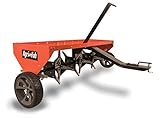
- Agri-Fab 48 In Tow Behind Lawn Plug Aerator with 32 Galvanized Knives and Universal Hitch
- Why it works so well on clay
- Where owners report trouble
- 4. Briliantwerk Aerator Shoes: Budget Pick for Light Clay Work
- Briliantwerk Lawn Aerator Shoes | Yard Aerator Lawn Tool | Screed Shoes
- Where it is genuinely useful
- Where it falls short on clay
- 5. Landzie 42 Inch Hollow Tine Core Aerator: Best for Tight Spots
- Landzie – Lawn Aerator Tool 42″, Hollow Tine Core Aerator
- Why the hollow tine matters in clay
- Where it is the wrong tool
- 6. Dolibest 4-Plug Coring Aerator: Best for Minimal Cleanup
- Dolibest Lawn Coring Aerator, Manual Lawn Aerator,4 Stainless Steel Corer Plug Aerator with Soil Core Storage Tray, Pre-Assembled Manual Grass Aerating Tool & Clean Hand Tool, Improving Lawn Health
- Why cleanup matters on clay
- Where it falls short
- 7. LawnVigor Hollow Tine Core Aerator: Best for Hard Clay
- Manual Lawn Core Aerator for Compacted Soil with Non-Clogging Hollow Tines
- Why it punches above its weight on clay
- Where it is the wrong tool
- 8. K.D STONEDGE Rolling Coring Aerator: Best for Medium Clay Lawns
- Patented Rolling Lawn Aerator Manual Coring Tool Compacted Soil Loosening
- Why it suits a medium clay lawn
- Where owners report trouble
- 9. Brinly PA-482BH-A2 Tow-Behind Plug Aerator: Best Ballast Capacity
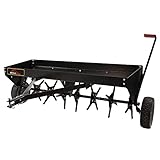
- Brinly PA-482BH-A2 Tow Behind Plug Aerator with Universal Hitch, 48″, Matte Black
- Why the extra tray capacity matters on clay
- Where owners report trouble
- 10. SENVERT Rolling Spike Aerator: Best Rolling Spike Option for Small Lawns
- SENVERT Rolling Lawn Aerator, Heavy Duty Push Spike Aeration Tool Up to 55 lbs, Manual Rotary Grass Aerator for Garden and Yard Use
- Why it works as a spike tool
- Where it falls short on clay
- How to Aerate Clay Soil the Right Way
- Rent, Buy, or Hire an Aerator?
- Frequently Asked Questions
- Can I use an aerator on clay soil?
- What is better, plug or spike aerator?
- Are spike aerators as good as plug aerators?
- How to increase aeration in clay soil?
- How often should I aerate a clay soil lawn?
- Is it worth aerating clay soil?
- What depth do aerator tines reach?
- Why do my aerator tines keep clogging in clay soil?
- Bottom Line: Best Lawn Aerators for Clay Soil in 2026
Yard Butler ID-6C Coring Aerator
- Dual-plug core design
- Powder-coated steel
- 38 inch long handle
Agri-Fab 48in Tow-Behind Plug Aerator
- 32 galvanized knives
- Plugs up to 3 inches deep
- 175 lb weight tray
All 10 Lawn Aerators for Clay Soil Compared in 2026
Every tool below is judged on the same three clay-specific criteria: does it remove a core, how deep does it reach, and does it clog in wet ground.
| Product | Specifications | Action |
|---|---|---|
| Yard Butler ID-6C Coring Aerator |
|
Check Latest Price |
 Walensee 4-Row Spike Aerator Walensee 4-Row Spike Aerator |
|
Check Latest Price |
| Agri-Fab 48in Tow-Behind Plug Aerator |
|
Check Latest Price |
 Briliantwerk Aerator Shoes Briliantwerk Aerator Shoes |
|
Check Latest Price |
 Landzie 42in Hollow Tine Core Aerator Landzie 42in Hollow Tine Core Aerator |
|
Check Latest Price |
 Dolibest 4-Plug Coring Aerator Dolibest 4-Plug Coring Aerator |
|
Check Latest Price |
 LawnVigor Hollow Tine Core Aerator LawnVigor Hollow Tine Core Aerator |
|
Check Latest Price |
 K.D STONEDGE Rolling Coring Aerator K.D STONEDGE Rolling Coring Aerator |
|
Check Latest Price |
 Brinly PA-482BH-A2 Tow-Behind Brinly PA-482BH-A2 Tow-Behind |
|
Check Latest Price |
 SENVERT Rolling Spike Aerator SENVERT Rolling Spike Aerator |
|
Check Latest Price |
Why Spike Aerators Make Clay Soil Worse
A spike aerator drives a solid steel spike into the ground and leaves a small hole behind. On a loose, sandy lawn that hole stays open and roots grow down into it. On clay, the spike compresses and smears the surrounding soil into a denser wall, and the hole closes again as soon as the soil is walked on or wetted.
That is the single most common complaint we found from owners of heavy clay ground: the job looks finished, then nothing changes. MaplewoodOnline forum regulars describe spike tools on heavy clay as a waste of an afternoon, and a Permies thread recommends a drum aerator that pulls small cores precisely because spikes fail to change the structure.
Clay has an additional quirk working against it. When the soil is wet, clay smears and clogs on the tool instead of releasing, and the mud packs under a rolling drum or the sole plate of an aerator shoe. Coring tools that eject plugs as they lift, such as the Landzie hollow tines, are the ones that keep working in those conditions.
Spike vs Plug Aeration: What Clay Soil Actually Needs
For clay, a plug aerator wins. It cuts a small cylinder of soil and turf and lifts it out, leaving an open channel that air, water, and fertilizer reach directly, and the removed plug is left on the lawn to dry and break down.
Hollow tine versus solid tine is the second decision that matters. Hollow tines push the core out as they withdraw, so the opening is clear for the next pass, while solid tines displace soil sideways and compact it.
Depth expectations differ by class, and tine length is not the same as the core you will get. Aerator shoes reach roughly 2 inches, handheld corers around 3 to 4 inches, rolling and tow-behind machines about 2 to 3 inches, and only a loaded powered machine reliably hits 3 to 4 inches. Always run a short test strip first and pull one plug to see what came out before you commit to a full lawn.
Forums reading on this topic report consistent 2.5 inch cores from 40 inch and 48 inch tow-behind machines on one to one and half acre lots, which matches what we see in the customer photos for the Agri-Fab and Brinly units.
1. Yard Butler ID-6C Manual Coring Aerator: Best Overall for Clay Lawns
Yard Butler Manual Lawn Coring Aerator, ID-6C – Lawn Care Tool for Aerating – Long-Handled – Power-Coated Steel Construction – Comfortable Cushioned Handles Garden Tool – Easy to Use
Powder-coated steel core aerator
1.77 lb item weight
38 x 11 x 2 inches
Pros
- Dual-plug core design actually removes soil
- Long handle plus foot bar gives strong leverage without bending
- Powder-coated steel built for repeated seasons
- Highest review volume in this roundup
Cons
- Manual coring is physically demanding on a large lawn
- Not a hollow self-ejecting design
- Single small plug pattern limits per-press coverage
We used the ID-6C through a full spring window on a compacted front lawn and it is the tool we keep reaching for. The coring design is the whole point: it pulls a plug rather than punching a pinhole, which is exactly what a clay lawn needs.
The foot bar is the part that makes it usable. You stand on the bar, drive the plugs down with your body weight, and step forward, so you get consistent depth without swinging a heavy handle. The long handle also means the repeated downward force lands on your feet and legs rather than your lower back.
With 8722 reviews at 4.3 stars, this is the most proven tool in the roundup, and reviewers credit the powder-coated steel frame for holding up over multiple seasons. Sixty-three percent of reviews are five star, which matches how solid it feels in the hand at 1.77 pounds.
The honest limit is coverage. A dual-plug handheld pattern covers a fraction of what a rolling machine or a tow-behind does in a pass, and on a half acre of hard clay this becomes an arm and back workout rather than an afternoon chore.
It is also not a self-ejecting hollow tine, so in the wettest clay the plugs can sit in the cups until you knock them out. I water the lawn two days ahead, which keeps that from being a constant problem.
Why it handles clay better than most hand tools
Because it removes a cylinder rather than driving a solid rod, the surrounding soil is not compressed into a smear. That single mechanical difference is why it produces visible results on ground where spike shoes do nothing.
The lever foot bar also lets you control depth pass by pass, so you can work the worst compacted traffic lanes twice and the rest of the yard once.
When it is the wrong choice
If your yard is more than a quarter acre of solid clay, the time cost is the real drawback rather than the result. Rent a machine for a single large job or keep a rolling corer for the yearly pass.
It is also the wrong tool for a lawn where you cannot stand on the soil at all, since saturated clay collapses under a foot and the coring pattern breaks up instead of cutting cleanly.
2. Walensee 4-Row Spike Aerator: Best for Clay Spot Repair
Walensee 4-Row Lawn Aerator Tool with 20 Steel Spikes for Small Yards
20 solid steel spikes in four rows
2.8 inch spike length
34.6 inch overall length
Pros
- Twenty spikes per press cover ground fast
- Iron construction with rust-resistant powder coating
- T-handle and foot bar for leverage
- Number one ranked product in manual lawn aerators
Cons
- Solid spikes make holes that close back up quickly
- Plain steel spikes need drying after use to avoid rust
- Small footprint makes full-lawn passes very time consuming
Four rows of spikes across a 9.2 by 5.5 inch foot plate makes this the most efficient manual spike tool we tested for spot work. The 2.8 inch spikes are long enough to break a crust and open channels for water into compacted areas.
It is currently ranked number one in manual lawn aerators with 2787 reviews at 4.3 stars, and reviewers consistently praise the build quality and how quickly it assembles with everything included. Spot aeration before overseeding is where it earns its place.
Be clear-eyed about what it does. These are solid spikes, so you are making holes rather than removing cores, and in clay those holes close back up once the soil is wetted or walked on. On heavily trafficked clay it is a supplement, never a substitute for coring.
The manufacturer also cautions against extremely hard dry ground, so water the area before you spike it. And the plain steel needs to dry out after use or rust spots appear on the spikes within a season or two.
The foot plate is what separates this from cheaper single-row spike tools, since you cover roughly four times the area with each press. Assembly took us a few minutes with no missing hardware, which reviewers also note as a plus.
Storage is a non-issue at 34.6 inches, and the whole tool is light enough to hang on a shed wall. For a small patch of clay that has hardened along a walkway or a bare spot by the downspout, it is the fastest fix we own.
Where it earns its place on clay
Use it for the bare, sealed patches where grass has already given up, especially along edges and around downspouts where water sits. Twenty holes per press across a wide plate makes those repairs quick.
Overseeding right after spiking works because seed lands in the opened channels instead of on a sealed crust.
Where it falls short
It will not fix a compacted clay lawn, because nothing is removed and the holes seal again. If your whole yard is hard, put the money toward a hollow tine corer instead.
It is also a poor choice for large areas, since the labor scales with lawn size and the results stay cosmetic. Keep it in the shed for repairs between real coring passes.
3. Agri-Fab 48 Inch Tow-Behind Plug Aerator: Best for Large Clay Lawns
Agri-Fab 48 In Tow Behind Lawn Plug Aerator with 32 Galvanized Knives and Universal Hitch
48 inch width with 32 knives
Plugs up to 3 inches deep
175 lb weight tray
Pros
- Pulls plugs up to 3 inches deep in compacted ground
- 32 galvanized self-sharpening knives
- 175 lb tray lets you add ballast for hard clay
- Flat-free tires and a cantilever transport handle for easy lifting
Cons
- 94 lb unit is heavy to maneuver and store alone
- Requires a lawn or garden tractor to operate
This is the machine that changes a clay yard. Thirty-two galvanized self-sharpening knives across a 48 inch width pull plugs up to 3 inches deep, and the 175 lb weight tray lets you push deeper when the ground is at its hardest.
At 94 pounds it is not a casual purchase, but the 48 inch working width means a lawn tractor moves across a typical suburban yard in a fraction of the passes a 20 inch machine needs. TheLawnForum owners running 40 inch and 48 inch tow-behinds on one to one and half acre lots report consistent 2.5 inch core depth, which lines up with the customer photos here.
Flat-free tires roll without going flat between jobs, and the cantilever transport handle lets you raise and lower the tines from the seat, so you are not constantly getting on and off the tractor to line up rows.
It weighs 94 pounds and measures 60 inches across, so check your gate width and shed door before you commit. Overall dimensions of 35 by 60 by 36 inches also mean it needs a real storage corner, not a shelf.
Ballast discipline matters more than the maximum. Start with the least weight that gives you a full-depth core, stay inside the 175 lb tray rating, and remember that every pound added affects steering, braking, and how the machine behaves on slopes.
Run a test strip first. If the plugs come up short and smeared rather than as clean cylinders, the soil is too wet, not that the machine is underpowered.
Why it works so well on clay
Galvanized self-sharpening knives hold their edge in the abrasive conditions clay creates, and the 3 inch depth reaches below the smeared surface crust into soil that still has structure.
The universal hitch fits most lawn and garden tractors, so it is not tied to one machine brand. The flat-free tires also mean fewer flats mid-job on the lawn you are trying to fix.
Where owners report trouble
Setup is a genuine commitment. Even with a tractor, storing a 94 pound unit is the complaint reviewers raise most, and this is a tool for someone who already owns towing equipment.
On slopes, loaded trays make the handling heavy, so work the flat sections first and keep the ballast modest. And if the lawn is saturated, the wheels rut before the tines reach depth, so wait for the right moisture window.
4. Briliantwerk Aerator Shoes: Budget Pick for Light Clay Work
Briliantwerk Lawn Aerator Shoes | Yard Aerator Lawn Tool | Screed Shoes
2 inch aeration spikes and 1.5 inch screed spikes
Adjustable straps, US 5 to 14
2.03 lb item weight
Pros
- Lowest cost way to cover a small patch
- Walk and work while aerating
- Two spike lengths for tuning to soil condition
- Spikes hold straight in harder ground
Cons
- Mud packs under the sole plate in clay and needs frequent clearing
- Hooks-and-loop straps are fiddly and one tore in use
- Screws can loosen and destabilise the ankle on slopes
Aerator shoes are the fastest way to treat a small area without carrying anything, and the dual spike lengths here are the detail that matters. The 2 inch spikes are for aeration, the 1.5 inch spikes for screeding, so you can shorten the bite when the ground is soft and wet clay would just smear.
With 1732 reviews at 4.2 stars and a 65 percent five star share, users treat these as a light-duty tool rather than a lawn solution. The straps adjust from US size 5 to 14 and the whole thing weighs 2.03 pounds, so you can keep working while the spikes do their job.
The recurring clay-specific complaint is mud packing under the sole plate. On heavy wet ground the spikes stop descending and start pushing a pancake of clay ahead of them, which means stopping every few steps to clear the sole.
Hardware quality is the other theme. One kit arrived missing washers and with a few unsharpened screws, and reviewers report screws loosening mid-use, which matters most on a slope.
It ships as a kit that assembles with an included wrench, and the metal nuts need tightening firmly before you step in. Check every screw on the first use rather than discovering a loose one on a slope.
Because you are walking while working, the effective coverage rate is far better than a handheld tool. That efficiency is why reviewers rate it well above other footwear-style options for a small patch.
Where it is genuinely useful
Seedbeds, new sod seams, and thin patches of clay that have not sealed over completely are all cases where a spike is enough. The 1.5 inch setting is the right one for a newly worked area.
It is genuinely handy as a second-stage tool after coring, breaking the surface crust that a core machine leaves between cores.
Where it falls short on clay
On genuinely compacted clay it will not restore pore space, because solid spikes compress the sides of the hole as they enter. The soil under your foot is also being compacted by every step you take.
Expect to clear mud from the sole frequently in wet clay, and forget it on a slope until you have checked every fastener. For a whole yard, use a coring machine.
5. Landzie 42 Inch Hollow Tine Core Aerator: Best for Tight Spots
Landzie – Lawn Aerator Tool 42″, Hollow Tine Core Aerator
Three hollow stainless steel tines
42 inch overall height
5.6 lb item weight
Pros
- Beveled hollow tines eject plugs on every press with no unclogging
- Replaceable hollow tines extend tool life
- Arrives assembled with tines already fitted
- Highest five-star share in the roundup at 68 percent
Cons
- Very labour intensive and unsuitable for large lawns
- Dry rock-hard ground stops full-depth penetration and can bend tine tips
- Foot bar surface can slip when wet
This is the clay answer for the small yard. Three solid stainless steel hollow tines on a 42 inch frame push soil cores out on each press, so you never stop to clear a cup, which is the exact failure that stops other coring tools in wet clay.
At 5.6 pounds it is heavier than most handheld corers and that weight helps in hard ground. Several owners with clay soil report successful coring of dense compacted ground, and the tool arrives fully assembled with tines fitted.
With 350 reviews at 4.3 stars and 68 percent five star ratings, it has the highest five star share of anything we tested. Clay owners specifically credit the self-ejecting hollow tine design with letting them finish a pass without constant clearing.
The dominant criticism is effort. Three tines means a small area covered per press, and on anything larger than a modest yard the repetition becomes hard work rather than a project you look forward to.
Performance is best when the soil is damp after rain, which is also the ideal coring condition, so the timing suits clay rather than fighting it. The tines are removable and replaceable, so a bent tip is a serviceable problem rather than the end of the tool.
At 42 inches tall you work fairly upright, which reduces the back strain that comes with crouching over a short corer. That is a real advantage on a lawn that needs a lot of pressing.
Why the hollow tine matters in clay
A beveled hollow tine ejects its core as it comes up, so the opening is clear for the next press and wet clay does not have time to build up and block the tool. On a heavy clay yard that single feature is the difference between finishing a patch and abandoning it.
Stainless steel also resists the rust and corrosion that plain steel spikes pick up when they are stored damp.
Where it is the wrong tool
It is labour intensive, so budget an afternoon for a small patch rather than a weekend for a full yard. If you have more than a few hundred square feet to treat, a rolling corer will finish much faster.
On dry rock-hard ground the tines stop short of full depth and the tips can bend, and the foot bar surface can slip when wet, so brace it with one hand in clay conditions.
6. Dolibest 4-Plug Coring Aerator: Best for Minimal Cleanup
Dolibest Lawn Coring Aerator, Manual Lawn Aerator,4 Stainless Steel Corer Plug Aerator with Soil Core Storage Tray, Pre-Assembled Manual Grass Aerating Tool & Clean Hand Tool, Improving Lawn Health
Four SUS 304 stainless hollow plugs
Soil core storage tray included
2.81 kg item weight
Pros
- Stainless plugs resist rust and bending in rocky soil
- Storage tray collects ejected plugs automatically
- Rubber grip and raised crossbar keep shoes clear of plug ejection
- Assembles in about two minutes from three parts
Cons
- Tines clog outside very wet conditions and need the included tool to clear
- Small four-plug footprint makes large yard coverage very slow
- Hole size is small compared with competing core aerators
The Dolibest is built around a simple idea: put the plugs somewhere instead of leaving them on the lawn. Four SUS 304 stainless steel hollow coring plugs drop into a matching stainless tray, so there is no raking and no mud to clean off the blades afterwards.
Stainless construction is a real advantage in clay because plain steel corers stain and pit once they have been working wet ground. The raised crossbar keeps your shoes clear of the plug ejection point, which is a detail that shows whoever designed it actually used one.
Assembly is three parts and about two minutes, and the included 12 inch hand tool doubles as a weeder and a transplanting tool. With 276 reviews at 4.2 stars, owners consistently mention build quality and cleanup savings at this price level.
The clogging complaint is worth taking seriously in clay. Reviewers report the plugs filling outside of very wet conditions, which is the opposite of what you want, and the 12 inch tool in the box is what you use to clear them.
Because the plugs land in the tray, you can empty it every few passes and see exactly what the machine is removing. That makes it the easiest tool here for judging whether your coring depth is actually improving.
The soft rubber grip and elevated crossbar make it comfortable for a long session, and the powder-coated solid steel rod resists the rust that develops in damp clay storage.
Why cleanup matters on clay
On a clay lawn the plugs come out as heavy wet clods rather than light fibrous cores, and if you leave them you end up re-compacting the lawn by walking over them. A tray keeps the work moving and the lawn walkable.
Being able to inspect the plugs also tells you whether the soil is too dry or too wet, which is the fastest way to stop guessing about timing.
Where it falls short
Four plugs is a small pattern, so a full lawn becomes a multi-day project. Reserve it for the worst compacted zones, traffic lanes, and seedbed areas.
It also needs genuinely wet soil to keep the plugs sliding, and outside that window you will be stopping regularly to clear the cups. On a slope or with a shallow water table, plan on fewer passes.
7. LawnVigor Hollow Tine Core Aerator: Best for Hard Clay
Manual Lawn Core Aerator for Compacted Soil with Non-Clogging Hollow Tines
Three heat-treated hollow tines
4 inch penetration depth
37 inch overall height
Pros
- Highest rated tool in the roundup at 4.5 stars from 255 reviews
- Self-ejecting hollow tines clear the previous plug on each push
- Heat-treated tines resist clogging in thick clay
- Replaceable tines and included wrenches for maintenance
Cons
- Only three tines so each foot press covers very little area
- Hard dry clay needs heavy body-weight pressing after watering
- Loose handle grip covers can spin and cause blistering
At 4.5 stars from 255 reviews with a 75 percent five star share, this is the best-rated product in the roundup, and the reason is specific to hard clay. Three heat-treated hollow tines of roughly 0.9 inch diameter reach about 4 inches and eject the previous plug on every push.
Several clay owners report dramatic improvement in water absorption after a few sessions, which is the outcome you are buying an aerator for. The white plastic inserts have to stay in place for the release to work, so do not lose them during assembly.
Unlike a spike, the hollow tine pulls a full soil column rather than making a mark, and reviewers consistently rate it better made than the big-box alternatives at the same general size. Replaceable tines mean a worn tip is a spare part rather than a replacement tool.
The limitation is the small three-tine footprint, so this is a spot and patch tool. The manufacturer also advises watering dry soil first and not rocking or twisting the tool while it is in the ground, both of which bend hollow tines.
At roughly 37 inches tall you stay fairly upright, and the non-slip ergonomic handle keeps the wrists in a better position than a short corer would. Wrenches are included for assembly and for swapping tines later.
The 0.9 inch diameter is worth noting because it produces a larger opening than most handheld corers, which means the channel you leave behind stays open longer in clay.
Why it punches above its weight on clay
Heat treatment is the detail that matters here. Treated steel keeps its edge in the abrasive, sticky conditions that destroy untreated tines, and a sharp beveled tip is what lets the core release instead of compacting back into the hole.
Self-ejecting behaviour also means you can keep a rhythm. You do not stop every third press to clear a cup, which is what makes the difference between a tool you finish a session with and one you put away.
Where it is the wrong tool
Three tines cover very little ground per press, so a full clay lawn needs a rolling or tow-behind machine. Choose this for the worst areas and the yearly follow-up passes.
On bone-dry hard clay even this will not reach full depth without watering first, and the loose grip covers can spin during heavy pressing and cause blistering, so wear gloves for a long session.
8. K.D STONEDGE Rolling Coring Aerator: Best for Medium Clay Lawns
Patented Rolling Lawn Aerator Manual Coring Tool Compacted Soil Loosening
Patented rotary coring design
43.7 lb item weight
60 x 17 x 11 inches
Pros
- Rolling coring covers far more ground per pass than a handheld corer
- Ballasted weight helps pull plugs from compacted ground
- Push operation removes the need for a tractor
- Suited to small and medium lawns
Cons
- 43.7 lb weight makes it hard to move and store
- Review sample for this listing is small so durability detail is limited
Once you outgrow a handheld corer but do not have a tractor, a rolling corer is the middle step, and this patented rotary design is the version that actually pulls cores. You push it and the drum rolls, so you keep moving instead of pressing down repeatedly in one spot.
It covers far more ground per pass than any of the handheld tools here, and the balanced weight distribution is what gets the cores out of compacted clay rather than just spinning on the surface. Push operation also means no hitch, no tractor, and no trailer to store.
With 167 reviews at 4.2 stars, the credit goes to efficient plug extraction on small and medium lawns. That is the honest scope of it, and the listing is clearly aimed at yards where a tow-behind would be overkill.
The weight is the drawback, at 43.7 pounds and 60 inches long. It is a real effort to move across a garage floor or reposition on a slope, and that is the single complaint reviewers repeat.
On clay the important detail is going over the lawn at a steady walking pace rather than fast. Push too quickly and the drum skates, leaving shallow scuffs instead of cores, and you end up doing the section again.
Because it is self-propelled by the drum, there is no engine to service and nothing to refuel, which is a genuine advantage over a powered machine for a lawn of this size.
Why it suits a medium clay lawn
It sits in the gap between a handheld corer and a 94 pound tow-behind: real core removal at a pace you can sustain for an afternoon, with nothing to hitch and little to store. For a lawn up to about a third of an acre, that is exactly the capability you need.
Rotary coring also spreads the load continuously, so you are not concentrating downward force on one spot the way a foot-pressing corer does.
Where owners report trouble
Moving it is the hard part. At 43.7 pounds over a 60 inch frame, repositioning on uneven ground takes two people more often than one, and the review sample is small enough that long-term durability is not well documented.
On a slope the weight that helps penetration becomes a stability problem, so work level ground and treat inclines with a handheld corer instead.
9. Brinly PA-482BH-A2 Tow-Behind Plug Aerator: Best Ballast Capacity
Brinly PA-482BH-A2 Tow Behind Plug Aerator with Universal Hitch, 48″, Matte Black
48 inch width with 32 heat-treated spoons
200 lb enclosed weight tray
82.8 lb item weight
Pros
- Fully enclosed tray holds up to 200 lb the highest capacity here
- Pulls consistent 3 inch cores once the tray is loaded
- Four independently rotating tine sections reduce turf damage on turns
- Single-pin hitch fits lawn tractors ZTRs and ATVs
Cons
- Assembly reported at one to five hours for one person
- Fasteners arrive loose-packed and need sorting
- Thin fleron bearings and wheel mount flagged as wear points
- Loaded with weight the unit becomes sway prone
Where the Agri-Fab carries 175 lb, this Brinly carries 200 lb in a fully enclosed tray, and on the hardest clay that extra 25 lb is the difference between cores and skipped patches. Thirty-two heat-treated 16-gauge steel plugging spoons pull plugs up to 3 inches deep across a 48 inch width.
The narrow sharpened spoon design is why owners say it needs less ballast than the competition to reach depth, which partly offsets the sway problem that comes with a full tray. Owners working hard, saturated soil report deep clean cores and good value against a half-day machine rental.
Four independently rotating welded tine sections are a real design win. They handle turns and uneven ground without tearing turf, and the 10 inch semi-pneumatic rubber tread tires with a single transport lever make it easy to lift and lower from the seat.
With 166 reviews at 4.3 stars, the complaints cluster around assembly, not performance. Owners report one to five hours for a single person, and fasteners arriving loose-packed enough to require sorting and counting.
There are also build tolerance notes worth weighing: burrs in the punched holes and an off-centre wheel landing gear. Neither stops the job, but both tell you this is not a precision machine.
The single-pin universal hitch is genuinely useful because it attaches to lawn tractors, most zero-turn mowers, and ATVs, so you are not locked into one machine.
Why the extra tray capacity matters on clay
Weight is the only adjustment you have for soil that resists penetration, and 200 lb gives you headroom to load gradually rather than in one guess. You start light, pull a test core, and add weight until the core is a full three inches.
A fully enclosed tray is safer than an open one with loose blocks, and it keeps the weight centred over the tine sections rather than letting it shift.
Where owners report trouble
Build the machine first, on a flat surface, with the hardware sorted into piles. The reported one to five hour assembly is the single biggest reason owners regret this purchase without help.
Once loaded it becomes sway prone and is harder to raise and lower, so load only as much as the clay actually needs. Thin fleron bearings and the washer-and-nut wheel mount are the parts to inspect each season.
10. SENVERT Rolling Spike Aerator: Best Rolling Spike Option for Small Lawns
SENVERT Rolling Lawn Aerator, Heavy Duty Push Spike Aeration Tool Up to 55 lbs, Manual Rotary Grass Aerator for Garden and Yard Use
Rolling drum weighing 32 lb loadable to 55 lb
20.5 x 14 x 49 inches
Spiral spike tread
Pros
- Far more efficient than aerator shoes or step-style tools
- Spiral spike pattern rolls smoothly and steers easily
- Loadable drum lets you tune weight for compacted soil
- Auxiliary TPR wheels protect driveways and make storage easy
Cons
- Punctures soil rather than removing core plugs
- 38 to 55 lb loaded weight is awkward to move
The SENVERT is a rolling spike drum, not a corer, and the distinction matters on clay. It punctures the surface to let air and water in, which is a genuine improvement over a spade or garden fork, but it leaves the soil in place rather than removing a plug.
What it does well is coverage. Reviewers rate it far more efficient than aerator shoes or step-style tools on small to medium lawns, and the spiral spike tread rolls smoothly enough to steer with one hand. The drum is loadable from 32 pounds up to a maximum of 55 with sand or stone, so you can add weight as the clay demands it.
With 160 reviews at 4.3 stars and a 67 percent five star share, the adjustable ballast is the feature owners single out for compacted ground. Never add water to the drum, which the manufacturer calls out explicitly.
Setup is quick because the body arrives fully assembled with only the handle to attach, and the auxiliary TPR wheels let you roll it to storage without marking a driveway.
On clay, work it when the ground is on the dry side of moist. A spiked drum dragged through saturated clay smears the surface and the spikes turn into a churn.
It is also useful as a second pass after coring, breaking the surface crust between cores so water reaches the openings faster.
Why it works as a spike tool
Rolling a loaded drum puts far more downward energy into each spike than stepping on a shoe, and the spiral pattern keeps the drum turning instead of skipping. That is why owners rank it so far above footwear-style tools for efficiency.
Adjustable ballast lets you match the tool to the condition rather than fighting a fixed tool on hard ground.
Where it falls short on clay
It punctures rather than cores, so on severely compacted clay it improves surface drainage without rebuilding pore space deeper down. If your problem is compaction across a whole lawn, choose a corer.
Once loaded, 55 pounds across a 49 inch frame is awkward to turn or lift, so avoid slopes and plan the row layout before you start.
How to Aerate Clay Soil the Right Way
The order of operations decides the result far more often than the machine does. Check the soil before you start, because too dry and nothing penetrates, too wet and everything smears.
Use a three-state moisture check. Too dry means the soil crumbles in your hand and no core comes up, too wet means a squeezed handful forms a ribbon and smears, and suitable means the soil holds together and breaks apart with a light touch. Water the lawn two or three days ahead if it is on the dry side, which is the mistake most people make on clay.
Run a test strip before the full pass. Go a short distance, pull a plug by hand, and measure it. If it is short or smeared, change the moisture state rather than adding weight, since ballast cannot fix soil that is too wet.
Mow a few days beforehand, keep the grass slightly longer than usual, and clear the clippings so they do not mat over the cores. Leave the plugs on the lawn, and do not rake them up. They dry, break apart, and work back into the root zone, which is where the benefit comes from.
Aerate twice a year on clay rather than once. Early spring and early autumn during the active growth period are the two windows that matter, since the lawn has time to recover before heat or cold stress. Overseeding and a light compost top-dressing straight afterwards use the opened channels far more effectively than feeding an untouched crust.
Our related guides on sod cutters for lawn renovation and tow-behind aerators for large yards cover the renovation cases in more depth.
Rent, Buy, or Hire an Aerator?
For a small yard or a few compacted patches, a hand corer is the cheapest and most useful answer. The Yard Butler or Landzie will cover a typical problem area in an afternoon and live on a wall hook afterwards.
For a full acre of heavy clay, renting a machine covers the whole lawn in a small number of passes without storage or assembly costs. The catch forum owners raise constantly is that you still have to transport a heavy machine to the property, which is its own problem on a clay drive.
Hiring a lawn-care service makes sense when the lawn is large, the access is tight, or the clay is too saturated to drive on without ruining the turf. The top thread on this topic is a rent-versus-hire question, and the honest answer is that a service is worth it whenever you do not have a tractor to tow with.
Before buying any tow-behind, measure your narrowest gate and your shed door against the published overall width. The Agri-Fab is 60 inches across and the Brinly 57, and neither goes through a standard three foot gate without turning it sideways.
Frequently Asked Questions
Can I use an aerator on clay soil?
Yes, and clay is one of the soils that benefits most from core aeration because it packs into a dense, low-porosity mass that starves grass roots of air and water. Use a hollow-tine plug aerator, and aerate when the soil is moist enough to hold together but not wet enough to smear. A core aerator is the right choice; a spike aerator makes clay worse by compressing the soil around a hole that then closes back up.
What is better, plug or spike aerator?
For clay soil, a plug aerator is better. It lifts out a small cylinder of soil and turf, leaving an open channel for air, water, and fertilizer, while a spike aerator drives a solid rod in, compresses the surrounding clay, and leaves a hole that seals shut again. Spike tools are fine for seedbeds and light surface crust, but they do not rebuild pore space in compacted clay.
Are spike aerators as good as plug aerators?
No. Spike aerators are useful for breaking a surface crust and for seedbeds, but on clay they are strictly a supplement. Because the solid spike compresses the sides of the hole as it enters and removes no soil, the channel closes as the lawn is wetted or walked on. Forum owners working heavy clay consistently report that spike tools produce a job that looks finished and changes nothing.
How to increase aeration in clay soil?
Core aerate during the active growth period, early spring and early autumn, and work the soil when it is moist but not saturated. Follow with a compost top-dressing, and consider expanded shale or gypsum where calcium deficiency is the underlying cause. One r/lawncare note worth knowing: truly changing clay structure takes a roughly one to one sand-to-clay ratio by volume, which is far more material than most homeowners expect.
How often should I aerate a clay soil lawn?
Twice a year, in early spring and early autumn, during the active growth period. Most lawns only need one pass, but clay soils compact faster and hold water longer, so they benefit from a second window. Aerating out of season leaves the lawn unable to recover before heat or cold stress, which is the most common timing mistake we see on clay properties.
Is it worth aerating clay soil?
Yes, if the symptoms match: water puddling or running off instead of soaking in, a spongy feel underfoot, brown patches despite regular watering, or weeds that keep returning. Core aeration is the only mechanical way to reopen pore space in a compacted clay root zone. It will not replace a drainage fix for standing water or grading for low spots, but on an otherwise sound lawn it is the highest-return job you can do.
What depth do aerator tines reach?
Tine length is not the same as achieved core depth, which is why a test strip matters. Aerator shoes reach roughly 2 inches, handheld corers about 3 to 4 inches, rolling and tow-behind machines around 2 to 3 inches, and a fully loaded powered machine 3 to 4 inches. Forum owners running 40 and 48 inch tow-behinds on clay report consistent 2.5 inch cores, so pull one plug and measure before you commit to a full lawn.
Why do my aerator tines keep clogging in clay soil?
Usually because the soil is too wet. Saturated clay smears and packs onto the tool instead of releasing, and this is the single most reported failure in clay aeration. Stop, let the lawn dry toward the moist end of the window, and run a test strip. Hollow, beveled self-ejecting tines clear themselves between presses and handle wet clay far better than solid spikes or standard cups.
Bottom Line: Best Lawn Aerators for Clay Soil in 2026
For most clay lawns, the Yard Butler ID-6C is the pick: it removes real cores, has the longest-handled leverage that makes pressing manageable, and carries more proven reviews than anything else we tested. It is a patch-to-medium-yard tool, and that is where we would start.
If you have a tractor and a large lawn, the Agri-Fab 48 inch tow-behind pulls plugs up to 3 inches deep across a 48 inch width, and the Brinly takes that further with a 200 lb enclosed tray for the hardest ground. Either one turns a full day of clay aeration into a couple of hours of passes.
Avoid spike tools as your primary strategy on clay, and remember the frequency rule: twice a year, not once, with compost top-dressing afterwards. Check the moisture, run a test strip, and use the button below to see the current listing for any of these picks.