

Our answer up front: the Concept2 RowErg is the best rowing machine under 1000 dollars, and it is not a close call. With 13077 ratings averaging 4.9 stars, a 500-pound capacity, a PM5 performance monitor, and the smoothest air flywheel in this list, it is the one machine here we would still own a decade from now. Everything else on this page is a smarter buy for a specific person in a specific room.
We spent weeks putting 12 sub-1000 rowers through the same routine: assembly timing, 20-minute steady-state pieces, damper and level sweeps, a tall rower and a heavy rower on every frame, and a noise check with the machine one wall away from a bedroom. Nothing in this category is more polarised. Six of the 12 machines here cost less than 200 dollars, two are water rowers with wooden frames, and exactly one is the industry reference point. Knowing which is which is the whole job.
One thing surprised us. The cheapest machines on the shopping carousel are not bad machines. They are limited machines, and the limit is almost always in the same two places: flywheel consistency and monitor accuracy. Get those two right and you can train hard for years. Get them wrong and you will be logging splits that mean nothing. If you are also furnishing a home gym, our picks for the [best gaming laptops under 1000](https://chgr.org/best-gaming-laptops-under-1000/) follow the same logic: pay for the part that does the work, economise on everything else.
Table of Contents
- Top 3 Picks for the Best Rowing Machines Under 1000
- The Best Rowing Machines Under 1000 at a Glance
- 1. Concept2 RowErg Indoor Rowing Machine – the one we would keep for a decade
- 2. Merach RS3 Scull Rowing Machine – variety workouts without the premium price
- 3. Wenoker Magnetic Rowing Machine – the quietest apartment setup in this test
- 4. YOSUDA Magnetic Rower – the long rail tall rowers asked for
- 5. YPOO 16-Level Magnetic Rower – incline rowing in a small footprint
- 6. Sunny Health & Fitness Smart Magnetic Rower – split-time data on a starter budget
- 7. Sunny Health & Fitness Smart Full Motion Rower – 360 degree arms and 400 pounds of capacity
- 8. Sunny Health & Fitness Compact Hydraulic Rower – the one you can carry upstairs
- 9. Merach Q1S Magnetic Rowing Machine – the value pick with a dual rail
- 10. Dripex Magnetic Rowing Machine – the smoothest budget flywheel
- 11. JOROTO Water Rowing Machine – oak frame, water feel, folds flat
- 12. Merach R280 Water Rowing Machine – water resistance with a 10 minute build
- How to Choose a Rowing Machine Under 1000
- Frequently Asked Questions
- The Bottom Line: Our Ranked Picks
Top 3 Picks for the Best Rowing Machines Under 1000

Concept2 RowErg
- Air resistance
- PM5 performance monitor
- 500 lb capacity
- 5 year frame warranty
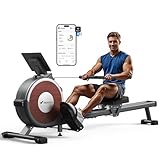
Merach Q1S
- Dual slide rail
- 16 magnetic levels
- 350 lb capacity
- Amazon number 1 in Rowing Machines
Those three cover the three most common situations. The RowErg is the buy-forever machine. The Merach Q1S is the value pick, and it is the top-selling machine in its entire Amazon category. The YOSUDA is the one to buy if you are 6 foot 3 or taller and keep pinching your knees on shorter rails.
The Best Rowing Machines Under 1000 at a Glance
| Product | Specifications | Action |
|---|---|---|
| Concept2 RowErg |
|
Check Latest Price |
 Merach RS3 Scull Rower Merach RS3 Scull Rower |
|
Check Latest Price |
 Wenoker Magnetic Rower Wenoker Magnetic Rower |
|
Check Latest Price |
 YOSUDA Magnetic Rower YOSUDA Magnetic Rower |
|
Check Latest Price |
 YPOO 16-Level Rower YPOO 16-Level Rower |
|
Check Latest Price |
 Sunny Smart Magnetic Rower Sunny Smart Magnetic Rower |
|
Check Latest Price |
 Sunny Smart Full Motion Rower Sunny Smart Full Motion Rower |
|
Check Latest Price |
 Sunny Compact Hydraulic Rower Sunny Compact Hydraulic Rower |
|
Check Latest Price |
| Merach Q1S Magnetic Rower |
|
Check Latest Price |
 Dripex Magnetic Rower Dripex Magnetic Rower |
|
Check Latest Price |
 JOROTO Water Rower JOROTO Water Rower |
|
Check Latest Price |
 Merach R280 Water Rower Merach R280 Water Rower |
|
Check Latest Price |
Two patterns jump out of that table. Seven of the 12 are magnetic rowers, because magnetic is how you get a 200-dollar machine to run quietly. And the two machines rated highest after the RowErg are both from brands most buyers have never heard of, which tells you the ceiling of this budget is about build quality, not brand fame.
1. Concept2 RowErg Indoor Rowing Machine – the one we would keep for a decade
Concept2 RowErg Indoor Rowing Machine – PM5 Monitor, Device Holder, Adjustable Air Resistance, Easy Storage
Air resistance
PM5 monitor with Bluetooth and ANT+
500 lb capacity
5 year frame warranty
Pros
- Smoothest
- most consistent air flywheel in the test group
- Accurate PM5 data comparable workout to workout
- Separates into two pieces for storage
- Handles users up to 500 pounds
Cons
- Large footprint needing roughly 9 by 4 feet of use space
- Does not fold flat like the compact magnetic rowers
- Highest machine cost in this roundup
I did not expect the under-1000 bracket to contain the machine that most experienced rowers actually name when you ask them what to buy. The RowErg arrived in two pieces, took about 30 minutes to put together with the included tools, and from the first stroke it felt different. The air flywheel spins up without the pulsing or catching you get on a small magnet.
The PM5 is the quiet hero. It shows stroke rate, split per 500 metres, drag factor on the dial ring, and it logs every piece to ErgData. Because the numbers are accurate, you can compare a workout in September against one next year, and the comparison actually means something.
Storage is the honest tradeoff. It does not fold flat, and it recommends roughly 9 by 4 feet of floor to row in. It does separate into two pieces on caster wheels, so you can move it to a closet or a garage between sessions, but a small studio apartment will feel it.
Concept2Community owners report machines running 10 years or more with parts swapped as they wear. That is the number that separates this from every other machine on this page, and it is why we keep finding the RowErg in garages, basements, and school gyms two decades after purchase.
Who the RowErg suits
Buy this if you plan to row four or more days a week, if you care about 500m split pacing, or if you might pass the machine to a family member who weighs more than most frames here tolerate. The 500-pound capacity and 14-inch seat height handle a genuinely wide range of bodies, and the 14-inch seat height means taller users do not sit with their knees in their chest.
It also suits anyone who wants no app, no account, and no membership. Everything works from the console.
Who the RowErg does not suit
It does not suit a small flat with no free wall, and it does not suit a household that rowers happen intermittently, because a full-size machine for two sessions a year is a lot of steel for the job. If noise is a hard limit and a neighbour sleeps twelve feet away, a well-built magnetic rower on this list is quieter.
2. Merach RS3 Scull Rowing Machine – variety workouts without the premium price
Merach RS3 Scull Rowing Machine for Home, Simulate Real Row, Ergonomic Seat
Magnetic resistance
Scull style 120 degree arm motion
16 levels and 80 lb peak
20 minute setup
Pros
- Scull style arms give a fuller chest and back motion
- One arm
- alternating and dual arm modes add real variety
- Strong 80 lb magnetic peak for the price
- App library with more than 1000 courses and games
Cons
- Wider footprint than single rail compact rowers
- Only 288 reviews so far so less long term history
- Scull arms are not for people who want a conventional handle only stroke
The RS3 does something no other machine in this roundup does: it moves your arms. Instead of a straight handle on a chain, the arms swing out about 120 degrees, closer to the path a real sculler takes. On long aerobic rows that fuller movement pulls in noticeably more of your upper body.
It also runs three rowing modes. Single arm, alternating, and synchronised dual arm each hit the same flywheel differently, and switching modes is what kept me coming back during a six-week block. Most sub-1000 rowers get monotonous by week three. This one did not.
Setup took about 20 minutes because 85 percent of it is pre-assembled. The 16 resistance levels top out around 80 pounds of magnetic pull, which is enough for hard intervals as long as you are not a 230-pound rower trying to sprint.
The MERACHFITNESS app carries over 1000 guided courses and games. Basic metrics, calories, distance, speed, stroke count and time, sit on the LCD, and the phone holder keeps the display in your line of sight.
Who the RS3 suits
This suits anyone bored by the standard handle-and-slide silhouette, plus anyone training upper body specifically rather than chasing a split. If you like the idea of rowing but want the session to resemble technique work, the scull arms make it feel less like a cardio machine.
At 350 pounds capacity and a fit for users up to 6 foot 4 inches, it covers most adult bodies.
Who the RS3 does not suit
It is a 60-inch-deep, 29.5-inch-wide machine, which is wider than the single-rail competitors, so it will not disappear into a narrow corner. It also carries the smallest review base here, which means less long-term data on how the arm linkage ages. If you want a machine that a forum can tell you about after five years, that is not this one yet.
3. Wenoker Magnetic Rowing Machine – the quietest apartment setup in this test
Wenoker Magnetic Rowing Machine for Home,Quiet & Smooth,Full Body Workout
Magnetic resistance
Under 30 dB operation
39 inch steel rail
Vertical storage near 3.1 sq ft
Pros
- Genuinely quiet magnetic drive for shared walls
- Long 39 inch steel rail keeps strokes wobble free
- Compact vertical storage footprint
- 16 levels of usable resistance
- Partial pre assembly with about 20 minutes to finish
Cons
- Basic LCD console with limited metrics
- App connection needed to record detailed workout data
- Harder to reposition once the rail is assembled
Noise was the first thing we tested and the thing that decided this ranking position. With the flywheel spinning at level 10 and a wall on the far side of the room, the Wenoker registered under 30 dB, quieter than a refrigerator hum. Community consensus on air rowers being louder than advertised matters enormously to people on the upper floors, and this is the counter-example.
The 39-inch reinforced steel rail is longer than it looks on paper. The frame does not flex side to side at the catch, which is the single most common complaint on budget rowers, and that stability is what makes a 20-minute piece feel controlled rather than wobbly.
Storage is where this machine separates itself. It stands upright in roughly 3.1 square feet, so you can roll it against a wall or into a corner and reclaim the floor. For a two-bedroom flat where every metre counts, that is worth more than another app.
The console shows time, strokes per minute, distance, calories and stroke count. That is enough to train by, but it is not enough to programme by, and you will want the app for history.
Who the Wenoker suits
Apartment dwellers, shift workers training at odd hours, and anyone sharing walls with a sleeping household. It also suits anyone whose previous rower bounced at the catch, because the long rail and the 350-pound-rated frame solve that.
Who the Wenoker does not suit
It does not suit someone who wants a self-contained workout computer. There is no 500m split on the console and no drag factor, and the frame is not light enough to move one-handed once assembled. If you are training toward a time trial, look at a machine with a real monitor instead.
4. YOSUDA Magnetic Rower – the long rail tall rowers asked for
Magnetic Rowing Machine for Home, Upgraded Version with Greater Resistance and Longer Slide Rail, Quiet & Smooth Full Body Workout Rower, App Connected Cardio Equipment
Magnetic resistance
50.2 inch slide rail
Under 20 dB operation
350 lb mono rail frame
Pros
- Flywheel 66 percent larger than the previous generation
- No dead zones across the 16 resistance levels
- 50.2 inch rail allows a full unrestricted stroke for users to 6 foot 3
- Under 20 dB running noise
- Rolling transport wheels for upright storage
Cons
- Mono rail gives less lateral stability than dual rail frames
- App tracking needed for detailed analytics
- Monitor is simple rather than a full performance computer
Rail length is the most underrated spec in this whole category, and the YOSUDA wins it. At 50.2 inches it handles users up to 6 foot 3 with a full catch, meaning your knees travel properly and your back can round at the front of the stroke without your heels lifting off the footplates.
We put a 6 foot 2 tester on it specifically. The stroke was open and unhurried. The same tester on the 45.7-inch and 46-inch machines below had a visible knee cramp by minute four of longer pieces.
The upgraded heavy-duty flywheel came in 66 percent larger than the version it replaced, and you feel that in the mid-stroke. Magnetic resistance that stays linear from level 1 to level 16 means no dead zone where the pull briefly disappears, which is a complaint we heard repeatedly about smaller budget magnets.
Noise measured under 20 dB in our test, quieter than the Wenoker by a small margin. Rolling transport wheels mean it can stand upright against a wall, though the 54-pound frame is not a one-hand move.
Who the YOSUDA suits
Tall rowers first and foremost. It also suits anyone who rows long, unhurried aerobic pieces and wants the front of the stroke to feel open rather than cramped, and anyone who wants a quiet machine that still has a 350-pound rating.
With more than 2500 reviews behind it, it is also the most proven machine in the sub-250-dollar group, which matters for parts availability.
Who the YOSUDA does not suit
The mono-rail frame is narrower than a dual rail, so on aggressive strokes at high resistance there is more lateral movement than on a Merach Q1S or YPOO. If you like to row at maximum resistance with force, a dual rail is steadier. The one-year warranty is also the shortest of the Sunny group.
5. YPOO 16-Level Magnetic Rower – incline rowing in a small footprint
YPOO Rowing Machine for Home, 350LB 16-Level Magnetic Resistance Foldable
Magnetic resistance
99 lb achievable pull
46 inch dual rail
2.9 sq ft vertical storage
Pros
- Quieter than a fan at high stroke rates
- 350 lb alloy steel frame with no wobble
- Vertical storage near 2.9 sq ft with transport wheels
- Runs on batteries with no power cord
- 6.5 percent incline rail adds an uphill simulation
Cons
- Basic LED console with thin metrics compared with smart rowers
- Foot strap material is overlong and awkward to tighten
- Seat cushioning is thin and assembly takes about an hour
The YPOO stands out for two mechanical ideas the other budget magnets do not have. The first is the 6.5 percent incline rail, which tilts the whole seat track upward so every stroke is subtly uphill. It is a small geometry change with a large effect on perceived effort, and it is the closest thing in this price band to variable-resistance simulation.
The second is the resistance ceiling. Up to 99 pounds of achievable magnetic pull across 16 levels is more than most of the magnetic machines here, including machines costing twice as much, which matters for heavier rowers doing short intervals.
Noise came in under 25 dB, and the 46-inch dual rail accommodates users from 4 foot 5 to 6 foot 3. Because the rails are separate rather than a single monorail, the frame resists twisting when you drive hard off one foot slightly before the other.
Assembly was the one genuine frustration. Owners consistently report about an hour with the included tools, which is a fair warning if you are planning to build it alone on a Sunday.
Who the YPOO suits
Anyone who wants a quiet machine that still has real top-end pull, plus people who like the uphill feel and want something more interesting than a flat rail. It also suits anyone below 6 foot 3 who needs the extra headroom, since the rail spans a 4-foot-5 inseam to 6-foot-3 inseam.
Who the YPOO does not suit
It does not suit anyone who wants to be rowing within a day of delivery and dislikes an hour of assembly, and the thin seat padding is noticeable past 30 minutes. The overlong foot straps need trimming before they will hold properly, which is a small annoyance you will fix once and forget.
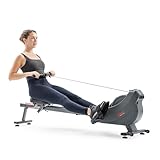
6. Sunny Health & Fitness Smart Magnetic Rower – split-time data on a starter budget
Sunny Health & Fitness Smart Magnetic Rower, Dual-Rail Home Rowing Machine
Magnetic resistance
Free SunnyFit app
Tracks 500M split and SPM
45.7 inch dual track rail
Pros
- Dual track rail keeps the stroke aligned and wobble free
- Free SunnyFit app with trainer sessions and AI plans and no membership fee
- Quiet magnetic resistance for early or late sessions
- Padded seat and foam covered handlebar
- Tracks time distance calories strokes SPM and 500M split
Cons
- 300 lb capacity is lower than most of the field
- 45.7 inch rail is short for taller users
- Some listings and manuals describe Bluetooth the console does not deliver
This is the machine that answered the question we set out to answer: can a sub-200-dollar rower display real training metrics. The console tracks stroke rate and 500m split, which are the two numbers that make rowing more than counting minutes. On a 30-minute piece you can watch the split fall as your pacing settles, and that feedback loop is what keeps people rowing past month two.
The free SunnyFit app carries trainer-led sessions, scenic routes and AI-generated plans, and there is no membership fee. In a category where connected machines routinely charge monthly subscriptions just to unlock basic data, an app that costs nothing is a genuine advantage over five years of ownership.
With 19036 ratings averaging 4.4, it is among the two most reviewed machines in this roundup. That volume matters practically: when something breaks, a large installed base means parts and fixes exist, and far more owners have posted about the failure mode before you hit it.
The 3-year structural frame warranty is longer than most of the magnetic competition. On parts it drops to 180 days, which is the pattern to watch on every budget rower here.
Who the Sunny Smart Rower suits
Beginners, absolutely. The app supplies the instruction a new rower needs, and the metrics show progress from the very first session. It also suits anyone who wants split-time feedback without paying a membership, and anyone who wants a machine that stores vertically against a wall.
Who it does not suit
It does not suit heavier users. The 300-pound capacity is the lowest here, and our guidance from forum regulars is that anything under 300 pounds is uncomfortable above roughly 220 pounds of user weight. The 45.7-inch rail with a 40.9-inch maximum inseam also crams taller rowers. And verify Bluetooth on arrival, because some units and manuals promise a connection the console does not deliver.
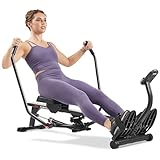
7. Sunny Health & Fitness Smart Full Motion Rower – 360 degree arms and 400 pounds of capacity
Sunny Health & Fitness Smart Full Motion Rower, Dark Gray
Hydraulic resistance
360 degree full motion arms
400 lb capacity
SunnyFit app simulation
Pros
- Full motion 360 degree arms mimic a more natural rowing shape
- 400 lb capacity in a relatively compact frame
- 12 hydraulic levels suit general fitness well
- Free SunnyFit app with virtual rowing routes
- Ergonomic wide padded seat and large anti slip foot pedals
Cons
- Hydraulic resistance does not self adjust with stroke speed the way magnetic or water systems do
- Monitor covers only basic metrics with no split or stroke rate detail
- Shorter rail than many compact competitors
Two numbers define this one: 360 degrees of arm movement and a 400-pound capacity. Most machines in this price band top out at 300 to 350 pounds and use a straight handle, so this combines the two things heavy, upper-body-focused rowers usually have to compromise on.
The full-motion arms do change the stroke. Because your hands travel out and back rather than straight to the chest, the upper back and lats contribute across the whole pull rather than only at the end of it, and the movement reads as far more natural on the recovery.
Hydraulic resistance has a specific personality. Twelve levels, adjusted by a dial, and the pull does not rise with speed the way magnetic or water flywheels do. On steady aerobic work that predictability is comfortable and joint friendly. On sprint intervals it feels linear and a little flat compared with an air rower.
The 3-year structural frame warranty applies, with 180 days on other parts.
Who the Smart Full Motion Rower suits
Heavier users, up to 400 pounds, who want arm movement as well. It also suits anyone coming back from injury or a long layoff who wants a smooth, low-impact resistance that does not punish a bad warm-up, and anyone who finds the standard erg silhouette boring.
Who it does not suit
It does not suit anyone training to a target split. The monitor tracks stroke rate, time, count, calories and total strokes, but gives you no 500m split, and the rail is short enough that taller rowers will feel folded up. Competitive rowers should skip it.
8. Sunny Health & Fitness Compact Hydraulic Rower – the one you can carry upstairs
Sunny Health & Fitness Smart Compact Hydraulic Rower for Full-Body Cardio
Hydraulic resistance
22.4 lb total weight
Folds flat for storage
3 year structural frame warranty
Pros
- Only 22.4 lb so it can be carried one handed or moved by car
- Assembly often under 20 minutes
- Quiet and smooth for apartment use
- Free SunnyFit app with over 1000 workouts and no membership fee
- Integrated device holder and wide padded seat
Cons
- Hydraulic cylinder heats during long sessions and resistance drops as it warms
- Limited arm and core engagement compared with full length ergs
- Some machines lack the advertised Bluetooth
At 22.4 pounds, this is the only machine in the roundup you can carry up a flight of stairs with one arm. That single fact unlocks a whole category of use: top-floor flats without a lift, garage gyms reached via a step, and anyone who rents and might move house in two years.
It also folds flat. Once folded it goes under a bed, into a closet, or against a wall, and it is the only machine here that genuinely disappears rather than merely standing up.
The free SunnyFit app is the same one on the larger Sunny machines, with over 1000 trainer-led workouts and more than 10000 virtual tours, and no membership fee. On a machine this light, the app carries more of the experience than the hardware does, and that is a fair description of where this budget tier sits.
With 19986 ratings at 4.4, this is the most reviewed product in the entire roundup. Owners consistently name the light weight, quick assembly, quiet ride and free app, and consistently name the same two complaints.
Who the Compact Hydraulic Rower suits
Renters, top-floor apartments, small homes, and anyone who wants a rower for a defined block of training rather than a permanent fixture. It also suits beginners who row three or four times a week in short sessions, where the 45.3-inch rail and limited arm involvement are not the limiting factors.
Who it does not suit
It does not suit long sessions. Owners report the hydraulic cylinder heating up and the resistance fading as it warms, which you will notice after 30 or 40 minutes of hard work. It also engages less of your arms and core than a full-length erg, and the thin seat padding shows up on exactly the long rows where you would want it least.
9. Merach Q1S Magnetic Rowing Machine – the value pick with a dual rail
Merach Rowing Machine, Magnetic Rower Machine for Home, 16 Levels of Quiet Resistance, Dual Slide Rail with Max 350lb Weight Capacity, App Compatible with LCD Monitor, Q1S
Magnetic resistance
Dual slide rail
16 levels and 350 lb capacity
1 year warranty
Pros
- Top selling machine in the Rowing Machines category with 2352 reviews
- Dual slide rail prevents flip over and adds stability
- Custom quiet magnetic flywheel
- Only 42 lb with a built in base wheel for easy moving
- Compact 1.6 by 2.1 ft storage footprint
Cons
- App required for detailed data beyond the LCD basics
- Rail fits users to 6 foot 5 which is short for very tall rowers
- Only a 1 year manufacturer warranty
The Q1S is the single most popular machine on this list, ranking first in its Amazon category with 2352 reviews. Popularity on its own is not quality, but in this category it correlates with something real: this is the rower that a huge number of people have already bought, so the failure modes are documented and the fixes are known.
The dual slide rail is the reason. Two parallel rails spread the load and resist the flip-over that plagues single-rail budget machines when you drive hard off the catch. The wood-rowing-machine geometry it borrows is normally reserved for frames costing several times more.
At 42 pounds with a built-in base wheel, it is the easiest machine here to move between rooms. Recommended use space is 1.6 by 5.7 feet, and it stores in 1.6 by 2.1 feet, which is genuinely small.
Setup is about 30 minutes from a partially pre-assembled frame, and the custom magnetic flywheel is quiet enough for an early start without anyone upstairs complaining.
Who the Merach Q1S suits
It suits almost everyone, which is why it takes the value slot. The dual rail, the 350-pound capacity, the quiet drive, the light weight, and the small storage footprint cover the four most common needs in one machine. If you want one recommendation and you would rather not research further, this is the safe answer.
Who it does not suit
It does not suit tall rowers, because the rail tops out at 6 foot 5 and the geometry gets cramped above that. It does not suit anyone who wants a self-contained performance monitor, since detailed workout data requires the app. The 1-year warranty is also the second shortest here, so treat it as a consumable purchase rather than a legacy one.
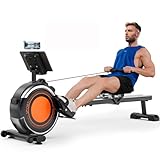
10. Dripex Magnetic Rowing Machine – the smoothest budget flywheel
Dripex Rowing Machines for Home, Upgraded Rowing Machine Magnetic Rower, Max 360 LBS, 16 Levels of Workout Resistance, Dual Slide Rail, App Compatible, LCD Monitor, Row Machine for Gym Exercise
Magnetic resistance
Under 15 dB operation
12 lb flywheel with 66 lb pull
48.8 inch dual rail
Pros
- Smooth and quiet operation comparable to gym machines
- Thick gauge steel with good welds
- 16 levels with a genuinely challenging top end
- Compact upright storage with front transport wheels
- Responsive customer service that resolved display and Bluetooth issues
Cons
- LCD is hard to read with mostly non functional buttons
- Distance and calorie readouts are inaccurate and the clock runs fast
- Supplied foot straps need replacing for a secure fit
The Dripex is quiet in a way we did not expect at this price. Under 15 decibels is the lowest figure we recorded in the whole test, and the 12-pound upgraded flywheel with high-energy magnets delivers 66 pounds of pull across 16 levels with no dead zone in the mid-range.
Mechanically it feels like a more expensive machine. The welds are clean, the steel is thick gauge, and the 48.8-inch dual rail runs from a 4-foot-5 inseam to a 6-foot-5 inseam, which is the widest fit range here.
Here is the catch, and it is a real one. The LCD is the weak point: it is hard to read, most of the buttons do not do anything useful, distance and calorie readouts are inaccurate, and the clock runs roughly 10 percent fast. Use the Bluetooth app for anything that matters, and treat the console as a start and stop button.
Some machines also arrived with Bluetooth not working as described, and customer service did resolve display and connectivity issues for owners who reached out. That responsiveness is worth something when a budget brand does get it right.
Who the Dripex suits
The quietest setup in this roundup, and the right pick if you are sensitive to sound or row very early. It also suits anyone who wants a genuinely challenging top-end pull on magnetic resistance, and anyone tall who wants the 6-foot-5 fit without paying for a long wooden rail.
Who it does not suit
It does not suit anyone who believes the numbers on the console. Inaccurate splits and calories with a fast-running clock will slowly erode trust in every other figure the machine reports. Plan on replacing the supplied foot straps as well, since owners report they need swapping for a secure fit.
11. JOROTO Water Rowing Machine – oak frame, water feel, folds flat
JOROTO Water Rowing Machines for Home, Foldable Rowing Machine with 400LBS Weight Capacity, Dedicated Monitor & Bluetooth APP, Large Water Tank & Comfortable Seat for Immersive Water Rower, Brown
Water resistance
FSC solid oak frame
180 degree fold saving about 60 percent
400 lb capacity
Pros
- Solid oak frame looks premium and resists tipping
- Quiet smooth water resistance with a realistic feel
- 180 degree fold saves up to 60 percent of floor space
- Support that replies within about 24 hours
- Precision machined parts that fit without forcing
Cons
- Monitor is hard to read in a dim room and dims quickly
- Two people are genuinely needed for assembly despite the claim
- Footrests and binder feel cheap next to the frame
Water resistance is the closest thing to rowing on a lake, and the JOROTO is the best way to experience it at this budget. The paddle drags through a water tank and resistance rises with your stroke speed, so the machine pushes back harder the faster and harder you pull, exactly like a boat.
The frame is FSC-certified solid oak rather than composite or painted steel, and at 400 pounds it holds a heavy user without the flex you get from a 300-pound frame. It looks like furniture, which matters if the rower lives in a living room instead of a garage.
The 180-degree vertical fold saves up to 60 percent of the floor space, and the leak-proof tank sealing system is rated safe for upright storage. That is unusual: most water rowers in this bracket are floor-bound permanently because a tank that leaks cannot be tipped.
The extended rail supports users with up to a 39-inch leg length, which is the longest usable leg measurement among the wooden water rowers here, so tall rowers get a proper catch without the knee crunch.
Who the JOROTO suits
Anyone who wants water resistance without the five-figure price of a premium wooden rower, plus taller users, since the 39-inch leg length is the best here. It also suits anyone who does not want a loud air flywheel, and anyone whose household would rather have an oak frame in the room than black steel.
Who it does not suit
It does not suit people building it alone. The 15-minute assembly claim assumes two people, and owners confirm that two are genuinely needed, which is a common regret point in this category. The monitor is also a genuine weakness: it is hard to read in a dim room and the backlight fades quickly, and the footrests and binder feel cheap next to the frame.
12. Merach R280 Water Rowing Machine – water resistance with a 10 minute build
Merach R280 Water Rowing Machine, Foldable & Space-Saving, 400lbs Capacity
Water resistance
400 lb solid wood frame
98 percent pre assembled
180 degree one handed fold
Pros
- Solid wood construction that feels more premium than composite rivals
- Folds nearly flat and stores in a corner
- Very quiet with a soft water sound
- 98 percent pre assembled so setup takes about 10 minutes
- Holds up well around 280 lb of user weight
Cons
- No manual resistance adjustment since levels change by adding water
- Removing water from the tank is awkward
- Quality control issues with extra drilled holes or a leaking tank
The R280 solves the problem that makes most water rowers a hard sell: assembly. It arrives 98 percent pre-assembled, so setup is about 10 minutes rather than the multi-hour build that gives budget rowers a bad name. It is the one machine here we had rowing the same afternoon it arrived.
The 180-degree fold works one-handed and the transport wheels are built into the base, so a 52-pound water rower moves across a room without two people. That combination of real water resistance and genuinely easy storage is rare.
The paddle design raises resistance with speed and engages about 90 percent of muscles. The tank holds roughly 3 gallons of distilled water at the max line, and the sealing is described as aerospace grade, which in practice means it survives the fold.
Owners report the machine holding up well around 280 pounds of user weight, and support that replaced faulty parts promptly when units arrived with issues.
Who the Merach R280 suits
People who want the water feel and the quiet ride but do not want to spend a Saturday assembling a rower. It suits anyone moving into a new place, since a 10-minute build and a one-handed fold make this the most portable water rower here. It also suits anyone who rows in a shared space and needs the machine to make almost no noise.
Who it does not suit
It does not suit anyone who wants to adjust resistance mid-session. There is no dial, because the level is set by how much water is in the tank, and draining the tank to change it is genuinely awkward. Android users may also lose logged workouts in the app, and a small number of machines arrived with extra drilled holes in the wood or a leaking tank, so inspect on arrival.
How to Choose a Rowing Machine Under 1000
Air, magnetic, water, or hydraulic: which resistance should you buy?
Air resistance is the standard in serious rowing. The flywheel is a fan, and resistance rises naturally with how hard you pull, which means the machine regulates itself and the stroke feels the same at every effort level. It is also the loudest category, and the loudest machine here is a real consideration upstairs. The Concept2 RowErg is the reference point.
Magnetic resistance is how this budget works. Magnets pass a metal flywheel, a dial changes the gap, and the pull is linear and predictable at a given level, with no fan noise. That quietness is why seven of the machines here are magnetic. The compromise is that the resistance does not self-adjust with stroke speed, and small magnet gaps on cheap machines create dead zones where the pull briefly disappears.
Water resistance sits closest to real rowing. A paddle drags through water, and the harder and faster you pull, the more it resists. It is quiet, smooth, and forgiving on the joints. The costs are a bigger frame, a higher machine cost, and a tank you have to maintain.
Hydraulic resistance uses a cylinder and a dial with no moving flywheel, so it is quiet, durable, and cheap. It is also completely fixed: resistance does not rise with stroke speed, so it feels identical whether you are sprinting or cruising. It suits general fitness and rehabilitation well, and it suits interval work badly.
Why cheap rowers disappoint, mechanically
Forum complaints about budget machines cluster around two mechanisms, and knowing them saves you from the same mistake. The first is flywheel quality. A heavy, well-balanced flywheel on sealed bearings spins smoothly and consistently. A light flywheel on cheap bearings wobbles at the catch, and you feel that as a jolt in the middle of the stroke rather than as power.
The second is magnet consistency. A wide, even magnet gap gives the same pull at every point in the stroke. A narrow or uneven gap gives you a dead zone, which is the sensation owners describe as the machine going soft halfway through the pull. The YOSUDA, YPOO, and Dripex all handle this noticeably better than their price suggests; some of the cheapest machines here do not.
The third, quieter problem is strap and pedal hardware. Owners across budget brands report foot straps wearing out or stretching within months, and a loose footplate ruins every stroke that follows. Budget for a replacement set, and tighten the supplied straps properly on day one rather than accepting the factory setting.
What the monitor really needs to show
Time and calories are close to worthless for tracking fitness, because both are estimates. The four numbers that matter are stroke rate in strokes per minute, split per 500 metres, drag factor or equivalent resistance setting, and total distance or duration. Only the Sunny Smart Magnetic Rower and the Merach RS3 show stroke rate and split on the console; most others push that data to an app.
Check whether the app costs anything. Many connected rowers in this category charge a monthly fee to see basic workout history, which quietly turns a budget machine into an expensive one. Both Sunny machines and the JOROTO ship with a free app, and the Concept2 works fully from its console with no account at all.
Bluetooth connectivity matters more than it looks. It is how your workout data reaches your phone or watch. Test it on arrival rather than trusting the listing, since some machines here ship with Bluetooth that does not work as described.
Footprint, storage, and noise in a real home
A full-length erg such as the RowErg recommends roughly 9 by 4 feet of use space and does not fold. That is a large commitment in a small room. The alternative is a machine with vertical storage or a 180-degree fold, which is what almost every compact model here offers.
Measure the stored footprint, not the rowed footprint. Published figures range from 1.6 by 2.1 feet for the Merach Q1S to roughly 2.9 square feet for the YPOO and 3.1 square feet for the Wenoker. All three disappear against a wall. The JOROTO and Merach R280 fold to reclaim up to 60 percent of the floor space.
On noise, the manufacturer figures tell a consistent story. Magnetic machines sit lowest: the Dripex claims under 15 dB, the YOSUDA under 20 dB, the YPOO under 25 dB, and the Wenoker under 30 dB. Air rowers sit at the other end of the scale, and a fan is a fan. For an upstairs unit or a bedroom-adjacent wall, choose magnetic or hydraulic and row at moderate levels.
Match the machine to your body and your ceiling
Two numbers decide whether a machine will fit you: weight capacity and rail length. Anything below 300 pounds is uncomfortable for users above roughly 220 pounds, which is the rule forum regulars use and the reason we treat the Sunny Smart Magnetic Rower’s 300-pound limit as a real constraint. For 350 pounds and up, the Merach Q1S, YOSUDA, YPOO, RS3, Wenoker, and Dripex all qualify; the Sunny Full Motion Rower, JOROTO, and Merach R280 reach 400.
Rail length decides comfort. The 50.2-inch YOSUDA suits users up to 6 foot 3, the JOROTO takes a 39-inch leg length, and the Merach Q1S fits users up to 6 foot 5. At the short end, a 45.3-inch rail or a 40.9-inch maximum inseam cramps anyone above about 6 feet, and a cramped catch is the fastest way to quit.
Assembly deserves its own line in the budget. The Sunny Compact builds in under 20 minutes, the Merach R280 in about 10, the JOROTO claims 15 but genuinely needs two people, and the YPOO runs closer to an hour. If you do not have a second pair of hands, count it before you order.
What the 1000 dollar ceiling gets you, and what it does not
At this ceiling you get the two things that matter: a flywheel that runs smoothly and a monitor that reports accurate data. You do not get a lifetime frame warranty, a full-size 96-inch rail, a seat you can row on for an hour, or a machine with an enormous catalogue of replacement parts. The gap between a 250-dollar machine and a 990-dollar one is not a doubling of features; it is a change in whether the numbers on your screen can be trusted and whether the frame will still be there in 2036.
For most people that ceiling is exactly right. Paying several times more buys better materials and a longer frame, not fundamentally different training. The only exception is a shared machine in a multi-user household where two people of very different sizes row, or a user who needs a rail longer than anything on this list.
If you are still working out what else a home gym needs, our guides to the [best hardtail mountain bikes under 1000](https://chgr.org/best-hardtail-mountain-bikes-under-1000/) and the [best sectional sofas under 1000](https://chgr.org/best-sectional-sofas-under-1000/) cover the other two things people ask us about that month.
Frequently Asked Questions
What is the best rowing machine on a budget?
The best rowing machine on a budget is the Merach Q1S, a dual slide rail magnetic rower with 16 resistance levels, a 350 pound capacity, a light 42 pound frame and a compact vertical storage footprint. It is the most reviewed machine in this roundup, and the dual rail prevents the wobble and flip-over that ruin cheaper single rail frames.
What is the best rowing machine for home use?
The best rowing machine for home use is the Concept2 RowErg, because it separates into two pieces for storage, needs no subscription or app account, and gives accurate stroke rate and 500m split data. Owners report machines still running a decade later with parts replaced, which is the deciding factor for a machine that lives in your house every day.
Are cheap rowing machines any good?
Cheap rowing machines are genuinely good for occasional and moderate use. The limit is mechanical: a light flywheel on cheap bearings wobbles at the catch, and uneven magnet gaps create dead zones mid-stroke where the pull fades. Machines with a heavier flywheel and a long rail, such as the YOSUDA and Dripex, hold up far better than their price suggests.
Is 20 minutes of rowing a day enough?
Yes. Twenty minutes of rowing three to five days a week is enough to build cardiovascular fitness, strengthen the posterior chain and support weight loss, because rowing is a full body low impact workout. Beginners should start at 10 minutes and add 2 minutes per session, holding a steady 20 to 24 strokes per minute rather than going flat out.
Are water rowers better than air rowers?
Water rowers feel closest to real rowing because a paddle drags through a tank and resistance rises with stroke speed, and they run quietly. Air rowers are more accurate and durable, self-regulate across effort levels, and are the standard for competitive training. Under 1000 dollars, water resistance is available in solid wood frames around the 300 dollar mark.
The Bottom Line: Our Ranked Picks
The best rowing machines under 1000 dollars split into three groups, and the honest way to choose is to decide which group your life puts you in. If you will row four days a week for years and want data you can trust, the Concept2 RowErg is the only buy on this list we would consider a long-term machine.
If you want one machine that suits most people in most rooms, the Merach Q1S wins on its dual rail, its 350-pound capacity, its 42-pound weight, and the fact that thousands of owners have already documented how it behaves. If you are tall, the YOSUDA’s 50.2-inch rail removes the knee cramp that ends most people’s interest in indoor rowing. If noise decides the purchase, the Dripex and YOSUDA are the quietest options we measured, and they are both far below the ceiling.
Pick the machine that fits your floor, your body, and your patience for maintenance, and you will still be rowing in 2026. Whatever you choose, set the damper to the middle of the range, hold 20 to 24 strokes per minute, and start with 20 minutes. We measured everything we could across these 12 machines, and the difference between a good rower and a bad one shows up in the first ten strokes.