
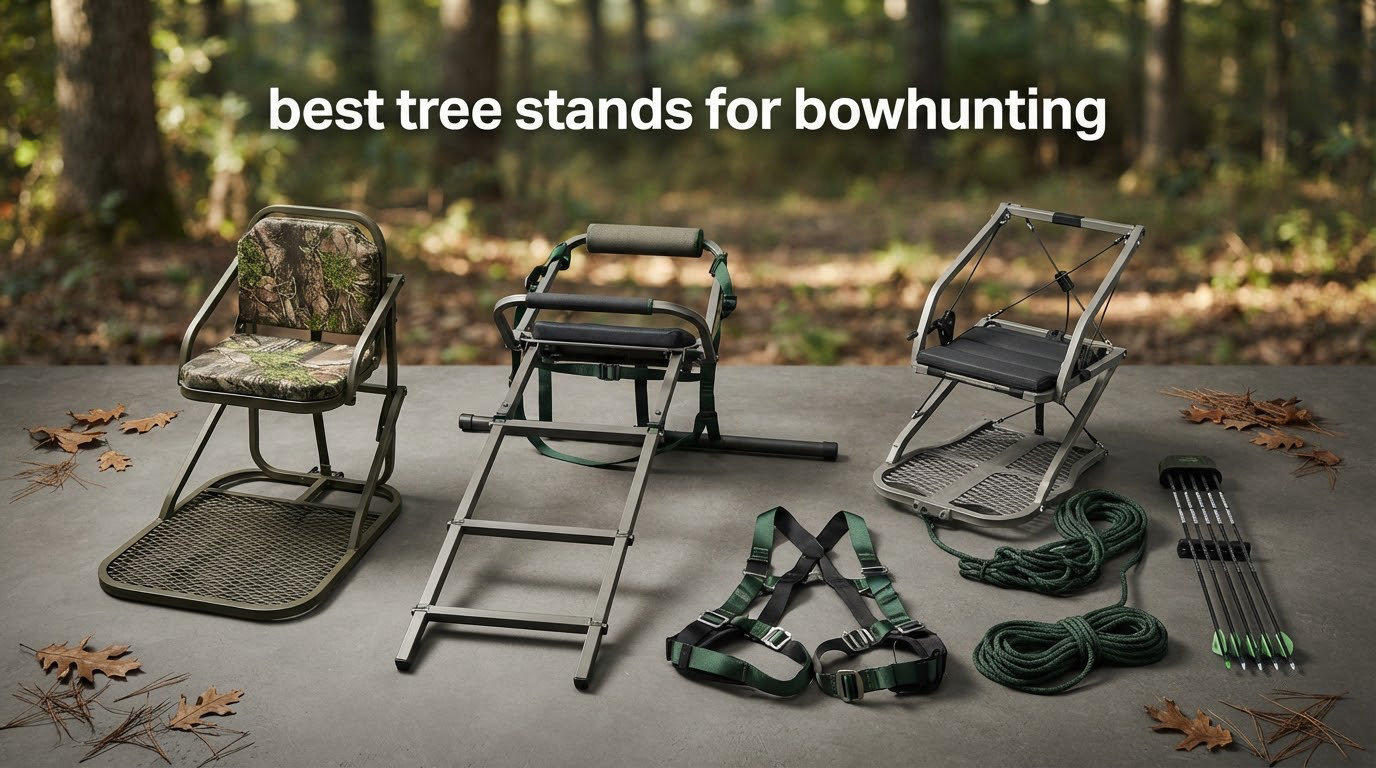
Stand type is the single decision that matters when buying the best tree stands for bowhunting. Climbing stands let you follow fresh sign to a straight trunk, hang-on stands go up on a prepared kill tree and stay there all season, and ladder stands trade weight for the easiest, most comfortable access you will find in a tree. Add an elevated platform for open country with no trees worth climbing, and you have four very different tools for the same job.
I have compared every stand in this roundup on the specifications that actually change how a hunt goes: pack weight, platform width and depth, weight rating, seat type, and whether the frame is quiet. Last updated for 2026 with current manufacturer specifications and reviewer feedback.
One warning before the picks. Amazon star ratings in this category are close to meaningless. You will see legitimate, well-built stands sitting at 2.8 stars next to others at 4.6, and the reason is almost never build quality. Buyers are rating fit. A hunter with a 40-inch waist rates a compact climber low, and a hunter with a 38-inch waist rates the same stand 4.8. Look at the weight rating, the platform dimensions and the strap system instead, which is what the rest of this guide does. If you want more on climbing stands specifically, our climbing tree stand guide goes deeper on that one category.
How we chose: every stand below comes from a major hunting brand with published specifications, carries a documented weight rating and has enough owner feedback to judge build consistency. We separated measured specifications (weight, platform size, capacity) from opinion (comfort, quietness, ease of setup) throughout.
Table of Contents
- Top 3 Tree Stands for Bowhunting in 2026
- The Best Tree Stands for Bowhunting at a Glance
- 1. Summit Treestands Viper SD Climbing Treestand
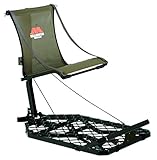
- 2. Millennium Treestands Monster Hang-on Treestand
- 3. Guide Gear 16.5 ft 2-Man Ladder Tree Stand
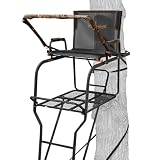
- 4. Big Game Hunter HD 1.5 Ladder Climbing Tree Stand
- 5. Millennium Treestands M100U Ultralite Tree Stand
- 6. Big Game Captain XC 1-Person Hang-On Treestand
- 7. Muddy 1-Person Huntsman Deluxe Steel Ladder Tree Stand, 17 ft
- 8. Summit Treestands OpenShot SD Climbing Treestand
- 9. Muddy Hunting Hang On Tree Stand
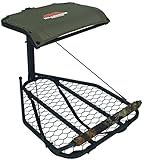
- 10. Millennium Treestands M50 Hang-On
- 11. Hawk Mega Combat Hang On Tree Stand
- 12. Summit Treestands Ledge XT Hang-on Tree Stand
- Climbing vs Hang-On vs Ladder vs Saddle: Which Stand Type Fits Your Hunt
- How to Choose a Bowhunting Tree Stand: 7 Criteria That Matter
- Stand Height and Shot Angles: Why 17 to 22 Feet Is the Window
- How to Hang a Stand Safely and What to Inspect Each Season
- Frequently Asked Questions
- What is the recommended tree stand height for bow hunting?
- Do you aim higher or lower from a tree stand?
- What weight rating do I need for a bowhunting treestand?
- Can you bow hunt from a ladder stand?
- Are climbing stands good for bow hunting?
- What is the best ladder stand for bowhunting?
- Is it better to hunt from a blind or a tree stand?
- How do I hang a hang-on tree stand?
- Final Verdict: Which Tree Stand You Should Buy
Top 3 Tree Stands for Bowhunting in 2026
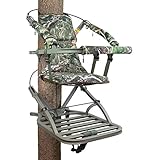
Summit Viper SD Climber
- 28 lb aluminum frame
- Suspended foam-padded seat
- 5-year limited warranty
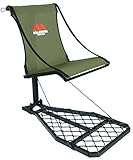
Millennium M100U Ultralite
- 11.5 lb folding frame
- 20 x 38 in platform
- Included SafeLink lifeline
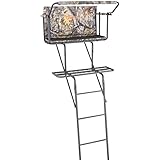
Guide Gear 16.5 ft 2-Man Ladder
- Rated to 500 lb
- 38 x 12 in seat and rail
- Two harnesses included
The Best Tree Stands for Bowhunting at a Glance
Twelve stands, grouped by the role each one plays. Weight is the number to watch first: it decides whether a stand is a pre-set tool or something you can carry to new ground every morning.
| Product | Specifications | Action |
|---|---|---|
| Summit Viper SD Climbing Treestand |
|
Check Latest Price |
 Millennium Monster Hang-on Millennium Monster Hang-on |
|
Check Latest Price |
| Guide Gear 16.5 ft 2-Man Ladder Stand |
|
Check Latest Price |
 Big Game Hunter HD 1.5 Ladder Stand Big Game Hunter HD 1.5 Ladder Stand |
|
Check Latest Price |
| Millennium M100U Ultralite |
|
Check Latest Price |
 Big Game Captain XC Hang-On Big Game Captain XC Hang-On |
|
Check Latest Price |
 Muddy Huntsman Deluxe 17 ft Ladder Muddy Huntsman Deluxe 17 ft Ladder |
|
Check Latest Price |
 Summit OpenShot SD Climber Summit OpenShot SD Climber |
|
Check Latest Price |
 Muddy Hang On Tree Stand Muddy Hang On Tree Stand |
|
Check Latest Price |
 Millennium M50 Hang-On Millennium M50 Hang-On |
|
Check Latest Price |
 Hawk Mega Combat Hang-On Hawk Mega Combat Hang-On |
|
Check Latest Price |
 Summit Ledge XT Hang-On Summit Ledge XT Hang-On |
|
Check Latest Price |
1. Summit Treestands Viper SD Climbing Treestand
Summit Treestands 81120 Viper SD Climbing Treestand, Mossy Oak
28 lb aluminum climber
Suspended foam-padded seat
Padded armrests and backrest
5-year limited warranty
Pros
- Lightweight aluminum frame is easy to transport and climb
- Suspended foam-padded seat with backrest and armrests
- Largest review base in the roundup at 4.8 stars across 1528 reviews
- Backed by a 5-year limited warranty
Cons
- At 28 pounds it is among the heavier climbers here
- Climbing gear and a full-body harness are required to use it safely
The Viper SD is the stand I keep coming back to for hunters who want one climber and do not want to think about it again. The frame is aluminum, which is why a full climbing stand arrives at 28 pounds rather than the 60-plus pounds of the steel ladder stands in this guide, and that difference is what makes a walk to a distant oak realistic.
The seat is the reason it holds a 4.8 average across more than 1500 reviews. A suspended foam-padded seat with a cushioned backrest and padded armrests spreads your weight instead of letting it hang on the frame edges, and suspension also kills the rattle that makes cheap stands squeak in cold air. Bowhunters in particular like that the padding does not compress into a hard edge by hour four.
Measured specifications first, opinion second. The stand is listed at 28 pounds with package dimensions of 36.5 x 23 x 19 inches, built by Pradco Outdoor Brands in aluminum with foam fill, and backed by a 5-year limited warranty. The rating distribution behind that 4.8 is 86 percent five-star, 10 percent four-star and only 1 percent one-star, which is unusually clean for a climbing stand where size complaints usually show up.
The obvious trade-off is weight. Twenty-eight pounds is manageable on a marked trail and genuinely heavy on a 300-yard carry across rough ground, and it is heavy for hunters who plan to run and gun. Climbers also demand real technique: a full-body harness, a lifeline from the ground up, and never carrying your bow while you climb.
What the 4.8 Rating and 1528 Reviews Actually Tell You
Review volume matters here. Most climbers on the market have a few hundred reviews at most, and in this category a low score often means the stand did not fit the buyer rather than that the stand failed. With 1528 reviews and only a 1 percent one-star share, the signal here is closer to a real consensus than to a fit complaint.
That said, the recurring thread in the reviews is comfort and the frame itself rather than the climbing system. Nobody is describing a wobble or a strap failure at any meaningful rate, and the sustained comfort of the seat is what the reviews keep returning to rather than the climbing system itself.
Who Should Look at a Lighter Climber Instead
If your hunting is hang-and-hunt on public land, weight dominates every other consideration. Twenty-eight pounds plus a bow plus climbing sticks adds up to a load most people will feel after the second mile, and the OpenShot SD at 15 pounds or the M100U at 11.5 pounds solve a problem the Viper SD does not try to.
Conversely, if you have one reliable tree and want maximum comfort for a four-hour sit, the Viper SD is the better buy. You are paying about 12 pounds over the lightest options in exchange for a suspended seat that stays comfortable, and that trade works in private timber.
2. Millennium Treestands Monster Hang-on Treestand
Millennium Treestands Monster Hang-on Treestand
19 lb aluminum hang-on
24 x 37 in platform
300 lb weight rating
Included 35 ft SafeLink lifeline
Pros
- Height-adjustable comfortMAX seat with a full backrest
- 24 x 37 inch platform gives room to reposition
- Includes a 35-foot SafeLink rope with Prusik knot and carabiner
- Adjusts for trees leaning up to 15 degrees
Cons
- Heavier than most hang-ons at 19 pounds
- Folding seat is awkward to raise while fully geared
The Monster Hang-on is the most comfortable hang-on in this roundup, and the reason is size. A 24 x 37 inch platform with a 24 x 20 inch seat leaves room to cross your legs, shift position and settle in for a long sit, which almost no budget hang-on gives you. Seat height adjusts between 16 and 20 inches, so a standing shot is a matter of setting the height before you climb rather than fighting the seat afterward.
Reviewers single out two things: the sling seat and the included lifeline. The 35-foot SafeLink rope with a Prusik knot and carabiner comes in the box, which removes the most common excuse for not hanging a hang-on, and the comfortMAX sling seat does not hold moisture the way a mesh seat does in a wet October.
On specifications: 19 pounds, aluminum with a durable powder coat finish, a 300-pound weight rating, and adjustment for trees leaning up to 15 degrees. That lean tolerance is a real feature in mixed timber, and it is one of the reasons this stand works where a strictly vertical hang-on would not. The 4.8 average comes from 354 reviews, with 88 percent five-star.
Two limits are worth planning around. Nineteen pounds is at the top of the hang-on weight range, so this is a stand for prepared trees within a reasonable walk rather than a run-and-gun tool. And the seat folds up to free the whole platform for standing shots, which is excellent in principle but awkward when you are wearing layers and a release aid.
When Platform Depth Decides the Purchase
Twenty-four inches wide by 37 deep is the deepest platform among the hang-ons here, and depth is what lets a bowhunter set up a stable draw. A quartering-away shot at 25 yards means rotating your whole body, and a shallow platform forces you to stand up and reset instead. If your hunting is archery-first, this depth is the spec that matters.
The flip side is honest: a 37-inch-deep platform on a 19-pound stand is a lot of hardware to carry. If you are walking a mile to a public land spot every morning, look at a 20 x 38 inch platform on a folding frame that weighs 11.5 pounds and accepts the same kind of shot with less total mass.
Who This Stand Is Not For
Small-pack hunters and anyone who must carry a stand across rough terrain more than once a day. Nineteen pounds is a full load before you add a bow, arrows, a climbing stick set and a harness, and no amount of comfort compensates for a stand you leave at the trailhead.
It is also a poor fit for trees that lean hard. Fifteen degrees of adjustment is generous but not unlimited, and beyond that you want a stand with a ratcheting mount that pulls tight against the trunk, like the M50 covered later in this guide.
3. Guide Gear 16.5 ft 2-Man Ladder Tree Stand
Guide Gear 16.5′ 2-Man Ladder Tree Stand for Hunting Elevated Climbing Seat Hunting Gear Equipment Accessories RT APX
Rated to 500 lb
16.5 ft to the flip-up rail
38 x 12 in seat and foot platform
Two harnesses and ratchet straps included
Pros
- Two-person capacity at a 500-pound total rating
- Flip-up padded shooting rail at 16.5 feet
- Two harness systems and ratchet straps in the box
- Straightforward assembly with all hardware included
Cons
- Very heavy at roughly 80 pounds and awkward to carry far
- Uneven ladder rung spacing makes foot placement awkward
- Some arrive with chipped paint and surface rust
- Included straps and fabric are basic and commonly upgraded
This is the stand to buy if you are taking a kid, a parent or a hunting partner up a tree, or if you simply do not want to climb a ladder alone in November. A 500-pound total rating means two adults in full gear with margin, and the flip-up padded rail lifts out of the way when you want open sightlines down a lane.
The padded seat with shooting rail measures 38 x 12 inches, matched by a 38 x 12 inch foot platform, so each hunter has real standing room for a bow draw rather than a perch. It is the widest platform of any ladder stand in this guide, simply because of that width. Platform footprint is the same sizing logic behind our extra large trunk stand roundup, just scaled to a different job.
Specifications: steel frame, listed at 80.3 pounds, 16.5 feet to the shooting rail, 500-pound capacity, and two full harness systems with ratchet straps included. It ranks in the top tier of the Hunting Tree Stands category, and the 4.6 average comes from 306 reviews with 70 percent five-star.
Read the weight number before anything else. Eighty pounds is a two-person carry and a two-person setup, and the reviews are blunt that uneven rung spacing makes the climb less graceful than it looks in a photo. A few buyers also report chipped paint and surface rust on welds and rails on arrival, so inspect the frame before you hang it.
Is a Two-Person Ladder Stand Worth the Extra Weight
For a mentoring setup, yes. Two hunters sharing one stand cuts the number of trees you have to scout, and a padded seat with a flip-up rail is far easier to share than two narrow hang-ons, because you can lift the rail out of the way instead of squeezing past it. The 38 x 12 inch platform is the difference between a clean standing draw and a cramped one.
For a solo hunter who is strong and mobile, no. You are carrying eighty pounds to a tree that a 20-pound hang-on would serve, and the ladder is far more conspicuous in the woods, which means it needs to go up well before season. Bowhunters on forums consistently warn that deer notice a ladder stand sooner than they notice a hang-on.
What to Check Before You Hang It
Sort the hardware before assembly and expect the basic straps to need replacing. Owners regularly upgrade to heavier ratchet straps, and the included fabric and straps are the first thing that fails after a season of weather. Do that swap before the first hunt, not after a strap lets go.
Also measure your climbing space. Uneven rung spacing is the most common physical complaint, and if you are hunting with someone younger or less sure on a ladder, practice the climb with an empty pack first. A 16.5 foot ladder is not the place to improvise.
4. Big Game Hunter HD 1.5 Ladder Climbing Tree Stand
Big Game 1-Person Ladder Tree Stand for Hunting Deer with Seat, Hunter, 18′ Tall, Black – Adjustable Climbing Treestand with Platform and Safety Harness for Shooting
350 lb weight rating
23 x 18 in Flex-Tek seat
23.5 x 29 in flip-back platform
Includes full-body fall arrest system
Pros
- Extra-wide contoured Flex-Tek seat handles multi-hour sits
- Roomy 23.5 x 29 inch platform gives room to stand
- Quiet footrest and rail
- Includes ratchet straps
- stabilizer straps and a fall arrest harness
Cons
- Difficult assembly with weak instructions
- About 70 pounds means a two-person carry
- Inconsistent quality control on some pieces
- Shooting rail padding is thin
The Hunter HD 1.5 earns its place on seat size. A 23 x 18 inch contoured Flex-Tek seat is genuinely wide for a ladder stand, and it is the number reviewers praise most, particularly for hunters who spend long hours on a food-source ridge in late season.
The platform is 23.5 inches wide by 29 inches deep and flips back, which gives a bowhunter a clear lane for a standing draw. The adjustable and removable padded rail works for bow, crossbow or gun, so the same stand serves an entire season with different equipment.
Specifications: steel, 350-pound weight rating, listed at 70.1 pounds, with two 1-inch ratchet straps, two 1-inch stabilizer straps and a full-body fall arrest system in the box. The 350-pound rating is the highest single-hunter capacity here and it matters for larger hunters who feel unsafe at 300 pounds.
The rating is 4.0 across 684 reviews, the widest review base after the Viper SD, and the 13 percent one-star share is the reason we place it fourth rather than higher. Those one-star reviews cluster around assembly difficulty, missing parts and thin rail padding, which is a quality control problem rather than a design problem.
How to Read a 4.0 Star Rating on a Stand With 684 Reviews
That 13 percent one-star share is the single most important number on this product, and it is worth understanding rather than dismissing. The complaints are about the packing and the instructions, not about the frame failing under weight or a strap letting go. That pattern is typical of a budget-priced ladder stand with a high-volume assembly line.
Sorting the hardware and following a setup video instead of the printed sheet removes most of the complaint, which is why the same buyers rate the finished product highly. If you are willing to spend twenty minutes sorting bolts before you start, the rating ceiling here is much higher than 4.0 suggests.
Who Should Buy This Instead of the Guide Gear Two-Person
Solo hunters and larger-framed hunters. At 350 pounds, this is the highest single-hunter capacity in the guide, and the 23 x 18 inch contoured seat has more usable width than most two-person setups offer one person. A 500-pound two-man stand is unnecessary if you hunt alone, and a 300-pound hang-on is a poor fit above that weight.
Skip it if you hunt with a partner regularly and want shared rail space, or if you cannot recruit a second person for the carry. Seventy pounds on a single shoulder is a long walk, and the reviews make no secret that setup takes two.
5. Millennium Treestands M100U Ultralite Tree Stand
Millennium Treestands M100U Ultralite Tree Stand
11.5 lb folding hang-on
20 x 38 in platform
300 lb weight rating
Included SafeLink lifeline and harness
Pros
- About 11.5 pounds and folds flat with backpack straps
- Repeatedly called the most comfortable hang-on seat available
- Quick and quiet setup
- Includes a SafeLink lifeline and a TMA-recognized full-body harness
Cons
- Receiver mount alone leaves slight wobble without a bottom strap
- Optional ratcheting socket hardware adds weight and cost
- Mesh sling seat needs an insulated pad in cold weather
Eleven and a half pounds is the number that makes the M100U a different category of stand. It is roughly 20 percent lighter than the original M100, it folds flat, and it comes with backpack straps, so a hunter can carry a full hang-on rig on their back instead of in one hand. For public land, follow sign, or any hunt where the tree is not guaranteed to be where you left it, that is the whole argument.
The sling seat is the other half of the appeal. Owners with long seasons behind these stands describe it as the reference point for hang-on comfort, and the fold-up seat clears the full platform for standing shots. The 20 x 38 inch platform is deep for a stand this light.
Specifications: aluminum with a durable powder coat, 300-pound rating, listed at 11.5 pounds with dimensions of 38 x 20 x 5 inches, seat 22 x 16 inches, seat height 17 inches. A 4.7 average across 258 reviews, with 85 percent five-star. The SafeLink 35-foot rope with Prusik knot and carabiner is included, and the build is TMA-recognized.
The one recurring fix is a bottom strap. The receiver system alone leaves a little movement in the frame, and experienced hunters add a strap or cam buckle under the platform to kill it, which costs a few ounces and removes the last complaint. In winter, the mesh sling seat is worth pairing with an insulated pad.
Why Pack Weight Decides More Than Comfort
Forum consensus across bowhunting communities lands in the same place this product does: a 16 to 20 pound steel hang-on is miserable to carry, and an aluminum stand in the 10 to 12 pound range is the consensus preference for anything that gets moved. The M100U’s 11.5 pounds sits at the bottom of the hang-on weight range, and that is not an accident of the spec sheet, it is the reason the stand exists.
The practical test is simple. If you can carry it to a tree at the end of a 400-yard day, you will use it. If the weight makes you pick an easier tree, the stand quietly limits where you hunt. Lighter gear gets used on better ground.
What to Add Before the First Climb
Add a bottom strap, full stop. It is the single most common upgrade in the reviews and the cheapest one, and it converts a slightly loose frame into a solid platform that does not shift when you draw. Skipping it is how good stands get a bad reputation for wobble.
Add an insulated seat pad if you will be in the stand in cold weather, since the mesh sling sheds heat faster than foam. Everything else the stand needs, including the lifeline and a TMA-recognized full-body harness, is already in the box.
6. Big Game Captain XC 1-Person Hang-On Treestand
Big Game Captain XC 1-Person Hang-On Treestand with Flex-Tek Seat
Steel hang-on frame
Supports up to 300 lb
Flip-back Flex-Tek seat
2-inch nylon strap included
Pros
- Solid feel at a budget price point
- Flip-back seat opens the full platform for standing shots
- Quick to assemble in about 15 to 30 minutes
- Foot platform has ample space
Cons
- Mesh seat bars get uncomfortable after a couple of hours for larger hunters
- Thin coating rusts at welds and cut ends after a month or two
- Included nylon strap and harness are not trusted by many
- Some arrive with missing or broken parts
The Captain XC is the entry point for a first hang-on stand, and the reason is that it does the basic job without pretending to be a premium frame. Steel construction, a flip-back Flex-Tek seat that opens the full platform, and a foot platform with enough space to stand for a bow shot. Assembly is typically 15 to 30 minutes, which is a real advantage over the two-hour ladder builds in this guide.
For a hunter who wants one hang-on on one prepared tree, it does the job at a fraction of the cost of an aluminum premium model. The value hunters on bowhunting forums describe are exactly this: cheaper Big Game and Guide Gear stands for private land pre-set use, rather than one expensive stand carried everywhere.
Specifications: steel, 300-pound weight rating, one-year limited warranty, listed dimensions of 32.25 by 24.25 by 3.25 inches, and it includes a 2-inch nylon strap with a slide buckle. The 4.2 average comes from 205 reviews, with 59 percent five-star and 6 percent one-star.
The coating is the weak point. Owners report rust at welds and cut ends after a month or two outdoors, so if you store this stand through a wet season, treat the bare metal before it goes up. The included nylon strap and harness also draw repeated criticism, and most owners upgrade to ratchet straps before the first serious sit.
When a Budget Hang-on Is the Right Answer
When the stand is going on one tree and staying there. If you are pre-setting a kill tree on private land and walking to it once a day, weight and fold-flat design are worth nothing to you, and a steel frame that rusts slowly in a shaded tree costs you nothing either. In that use case the Captain XC is a sensible buy.
It is the wrong buy for a hunter on public land who moves daily. A thin coating, a basic strap and a mesh seat that gets uncomfortable after a couple of hours for larger frames all work against the mobility use case, and the frame does not fold flat for packing.
Two Upgrades That Fix Most Complaints
Replace the nylon strap with ratchet straps, and the seat discomfort mostly disappears for everyone under average frame size. The strap is the safety item that matters most, and reviewers are consistent that the included one is not the strap they would trust overhead.
Touch up the welds and cut ends with paint or a rust-inhibiting coating before the first hang. That is fifteen minutes of work that directly addresses the single most common complaint in the reviews, and it also keeps the warranty terms in your favor by avoiding untreated corrosion.
7. Muddy 1-Person Huntsman Deluxe Steel Ladder Tree Stand, 17 ft
Muddy 1-Person Huntsman Deluxe Steel Ladder Tree Stand, 17 ft Tall
17 ft steel ladder stand
22 x 17 in seat, 19 x 25 in footrest
Silencer Technology, no metal-on-metal contact
300 lb rating
Pros
- Quiet steel ladder stand built for long sits
- Two-way padded rail adjusts for bow or rifle
- Stable flip-back seat platform
- Owners report it holds up through winter weather
Cons
- Assembly often takes two hours or more with poor instructions
- Heavy at 64 pounds and needs multiple people
- Some parts arrive in fluorescent orange that buyers repaint
- Compact platform feels tight for larger hunters
Quiet is the word that comes up most often for the Huntsman Deluxe, and it is a specific design claim rather than a general impression. Silencer Technology means the frame is built with no metal-on-metal contact points, which is the exact failure hunters complain about most: the squeak of a cold stand being climbed into or collapsed at dawn.
Deer hearing is the reason this matters. Forum hunters describe metal-on-metal squeak as deer-killing, and a stand that stays silent while you settle in gives you minutes of extra stillness. The two-way padded shooting rail also adjusts, so the same stand works for a bow season and a rifle season.
Specifications: steel frame, 17 feet tall, 300-pound rating, seat measuring 22 x 17 x 19 inches and a 19 x 25 inch footrest, with a full-body fall arrest system and climbing belt included. Listed at 64 pounds with a one-year limited warranty. The 4.5 average comes from 241 reviews, 76 percent five-star.
The platform is deliberately compact for stealth, and that is a real trade-off for bowhunters. A tighter platform is easier to hide in brushy cover and better for following the contours of a tree, but it leaves less room to stand and shift for a draw. Larger hunters flag this consistently in the reviews.
Why a Quiet Frame Is Worth Paying For
Cold-weather squeak is not a minor annoyance in this sport. Every rattle in the frame when you climb in, shift position or stand to shoot announces a moving animal to deer that are already looking for movement. A stand with no metal-on-metal contact points removes one of the most common sources of that noise before you ever think about movement discipline.
This is also why the compact platform is not purely a cost-saving measure. Less frame means fewer joints and fewer surfaces that can rattle, and hunters in thick cover value a platform that disappears into the branches when a deer looks up.
Is the Assembly Really That Bad
Buyers consistently report two hours or more with poor instructions, so plan for it. Budget an evening, sort the hardware, and repaint the fluorescent orange parts before you hang it, because many owners consider the shipped color a deal breaker on a stand they intend to sit in all season.
At 64 pounds it is a two-person carry and a two-person setup, and the compact platform tightens the fit for larger frames. If you hunt alone and your body size runs large, the 38 x 12 inch platform on the Guide Gear two-man stand gives you more room to work.
8. Summit Treestands OpenShot SD Climbing Treestand
Summit Treestands OpenShot SD Climbing Treestand, Mossy Oak
15 lb aluminum open-front climber
No front rail for a clear bow lane
Fold-up seat with foam pad
5-year limited warranty
Pros
- Open front with no rail for vertical bow shots and quiet movement
- Light at about 15 pounds with a bow and stand
- Sturdy stable base with a durable coating
- Fold-up seat foam pad is more comfortable than expected
Cons
- No climbing bar
- so the ascent is demanding
- Tight fit for larger frames
- Short platform and a cushion that can slide back
- No gear hanger included
If you shoot a bow, this is the only climber in the guide designed around the shot. The OpenShot SD has no front rail at all, which means nothing crosses your bow at full draw, nothing to knock an arrow or a stabilizer, and no horizontal bar to catch a bow riser while you settle into a shot angle. Nothing obstructs a vertical shot.
That rail also disappears from the noise budget. A bar in front of a seated archer is one more thing to clang against, and removing it makes the stand quieter during the small adjustments that give a bowhunter away.
Specifications: aluminum, listed at 15 pounds, dimensions of 36.5 x 23 x 19 inches, with a fold-up seat carrying a foam pad and a 5-year limited warranty. The 4.5 average comes from 234 reviews, with 72 percent five-star. At 15 pounds it is roughly half the carry weight of the Viper SD, which is the whole point for a mobile archer.
The size caveat is the most consistent theme in the reviews. Owners with a 38-inch waist or larger are advised to look elsewhere, and a few note the cushion sliding toward the back of the seat, which can expose the front bar on a standing shot. Treat it as a stand for a fit, athletic shooter under that frame size.
Why an Open Front Matters for a Bowhunter
Draw clearance. A closed-front climber puts a rail between you and the target, which for a compound archer means either a canted shot or a bow that touches metal at full draw. The open front removes that variable entirely, and it is the same reason ladder stand users flip or remove their rails before archery season.
The second benefit is geometry. With nothing in front, you can set up a shot at whatever angle the tree gives you, which matters most on a quartering-away deer below you where you need to be able to rotate freely without the rail limiting your shoulder.
Who Should Skip This Climber
Anyone above roughly a 38-inch waist, and anyone whose hunting shape is not that of an archer. A short platform and a tight seat are a poor match for a large frame, and no amount of padding fixes the geometry, so size up to the Viper SD or a hang-on with a larger platform instead.
Also skip it if you are not in shape for the climb. There is no climbing bar, so the ascent is a real effort rather than a step-up, and that becomes a problem in cold weather with wet boots. Climbers are a fitness tool as much as a hunting tool.
9. Muddy Hunting Hang On Tree Stand
Muddy Hunting Hang on Tree Stand – FlexTek Seat, Silent Straps
Steel hang-on frame
Silent straps, no metal-on-metal contact
Flip-back Flex-Tek seat
300 lb load capacity
Pros
- Affordable hang-on with a seat that flips back for the full platform
- Silent strap design with no metal-on-metal contact
- Wide stance platform gives solid footing
- Good value for a budget stand
Cons
- Thin coating and finish wear and rust outdoors
- Some arrive with missing or broken parts
- Backpack straps are average quality
The Muddy Hang On is a straightforward hang-on that gets two things right for a first-time buyer: a flip-back Flex-Tek seat that opens the whole platform for a standing shot, and a wide stance platform that gives you solid footing when you stand up to draw. Wide stance is a quiet safety feature on a hang-on, because narrow platforms twist under a bowhunter shifting position.
The silent strap system is the detail that separates it from other budget stands. Straps with no metal-on-metal contact remove the rattle and squeak that most cheap hang-ons develop within a season, and that matters more than another feature on a stand this price.
Specifications: 300-pound load capacity, a rectangular platform with a brushed finish, listed at 17 pounds, and a Flex-Tek seat that flips back. Three variants exist with different platform widths, so check which one you are actually ordering. The 4.4 average comes from 400 reviews, 71 percent five-star, and that review volume is a good sign for a budget stand.
Two cautions. The coating and finish are thin, so expect surface wear and rust over a season outdoors, and a portion of reviews mention missing or broken parts on arrival. Inspect the contents against the parts list before you leave the house, because the replacement parts are a second trip to the store.
Why Silent Straps Matter More Than Buyers Expect
Straps are the most common source of noise in a hang-on. When a metal buckle or cam rides on a bare steel surface, it expands and contracts with temperature, and on a cold November morning the stand that was silent in September starts talking. Designs with no metal-on-metal contact simply do not have that failure mode.
It is a cheap thing to build in and a cheap thing to buy, and it is the reason this stand holds a 4.4 average with 400 reviews. If a budget hang-on is your buy, check that the strap system is silent, because that noise is not recoverable once a deer hears it.
Where This Stand Falls Short
Durability of finish, and that is the honest limit. The thin coating means a stand that stays outside through a wet season will show surface rust, and the backpack straps are average, so a hunter who walks a long way to a tree will feel them more than they need to.
At 17 pounds it is also not a mobility stand. It is a tree you go to, not a stand you carry. If you hunt public land and move, the 11.5-pound Millennium M100U is a fundamentally different proposition, and the extra cost buys a frame that folds flat and a finish that holds up.
10. Millennium Treestands M50 Hang-On
Millennium Treestands M50 Hang-On, for Hunters
Alloy steel hang-on
24 x 33 in platform
InterlockLeveling and CamLock mount
Lifetime warranty
Pros
- InterlockLeveling and CamLock make hanging quick and quiet
- comfortMAX contoured sling seat with an integrated footrest
- Adjusts to leaning trees and the seat angle can be tuned
- Includes a 35-foot SafeLink rope and lifetime warranty coverage
Cons
- Heavier at 20 pounds and better for semi-permanent sets
- Seat and platform do not fold compactly
- No shooting rail included for archery
The M50 is the one to buy if your timber leans. InterlockLeveling lets you level the platform without tools and without fighting the trunk, and the CamLock receiver pulls the stand tight against the tree on an angled surface, where a basic hang-on would sit crooked and rock. Reviewers specifically call out the ability to tune the seat angle until the platform feels solid.
Archery-season buyers rate it as one of the best semi-permanent hang-ons available. The comfortMAX contoured sling seat with an integrated footrest reduces fidgeting over a long sit, and the sling does not hold moisture, which is the main failure of mesh seats in a wet fall.
Specifications: alloy steel, 300-pound capacity, listed at 20 pounds, with a 24 x 33 inch platform, a 20 x 16 inch seat and a 21 inch seat height. A 4.6 average from 181 reviews, 83 percent five-star. The 35-foot SafeLink rope with Prusik knot and carabiner is included, the build is TMA-recognized, and the warranty is lifetime, which is the longest coverage in this roundup.
Two things to know before you buy. Twenty pounds makes this a semi-permanent stand rather than a run-and-gun one, and the seat and platform do not fold flat, so it does not pack against your back the way the M100U does. Bowhunters should also note there is no shooting rail included.
Why Leaning Trees Ruin Cheap Hang-ons
A stand designed for a vertical trunk has no way to correct for a lean. The platform ends up at an angle, weight shifts to one rail, and the frame rocks under a bowhunter drawing at a quartering angle, which is exactly the moment you need it to be still. Leaning adjustment is a geometry fix, not a comfort feature.
The InterlockLeveling system and CamLock receiver solve it mechanically, and the ratcheting mount bracket pulls tight to hold position. If you hunt in mixed timber where straight trunks are rare, this is a differentiator worth paying for, and it is why a 20-pound stand can feel more solid than a 15-pound one on the same tree.
What Bowhunters Have to Add
A shooting rail. The M50 does not include one, so a rifle or crossbow user adds a rest, and an archer who wants to rest a bow at full draw adds one as well. This is the single most common accessory purchase with this stand.
It is also a no-fuss permanent placement, which suits private land where a stand can stay in a tree for a season. The comfortMAX sling seat plus the lifetime warranty is a good combination for a stand that is not being moved every week.
11. Hawk Mega Combat Hang On Tree Stand
Hawk Mega Combat Hang On Hunting Tree Stand, 24″ x 30″ Saddle Platform
24 x 30 in welded platform
4-layer memory foam seat
300 lb capacity
Tree Digger teeth and silent hooks
Pros
- Memory foam seat praised as one of the most comfortable hang-on seats
- Large 24 x 30 inch platform makes standing archery shots easy
- Quiet once hung thanks to Tree Digger teeth and silent hooks
- Includes a full-body harness
- tree tether and backpack straps
Cons
- Heavy at 23 pounds for a hang-on
- Included mounting straps are basic and commonly replaced
- Seat does not stay up when you stand
- Some surface rust after a couple of months outdoors
The Hawk Mega Combat is the comfort pick of the budget tier, and the seat is the reason. Four layers of memory foam with an adjustable seat angle is a noticeably different ride from the flat mesh and thin pads on most stands at this level, and owners who sit long hours single the seat out first. The angle adjustment matters more than it sounds, because it lets you set the seat for your own posture rather than adapting to the frame.
The 24 x 30 inch platform is large for a hang-on, which is what makes standing archery shots practical. The frame is welded at all contact points and the platform cables are heavy duty, and a full-body harness, tree tether and backpack straps are all in the box.
Specifications: listed at 23 pounds, a 24 x 30 inch platform with a 300-pound capacity, a four-layer memory foam seat, and a one-year limited warranty. The 4.5 average comes from 147 reviews, 70 percent five-star and only 1 percent one-star, which is a tight distribution for a mid-range stand.
Tree Digger teeth and silent-use attachment hooks are the quiet hardware, and they are the feature that keeps the stand from rattling once it is hung. The trade-off is weight. Twenty-three pounds is heavy for a hang-on, so this is a pre-set stand for a tree you return to rather than a stand you carry across new ground.
Is Memory Foam Worth More Than a Sling Seat
For seated bowhunting, often yes. Memory foam spreads pressure across the sit bones and reduces the point loading that makes long sits painful, and four layers hold their shape season after season where a thin pad compresses into a hard edge. A sling seat wins in wet weather because it dries fast; foam wins in comfort for a dry sit.
The adjustment is what makes it more than a comfort add-on. Being able to change the seat angle lets you square up to a shooting lane instead of fighting the frame, which is a functional benefit on an uneven tree as well as a comfort one.
The Seat That Will Not Stay Upright
The most common functional complaint is that the seat does not latch in the up position, so when you stand for a shot you do not keep the full platform. For a bowhunter that is a genuine drawback, because a standing draw needs the whole footprint and you end up sitting back down between shots.
Twenty-three pounds also limits this stand to permanent placements, and the included straps are basic, so upgrade to ratchet straps as with the other budget hang-ons here. If you need a stand that folds flat and carries at half the weight, the M100U is the alternative.
12. Summit Treestands Ledge XT Hang-on Tree Stand
Summit Treestands Ledge XT Hang-on Tree Stand | Lightweight | Folding Comfort-Mesh Seat (SU82117),Black
Textilene fold-up mesh seat and backrest
Dual post design for foot room
Folding footrest and backpack straps included
Bushed squeak-free joints
Pros
- Comfortable mesh seat and backrest for all-day sits
- Large platform with a folding footrest for sitting
- standing and bow placement
- Squeak-free thanks to bushed hardware
- Most owners set it up solo
- Mesh fabric stays dry and resists wear
Cons
- At 25 pounds it is heavy for a hang-on
- Included straps and harness are basic
- Backpack straps are unremarkable
- No armrests
- Basic gray primer finish that many owners paint
The Ledge XT is a Summit hang-on built around one thing: staying quiet for a full day. Bushing at the joints removes the metal-on-metal contact that makes budget stands rattle, and a 4.6 average across 135 reviews with 3 percent one-star reflects that owners notice the difference. Most set it up solo with average strength, which says more about the hang-on design than any spec.
The textilene fold-up seat and backrest are the other strength. Mesh fabric lets rain pass through and dries instead of holding water, and the dual post design opens up foot room on a generous platform, so you can sit, stand and place a bow without shifting your weight off center. The folding footrest is included, which is rare at this level.
Specifications: alloy steel, listed at 25 pounds, a 1-year manufacturer warranty, with mesh backrest and seat, footrest, mesh platform and backpack straps included. The 4.6 average comes from 135 reviews, 78 percent five-star. Package dimensions are 13.1 x 10.9 x 3.8 inches for the folded unit.
At 25 pounds this is the heaviest hang-on in the guide, and the platform does not fold flat for carry, so treat it as a set-and-leave stand rather than a mobile one. The included straps and harness are basic and most owners move to ratchet straps, and there are no armrests, which you will notice by hour three.
What Bushed Joints Actually Do
They put a non-metal sleeve between two surfaces that would otherwise rub. On a cold morning, bare steel joints expand slightly and grind against each other every time you shift position, and that sound travels much further than most hunters expect. Bushing removes the contact surface entirely, so the stand goes quiet as the temperature drops rather than getting louder.
This is why quiet hardware shows up on the premium picks in this guide alongside the memory foam and mesh seats. It is the one category of feature where buyers consistently report the difference is obvious on the first sit, and it costs a manufacturer very little to add.
Should You Repaint It
Most owners do. It comes in a basic gray primer rather than a finished camo, and a hang-on is a highly visible object attached to a tree you may sit in for weeks. Painting is a 30-minute job that costs almost nothing and removes the single most common comment in the reviews about the finish.
Otherwise this is a simple set-and-leave decision. If you want the quietest hang-on in the roundup for a tree you return to every day, the Ledge XT is the pick. If you want something you can carry to new ground, the 11.5-pound M100U is the stand to buy instead.
Climbing vs Hang-On vs Ladder vs Saddle: Which Stand Type Fits Your Hunt
Climbing stands are the quietest and the most comfortable option where you have straight, limb-free trunks, and they are impossible in brushy or crooked timber. Hang-on stands are the opposite: heavy and slow, but they go on almost any suitable tree and stay there, which is why they dominate private land pre-set hunting.
Ladder stands trade everything for access. The biggest platforms and the easiest climbing are in this category, along with the heaviest loads you will ever carry into a tree, and they are the most conspicuous. A tree saddle, the mobile alternative, weighs under 24 ounces of gear against 10 to 20 pounds for a stand, and offers total concealment behind the trunk, but new hunters regularly describe saddles as intimidating, which is why stands keep winning recommendations despite the comfort argument.
Match the Type to the Terrain
Straight mature timber with deer sign to follow: climber, with climbing sticks. Every other tree: hang-on, carried in on a shoulder. One productive trail you can commit to all season: ladder stand, set up well before opening day so animals acclimate. Open country with no straight trees at all: an elevated platform or tripod tower.
Hand climbers, worth naming as their own category, are the quietest and most comfortable option in brushy woods where straight trees exist. Most hunters end up with a climber and a hang-on rather than choosing once, because most properties contain one tree that qualifies and a dozen that do not.
What It Costs to Get a Stand Up There
Set a pre-set hang-on and it costs five minutes at the tree. Carry a hang-on a quarter mile and it costs a real effort every morning. Pull a climber up with climbing sticks and it costs the most, but it buys you the freedom to hunt a sign you found that morning. Carry in an 80-pound ladder stand and it costs a vehicle, a second person and a route you can drive.
The decision usually comes down to how often you move. If you move, buy light. If you do not, buy comfortable. That single question resolves most of the arguments in this category.
How to Choose a Bowhunting Tree Stand: 7 Criteria That Matter
Platform size for the shot comes first, and it is the criterion most often undersold. Depth decides whether you can set up a stable draw at a quartering angle without standing back up, and width decides whether you can stand for a shot at all. Aim for at least 20 inches of depth for bowhunting, and treat anything under 19 inches wide as a perch rather than a platform. Our heavy-duty cast-iron tree stand roundup covers the same platform-versus-frame-weight logic in a different class of hardware.
Weight rating is arithmetic, and the addition matters more than the number on the box. Take your body weight, add 5 to 7 pounds for layered clothing, add your bow, quiver, pack and harness, and keep a 50-pound margin. That is how a 200-pound hunter lands at a 300-pound stand, and it is why 300 pounds is the sensible floor and 350 pounds worth having above that.
Noise Is a Feature You Can Test
Check the design for metal-on-metal contact. Silent straps, bushed joints and designs marketed with silencer technology have no grinding surfaces to rattle in cold air, and cold-weather squeak is the noise complaint hunters call deer-killing. If you cannot tell from the product page, ask, because a cheap stand with cam buckles on bare steel will get loud by December.
Quietness is also the reason a folding stand can beat a fixed one. Every hinge, bracket and folding joint is a place two hard surfaces meet, and the wider the platform the more of them there are.
Weight Rating, Tree Fit and What Ships in the Box
Tree diameter fit matters more than most buyers check. A climbing stand needs a straight, limb-free trunk; a hang-on with a ratcheting mount handles leaning trees far better; a ladder stand needs enough trunk to accept two straps well clear of each other. Sap-heavy species are worth avoiding on fixed installations because they can crush under a loaded strap.
Then read what is actually included. Lifelines, full-body harnesses and ratchet straps are included on some models and absent on others, and the strap is the one item you should never economize on. A lifeline from the ground up is a rule, not an accessory, and a basic nylon strap is the first thing to replace.
Stand Height and Shot Angles: Why 17 to 22 Feet Is the Window
Seventeen to 22 feet is the working range for bowhunting, and both ends of it have a reason. Below about 17 feet you stay inside the deer’s natural scent cone more often than not, which is the whole advantage of elevation. Above roughly 22 feet the shot angle steepens, the arrow drops further over distance, and many archers find the resulting hold uncomfortable or unmanageable at full draw.
Do you aim higher or lower from a tree stand? You hold under and the arrow drops, so for a level shot at a deer in front of you you aim above the vital zone, and from height you can either hold fully for a slight downward angle or pin the arrow for a flatter line. There is no single correct answer; what matters is practicing the hold until it is automatic, because an unpractised hold from 20 feet up is how deer get lost.
How Much Horizontal Distance You Really Have
From 20 feet of elevation, a shot you range as 30 yards is closer to 28 yards horizontally. The vertical drop is small, but the sight picture is deceptive: the deer appears level with you when it is actually well below, and archers who range by eye from a stand routinely underestimate. Use a rangefinder from the ground before you climb and mark the distance.
Elevation also changes the angle on a moving deer, and the angle decides the shot. A deer quartering away below you gives a steep string angle, which is harder on a bow than a level shot, and the practical answer is to wait for the deer to straighten or stop rather than force the angle.
Why Higher Is Not Better
Every extra foot above 22 buys a little more scent separation and costs you shot angle, climb difficulty and comfort. Ladder stands that reach 16.5 or 17 feet hit the practical ceiling for a seated bowhunting sit, and climbing stands pushed to their limit with sticks stop being a comfortable place to sit for four hours.
Height also affects how much of the treeline you can see, and a hunter sitting too high shoots into canopy rather than at deer. Pick the height that puts the deer below your eye line and your bow arm above the shot, then stop climbing.
How to Hang a Stand Safely and What to Inspect Each Season
Never carry your bow or rifle up while climbing. This is the most consistent safety rule in bowhunting forums and the one most often ignored: haul your gear up on a rope line after you are in the stand. A fall with a bow in your hand is a far worse accident than a fall without one, and a bow can catch on a limb or strap on the way up.
With climbing sticks, work from the ground. Hang the sticks, clip your lifeline from the ground up, and clip in before your feet leave the earth. Never test a stand by standing on the ladder before the straps are torqued and the frame is seated flat against the trunk.
The Hanging Sequence
Choose the tree first: straight, live, free of dead limbs below and above, and on the correct diameter for the stand. A dead limb overhead is the single most avoidable climbing hazard in this sport.
Set the straps at standing height and walk the stand back to the tree. Torque the two top straps until the frame is solid, then set the lower strap so the platform is level rather than tilted. Clip the lifeline, then climb. Check for metal-on-metal contact points before you climb in cold weather, and add a bottom strap if the mount leaves movement.
Attach a bow hanger and a gear hook at the platform before you climb, so nothing has to be passed up afterward. Then sit, settle, and take your time for the first ten minutes. A stand that feels wrong at the start usually is.
Pre-Season Inspection for a Stand That Hung All Year
Hunters routinely report that stands left up from the prior season need a rust and hardware inspection before reuse. Check every strap for UV degradation and chafing at the buckle, and look for surface rust at welds, cut ends and any place the coating was breached, especially on budget steel models.
Torque every bolt, inspect the harness stitching and the lifeline rope for cuts or fuzzy wear, and confirm the buckles still latch. Test the fall-arrest hardware with the manufacturer instructions rather than guessing. If a stand has been in a tree through a wet season and you cannot account for a ratchet strap, replace it rather than trusting it.
Finally, check the rules where you hunt. Leaving stands up is a decision with legal weight: state and agency rules govern public land, and private land permission matters even where no rule exists. Remove straps from the tree when you take a stand down, both for the tree and for the next hunter.
Frequently Asked Questions
What is the recommended tree stand height for bow hunting?
Seventeen to 22 feet is the working range. Below about 17 feet you stay inside the deer’s natural scent cone, which is the main advantage of elevation. Above roughly 22 feet the shot angle steepens, the arrow drops more over distance, and comfort at full draw suffers. Most bowhunters settle in the middle of that range.
Do you aim higher or lower from a tree stand?
You hold under and the arrow drops, so you aim above the vital zone. From an elevated position you can hold fully for a slight downward angle or pin the arrow for a flatter line. Practise the hold until it is automatic, because an unpractised hold from 20 feet up is how deer get lost.
What weight rating do I need for a bowhunting treestand?
Add your body weight, 5 to 7 pounds for layered clothing, your bow, quiver, pack and harness, then keep a 50-pound margin. That is how a 200-pound hunter lands on a 300-pound stand, which is the sensible floor. 350 pounds is worth having if you run larger, and several ladder stands here are rated to 500 pounds for two hunters.
Can you bow hunt from a ladder stand?
Yes, and the largest platforms make it easier than a hang-on. Flip the shooting rail up or remove it so nothing crosses your bow at full draw, and check that you have standing room for a draw rather than only a seated one. The catch is that a ladder stand is conspicuous, so set it up well before season for animals to acclimate.
Are climbing stands good for bow hunting?
Yes, when you have straight, limb-free trunks and good technique. The Summit OpenShot SD is built for archery specifically, with no front rail so nothing obstructs a vertical shot. Closed-front climbers also work, but they take practice at standing draws. Climbers also require climbing sticks, a full-body harness, a lifeline from the ground up, and never carrying your bow while you climb.
What is the best ladder stand for bowhunting?
For one hunter, the Big Game Hunter HD 1.5 has a 23 x 18 inch contoured seat, a 23.5 x 29 inch flip-back platform and a 350-pound rating. For two hunters or a mentoring setup, the Guide Gear 16.5 ft two-man stand is rated to 500 pounds with a 38 x 12 inch padded seat and flip-up rail. Both are heavy and best carried by two people.
Is it better to hunt from a blind or a tree stand?
A tree stand wins on scent, angle and all-day comfort in open timber. A ground blind wins in brushy cover, on steep ground, in high wind, and for any hunter who cannot climb safely. Many hunters use both, running a ground blind early and a stand once the deer pattern settles into standing timber.
How do I hang a hang-on tree stand?
Choose a live, straight tree free of dead limbs and set the straps at standing height. Walk the stand back to the trunk, torque the top two straps until the frame is solid, then set the lower strap so the platform is level. Clip your lifeline before your feet leave the ground, attach a bow hanger and gear hook before climbing, and never carry your bow up while you climb.
Final Verdict: Which Tree Stand You Should Buy
The Summit Viper SD is the best tree stand for bowhunting overall. At 4.8 stars across more than 1500 reviews, with an aluminum frame, a suspended foam-padded seat and a 5-year warranty, it is the stand I would put in the truck for a hunter who has one reliable tree and wants maximum comfort. Its 28 pounds is the one thing to weigh against your own walking distance.
Buy the Millennium M100U instead if you move. At 11.5 pounds with a 20 x 38 inch platform, a folding frame and an included lifeline, it is the stand that gets used on ground you would otherwise skip. Buy the Summit OpenShot SD if the shot is the priority and you are a fit shooter under about a 38-inch waist, since its open front removes every obstruction from a vertical bow shot.
For a permanent sit, add the Big Game Hunter HD 1.5 for its 350-pound rating and wide contoured seat, or the Millennium M50 if your timber leans and you need a stand that levels without tools. And if you take a partner up a tree, the Guide Gear two-man at a 500-pound total rating is the only setup here built for two. Check the current details on any of them before you commit, and hang every stand with a lifeline clipped from the ground up.