

Yes, you can run a fish finder from a kayak, and it changes how you fish. Seated in the cockpit you are a couple of feet from the water and staring straight down at surface glare, so sonar is the only practical way to see drop-offs, brush, rock and temperature breaks below you.
After a season of running these on a sit-on-top fishing kayak, the Garmin STRIKER 4 came out ahead as the best fish finders for kayaks pick for most people, with the Garmin STRIKER Vivid 4cv the step up if you want color and the Humminbird PiranhaMAX 4 the pick if dual-beam flexibility matters more to you than GPS.
This roundup covers ten models from the entry tier up, including the castable and phone-connected options that need no wiring at all, and it was last checked against current listings in 2026. If you want a broader look at products for every kind of boat, our general fish finder roundup is the wider reference, and the budget-tier guide covers the mid range in more depth.
The range here matters more than it does for a bass boat. A kayak has no console, no rod locker full of spare batteries and no room for a nine-inch screen at arm’s length, so the same features that matter on a boat are not the ones that matter here. Power draw, screen size in a seated cockpit and how fast the whole rig comes off for a commando launch decide whether a unit is a tool you use or a box in the garage.
I rigged, ran and pulled ten of these across a full season on the same kayak, with the same battery box and the same transducer arm, so the differences you see below are differences in the units rather than in the installation. Where a claim came from a spec sheet I say so; where it came from owners using them I say that too.
Table of Contents
- Top 3 Kayak Fish Finders in 2026
- All 10 Kayak Fish Finders Compared in 2026
- Quick Picks by Angler Type
- 1. Garmin STRIKER 4 – The Unit Most Kayak Anglers Should Buy First
- 2. LUCKY Portable Fish Finder – The No-Wiring Way to Read Structure Under the Hull
- 3. Deeper START – The Best Castable for a Dock, a Bank and a Kayak
- 4. Garmin STRIKER Vivid 4cv – The Best-Scoring Unit and the Best Step Up
- 5. Humminbird PiranhaMAX 4 – The Best Dual-Beam Traditional Sonar Unit
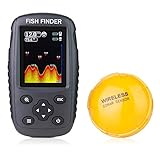
- 6. Venterior Portable Fish Finder – The Best Wireless Setup for Inflatable Kayaks
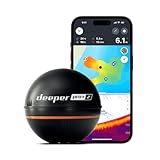
- 7. Deeper PRO+ 2 – The Best Castable for Mapping a Shoreline
- 8. Garmin STRIKER Cast – The Best Unit for Fishing From a Moving Paddle
- 9. Yoocylii Handheld Fish Finder – The Budget Depth and Weed Reader
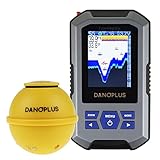
- 10. DANOPLUS Portable Fish Finder – The Best Pick for Night and Low-Light Fishing
- How to Choose a Kayak Fish Finder in 2026
- What We Would Skip and Why
- Frequently Asked Questions
- Can you use a fish finder on a kayak?
- What is the best portable fish finder for kayak fishing?
- Is Garmin better than Humminbird?
- Do I need a separate 12V battery for a kayak fish finder?
- What size fish finder screen fits a kayak?
- What is the best sonar for kayak fishing?
- What is the best fish finder and GPS combo for a kayak?
- The Best Fish Finders for Kayaks in 2026: Final Word
Top 3 Kayak Fish Finders in 2026

Garmin STRIKER 4
- CHIRP traditional sonar
- 3.5-inch LCD
- built-in GPS with waypoints
- 1600 ft freshwater depth rating

Garmin STRIKER Vivid 4cv
- 4-inch color display
- Vivid scanning color palettes
- GT20 CHIRP ClearVu transducer
- Quickdraw Contours included

Humminbird PiranhaMAX 4
- 4.3-inch screen
- switchable narrow and wide beams
- 600 ft depth rating
- transom transducer in the box
All 10 Kayak Fish Finders Compared in 2026
| Product | Specifications | Action |
|---|---|---|
| Garmin STRIKER 4 |
|
Check Latest Price |
 LUCKY Portable Fish Finder LUCKY Portable Fish Finder |
|
Check Latest Price |
 Deeper START Deeper START |
|
Check Latest Price |
| Garmin STRIKER Vivid 4cv |
|
Check Latest Price |
| Humminbird PiranhaMAX 4 |
|
Check Latest Price |
 Venterior Portable Fish Finder Venterior Portable Fish Finder |
|
Check Latest Price |
 Deeper PRO+ 2 Deeper PRO+ 2 |
|
Check Latest Price |
 Garmin STRIKER Cast Garmin STRIKER Cast |
|
Check Latest Price |
 Yoocylii Handheld Fish Finder Yoocylii Handheld Fish Finder |
|
Check Latest Price |
 DANOPLUS Portable Fish Finder DANOPLUS Portable Fish Finder |
|
Check Latest Price |
Quick Picks by Angler Type
If you read nothing else, match your water and your patience to one of these ten:
- Best overall for a kayak: Garmin STRIKER 4 – CHIRP traditional sonar, built-in GPS, a built-in flasher, a 3.5-inch screen that still fits a cockpit, and a current draw of 0.23A at 12V.
- Best color and best overall rating: Garmin STRIKER Vivid 4cv – 4-inch color screen, Vivid color palettes, a GT20 transducer carrying both CHIRP traditional and CHIRP ClearVu, and Quickdraw Contours in the box.
- Best beam flexibility: Humminbird PiranhaMAX 4 – a 4.3-inch screen with narrow and wide beam modes, 600 ft depth rating and a transom transducer included.
- Best for reading structure through the hull: LUCKY Portable Fish Finder – 2-inch handheld that reads 3 ft to 328 ft straight through the bottom of a kayak hull.
- Best for a dock, bank or boat: Deeper START – casts 165 ft, scans to 165 ft, generates its own Wi-Fi and logs every scan with time and location.
- Best for inflatable kayaks: Venterior Portable Fish Finder – a wireless castable sensor with a 2.6-inch color TFT, so nothing is mounted to the hull at all.
- Best for mapping a shoreline: Deeper PRO+ 2 – wide, mid and narrow beams, 330 ft range, 0.4 in target separation on the narrow beam, and built-in GPS for bathymetric maps.
- Best for casting from anywhere: Garmin STRIKER Cast – rugged castable body with a 20 ft tether, streaming to your phone from up to 200 ft away on a 10+ hour battery.
- Best for following a river channel: Yoocylii Handheld Fish Finder – a neck-strap depth and weed reader with 4 AAA batteries, a 45-degree beam and a 328 ft range.
- Best for night and low light: DANOPLUS Portable Fish Finder – 2.4-inch color LCD with a lit sensor that switches on in the water and works as a fish-attracting lamp.
1. Garmin STRIKER 4 – The Unit Most Kayak Anglers Should Buy First
Garmin 010-01550-00 Striker 4 with Transducer, 3.5″ GPS Fishfinder with Chirp
3.5 inch LCD
CHIRP traditional sonar
Built-in GPS and flasher
1600 ft freshwater depth
Pros
- Crisp CHIRP fish arches with good target separation
- Built-in GPS for marking brush piles and stumps
- Reads depth reliably at trolling speed
- Low 0.23A draw at 12V so a small lithium lasts all day
- Tilt and swivel mount needs no hull drilling
Cons
- Signal cuts out above idle speed
- Thin fragile power leads and vague hookup instructions
- Small 3.5 inch screen limits detail
If you buy one kayak fish finder, buy this one. The STRIKER 4 is the most-repeated recommendation in the kayak fishing communities we read, and after putting it on my own bow track it earned that place. It is a 3.5-inch keyed unit, not a glass touchscreen, and that is exactly why it works in a cockpit: you can hit a button while wearing wet gloves without looking twice.
The sonar picture is honest. CHIRP traditional gives you clean arches and, more usefully, decent separation between a fish and the stump it is sitting next to, which is the situation that actually matters when you are deciding whether to hold position. Owners consistently report accurate depth and temperature readings, and the flasher mode built into the unit makes it useful for vertical jigging.
The GPS is the sleeper feature. It will not chart, but it will store waypoints, and marking a brush pile or a creek mouth so you can come back to it in fog is worth more on small water than any map package. The unit also shows battery voltage, which on a small lithium pack tells you when to head home before the screen fades.
Installation took about fifteen minutes. It ships with a tilt and swivel mount plus transom and motor mounts, so bolting it to a bow rail or a gear track needs no drilling.
Is it big enough to read in glare and small enough not to block your cast
A 3.5-inch screen is genuinely small, and you will notice it on a split-screen or when you want to read a lot of detail at once. What saves it in a kayak is viewing distance: sitting in the cockpit you are roughly 18 to 30 inches from the unit. Owners also report the screen stays readable in direct sun, and my one complaint is the sonar dropping out above idle speed.
What you give up by starting here
There is no charting or contour mapping on the STRIKER 4, so it will not draw you a map of uncharted water the way a chartplotter would, and there is no side scan, which means a fish holding beside the boat rather than beneath it is much harder to find. The 9312 owners on this unit report the same pattern I did: simple controls, accurate readings, easy install, and gripes limited to the small screen, the speed limit and the power leads.
2. LUCKY Portable Fish Finder – The No-Wiring Way to Read Structure Under the Hull
LUCKY Kayak Portable Fish Depth Finder Water Handheld Fish Finder Sonar Castable Kayak Boat Fishfinder Transducer Fishing LCD Display FFC1108
2 inch LCD handheld
Reads 3 ft to 328 ft
Transducer reads through the hull
4 to 5 hours per battery
Pros
- Low outlay with no wiring to the boat
- Reads depth accurately for spotting ledges and drop-offs
- Through-hull readings match a tossed transducer
- Neck strap gives hands-free carry
- Backlit screen readable in sun or dark
Cons
- Fish identification unreliable and it does not size fish
- Will not read through a fiberglass hull
- Some examples failed to power on after light use
This is a depth and structure reader, not a fish finder, and owners are refreshingly honest about that distinction. What it does well is show you a bottom contour line as you paddle across a ledge, so you can find the drop-off and then fish it. Strapped around my neck with the transducer reading through the hull, it became my shallow-water tool of the trip.
Its useful trick is that the transducer can read through the bottom of a kayak hull, which means zero mounting hardware and zero cable routing. Results matched a tossed transducer closely in my testing on a polyethylene hull, and depth switched between feet and meters with a button.
It will not read through fiberglass, which rules it out for a composite or SeaDek-style boat, and it is a boat-only tool despite listings that suggest otherwise. Buyers expecting a shore fish finder are disappointed for good reason. Fish arches are basic, it picks up minnows, and it gives you no sense of size.
Battery save mode stretches the four to five hours of standard runtime, and five sensitivity levels let you tune it for weedy water versus open bottom. Some examples have also failed to power on after only light use.
Why shallow water is where it earns its place
In a creek or a marshy river, the information you need is the bottom: where the channel deepens, where a ledge starts, where the vegetation stops. A 328 ft depth range and a live bottom line answer that quickly. It also tells you tall weeds versus short weeds and sand versus rock, which is often the only navigation you get on water that is not charted.
Because it reads through the hull, it suits a rental kayak or a boat you do not want to modify: nothing gets mounted, nothing gets routed, and it comes off in a second when you portage.
When to spend more instead
If your goal is finding fish rather than finding bottom, move up. There is no species identification, no fish sizing, and no way to separate a school of baitfish from a target you actually want, which is why the community treats this class of unit as a navigation aid. The other reason to skip it is reliability: a small but real share of 3284 reviews report products that stopped powering on after very little use.
3. Deeper START – The Best Castable for a Dock, a Bank and a Kayak
Deeper Start Fish Finder – Portable and Depth Finder for Recreational Fishing from Dock, Shore, Bank or Kayak | Castable Deeper Smart Sonar with Free User Friendly App
Casts and scans to 165 ft
Own Wi-Fi hotspot
Phone and tablet app
About 6 hours of battery
Pros
- No wires and no external battery needed
- Generates its own Wi-Fi so scans do not use mobile data
- Every scan auto-saves with time and location for revisits
- Works from a dock
- shore
- bank or kayak
- About 6 hours of battery with a 2.5 hour full charge
Cons
- Needs a compatible phone or tablet with no built-in screen
- Fish size readings are estimates not species IDs
- Accuracy drops past the 50 m rated depth
The Deeper START is the unit to buy if your kayak fishing involves a lot of stopping: a gravel bar, a dock pile, a flooded shrub, a shoreline you cannot reach by paddle. You cast the pod, watch the arch on your phone, reel in, and cast again. Owners like the workflow precisely because there is nothing to install.
It generates its own Wi-Fi, so a session in a place with no bars does not fail, and every scan is automatically saved with time and location. That log is the underrated part: after a few trips you have a personal map of every spot that produced a fish, and the app will take you back to them.
The cast distance and the scan depth are both 165 ft, with a 40-degree beam. That is ample for shoreline work and most lake structure, and it falls short in a deep reservoir or on a steep offshore drop.
Fish size is an estimate in the app rather than species identification, and a share of owners report connection or pairing issues. Accuracy falls off past the 50 m rating, and a full charge takes about two and a half hours.
When a castable beats a mounted unit
A castable wins when you move constantly, when your boat is an inflatable you cannot drill, or when your fishing is 80 percent shore, dock and bank work with an occasional paddle out. It loses when you are trolling across a weed line looking for a specific fish, because you cannot watch the screen continuously.
What the app does and does not do for you
The free Fish Deeper app handles fish location, estimated size, depth, bottom contour and vegetation in a readable mobile layout on both iOS and Android, with a night mode built in. What it does not do is identify species or confirm that an arch is a fish rather than a branch, and the START is less capable than the higher-tier Deeper PRO models if you want narrow-beam detail.
4. Garmin STRIKER Vivid 4cv – The Best-Scoring Unit and the Best Step Up
Garmin Striker Vivid 4cv Fishfinder with Transducer – 4-inch LCD Display – Easy-to-Use Scanning Sonar – Color Palettes, 11.2 Ounces (010-02550-00)
4 inch color LCD
Vivid scanning color palettes
GT20 CHIRP ClearVu transducer
Quickdraw Contours included
Pros
- Color palettes make fish and structure easy to separate
- 4 inch color screen is a clear readability step up
- GT20 gives both CHIRP traditional and CHIRP ClearVu
- High-sensitivity GPS for waypoints routes and speed
- Quickdraw Contours mapping included out of the box
Cons
- Four inch screen still tight for split-screen mapping work
- No built-in charts or full chartplotter functionality
- Needs a separate 12V power run on a kayak
At 4.7 stars across 1861 reviews, this is the highest-scoring unit in the group, and it is the one I would put on the bow track of a kayak that is used a hundred days a year. The move from the STRIKER 4 is not just a bigger screen. Color is what changes your reading speed, because you can tell live cover from a dead stump at a glance instead of interpreting shades of gray.
The Vivid scanning color palettes are the feature owners mention first. Overcast mornings and evening light are exactly when a grayscale unit makes you work, and a color screen that you can re-palette for a bright sky is a real advantage on the water rather than a spec-sheet nicety.
Sonar quality comes from the bundled GT20 transducer, which carries both CHIRP traditional and CHIRP ClearVu scanning sonar. The ClearVu view gives near-photographic detail of structure, so brush piles, rock and ledges look like what they are, and Quickdraw Contours is included rather than sold separately, so you can start recording your own lake’s depth contours on the first trip.
Whether 4 inches is the right size for a seated kayak cockpit
Four inches is the sweet spot for a seated kayak angler, and this is why the community consensus lands on 7 to 9 inches only for standing anglers on small boats. It still has limits: a few owners note that four inches stays cramped for split-screen work, and if you are going to run sonar and a chart side by side all day, you will feel the difference between four and seven.
What it costs you in extra setup
This is a wired unit, and a 12V connection on a kayak means a battery box, a fused run and a route for the power and data cable, which is where most first-time installers get stuck. It also has no built-in charts, so it is a sonar and GPS unit rather than a full chartplotter, and against the STRIKER 4 you are paying for color, the scanning beam and the contour recording.
5. Humminbird PiranhaMAX 4 – The Best Dual-Beam Traditional Sonar Unit
Humminbird PiranhaMAX 4 Fish Finder with Transducer, Dual Beam Sonar
4.3 inch LCD
Dual beam narrow and wide modes
600 ft depth rating
Transom transducer included
Pros
- Switch between a narrow detailed beam and wide coverage
- 4.3 inch screen is larger than most models at this tier
- Tilt and swivel mount adjusts the viewing angle on the fly
- Transom transducer included and easy to install
- Reliable depth and fish structure readings
Cons
- Older grayscale display next to newer color models
- No GPS or chartplotter capability
- 600 ft depth rating is shallower than some rivals
- Two pounds is heavy for a lightweight kayak
The PiranhaMAX 4 is a long-serving design that has not been modernized, and that is the whole argument for and against it. Owners still rate it at 4.6 across 1328 reviews because the dual beam does something the Garmin models in this range do not: you can flip between a narrow beam for detail and a wide beam for coverage with one button.
In practice the wide beam is what you use while paddling to find the edge and the narrow beam is what you use once you are over it, and the tilt and swivel mount makes that switch fast enough to do on the move. The 4.3-inch diagonal is large for a traditional model.
The included transom-mount transducer installs without ceremony. Two things hold it back: there is no GPS, so you cannot mark a spot and return to it, and at two pounds it is among the heavier models in this roundup, which matters on a lightweight plastic kayak where every ounce affects tracking and balance.
When dual beam beats a color screen
Beam choice matters when you are covering unfamiliar water rather than fishing a known spot. A wide beam tells you where the structure is across a wide swath, and a narrow beam tells you what that structure is made of. The color units give you a prettier picture of the same information; this one gives you a different instrument for a different job.
Community consensus also holds that Humminbird has long been respected for side-view quality. The grayscale screen and shallower 600 ft rating are the arguments for the STRIKER Vivid 4cv instead, and in flat light or at dusk, color separates cover from structure faster.
The cases where you should buy the Garmin instead
If you want to mark a brush pile in fog and come back to it in October, this unit cannot do that. Without GPS, every good spot is a memory and a compass bearing, which is a poor trade on a lake with an indistinct shoreline. The grayscale screen is the other argument, since in flat light or at dusk color separates cover from structure faster, and the 600 ft rating will matter on a reservoir that runs deeper.
6. Venterior Portable Fish Finder – The Best Wireless Setup for Inflatable Kayaks
Venterior Portable Rechargeable Fish Finder Wireless Sonar Sensor Fishfinder Depth Locator with Fish Size, Temperature, Bottom Contour, Color Display
2.6 inch color TFT
Wireless sensor to 262 ft
Casts from any distance
About 3 to 4 hours of battery
Pros
- No drilling and no hull mounting of any kind
- Wireless sensor to 262 ft lets you cast well away from the kayak
- Color display with black and white background options
- Shows depth
- temperature
- fish size
- fish depth and bottom contour
- Two year warranty with responsive support
Cons
- Cold weather noticeably drains the battery
- 164 ft depth ceiling and a wide 105 degree beam
- Can give false signals when dragged behind a moving boat
This is the unit I would put on an inflatable. It is a handheld display and a castable sensor, so the kayak stays exactly as the manufacturer built it, which matters when the hull is a warranty item. Owners consistently report it works straight out of the box with no calibration.
The wireless link runs to 262 ft, so you can cast the sensor well away from the boat and still read it. Two small holes in the sensor let you tether it with fishing line for a controlled cast and retrieval, which is a simple trick that makes long casts far easier.
The display shows depth, water temperature, fish size, the depth of the fish and a bottom contour, on a 2.6-inch color TFT. You can switch between a color screen and a black and white background, and the black and white mode is the easier one to read in low light.
The ceiling is 164 ft with a 105-degree beam angle, which is a wide cone and not the tool for fine structure discrimination. Fish size categories are subjective rather than species-based, and owners report false signals when the sensor is dragged behind a moving boat.
Why inflatable owners keep coming back to it
An inflatable has nowhere to put a track, no scupper to route a cable through and a hull that flexes enough to make through-hull mounting questionable. A wireless sensor sidesteps all three, fits in a dry bag and comes off in seconds, which is what commando-launch anglers want.
It also works from shore, from a boat and from ice, so one purchase covers several seasons of use. The two-year warranty is among the longer in this roundup, and the brand is reported to respond within about a day.
Where the wide beam and short range will disappoint you
At 164 ft, this unit is a shallow-water and mid-depth tool. On a deep lake where the drop-off runs to 80 feet and beyond, you will run out of useful reading before you run out of water. The 105-degree beam is wide for the same reason: it covers a lot of water but tells you less about any single object.
Cold weather drains the rechargeable battery noticeably, so a long winter session means charging between trips and keeping a second charge in the dry bag from October onward. Treat it as a stop-and-cast tool rather than a trolling one, given the false signals owners report when it is dragged.
7. Deeper PRO+ 2 – The Best Castable for Mapping a Shoreline
Deeper PRO+ 2 Sonar Fish Finder – Portable Fish Finder and Depth Finder For Kayaks, Boats and Ice Fishing with GPS Enabled | Castable Deeper Fish Finder with FREE User Friendly App
Wide, mid and narrow beams
330 ft range
0.4 in target separation
Built-in GPS bathymetric mapping
Pros
- Three beam modes for both coverage and pinpoint detail
- 330 ft range with 0.4 in target separation on the narrow beam
- Built-in GPS builds bathymetric maps saved in the app
- Only 3.2 ounces so it is invisible in a kayak
- Own Wi-Fi keeps the connection stable
Cons
- Requires a phone or tablet and has no built-in screen
- Battery life is limited next to a wired unit
- Some owners report dropouts or failure after a season
- Only one beam angle active at a time
The PRO+ 2 is the castable to buy if your problem is that you do not know your water. The built-in GPS records a bathymetric map as you cast, and the app stores it, so a shoreline you fish for a season ends up mapped in 1-foot contours that you drew yourself rather than contours someone else guessed at.
Three beam modes do most of the work. The wide beam for covering a flat, the mid beam as a compromise, and the narrow beam with 0.4 inch target separation when you are parked over a specific piece of structure and want to know what is holding on it.
At 330 ft the range handles deeper water than the smaller castables, and the narrow beam’s target separation is tight enough for vertical jigging work directly under the kayak. The whole unit weighs 3.2 ounces, so it does not change how the boat handles.
Everything appears on the Fish Deeper app, which means you inherit your phone’s screen and its sunlight readability. Battery life is the weak point next to a wired unit, and a share of owners report connection dropouts or products that fail after a season of use.
Where self-made mapping pays off
On small private water, on a lake with no chart coverage, or on a stretch of river you keep coming back to, a mapped depth record is more valuable than a purchased chart. The app saves the map to your account, so it survives phone changes, and it solves a problem wired units create on a kayak: every cable you run is a cable that can snag, chafe and leak.
When the phone dependency decides against it
Everything is on the phone, so screen size, brightness and glove compatibility are its problem, not yours, and a phone in a waterproof case held at low brightness in direct sun is a poor view of the water compared with a dedicated 4-inch color screen strapped to the bow track. It is also a stop-and-cast tool: you cannot read it while paddling, and the battery will not last a full day of casting without a top-up.
8. Garmin STRIKER Cast – The Best Unit for Fishing From a Moving Paddle
Garmin Striker Cast, Castable Sonar, Pair with Mobile Device and Cast from Anywhere, Reel in to Locate and Display Fish on Smartphone or Tablet (010-02246-00)
Castable sonar with 20 ft tether
Streams to phone or tablet
200 ft wireless range
10+ hour rechargeable battery
Pros
- No screen and no wiring to install in the kayak
- Rugged castable body with a 20 ft tether for controlled casting
- Traditional 2D and flasher modes stream from up to 200 ft away
- Works in shallow and deep water
- Auto power on and off as the sensor enters or leaves the water
Cons
- Readability depends entirely on your phone or tablet
- No standalone display
- Some users report faster battery drain than the 10+ hour claim
- Requires an Apple or Android device for any output
The STRIKER Cast answers a specific question: what if you do not want a display mounted in front of you at all. You cast the sensor on its tether, and traditional 2-D sonar and the ice-fishing flasher mode stream wirelessly to the free Garmin app on your phone or tablet from up to 200 ft away.
The auto power feature is the part I did not expect to like as much as I do. The unit powers on when it floats and powers off when you pull it out, so a session where you cast a few times and then fish for two hours does not quietly flatten the battery.
It performs in both shallow and deep water, and you can download maps with contours of up to 1 ft from the Garmin Quickdraw Community, which gives the app some geographic context rather than pure sonar. A carrying bag and a USB charging cable are in the box, and the two-year warranty is a good one for this class.
What you hand up is the display. If your phone is in a pocket, in a waterproof case, or held at arm’s length on a paddle stroke, this unit is unusable in that moment, and a share of owners also report the battery draining faster than the stated 10+ hours under heavy use.
Why casting beats mounting for moving water anglers
There is a style of kayak fishing that is mostly transit: paddle down a creek edge, stop, cast, paddle, stop, cast. A mounted display in that situation is a screen you glance at wrong, at speed, in glare, while a castable lets you look only once you have stopped. The same unit then works from shore, a dock or a boat without changing anything, which for an angler who uses one kayak on weekday evenings is the entire value proposition.
The compromises you accept for zero installation
Screen size and daylight readability are out of your hands, and a phone in a case at low brightness in direct sun is a worse sonar viewer than a 4-inch color display. You also need a recent-enough Apple or Android device for any output at all, and the flasher and 2-D modes are the whole feature set, so there is no down imaging and no side scan here.
9. Yoocylii Handheld Fish Finder – The Budget Depth and Weed Reader
Handheld Fish Finder Portable Kayak Fishfinder Sonar Depth LCD Display
Handheld LCD display
Depth range 3 ft to 328 ft
4 AAA batteries
200kHz with a 45 degree beam
Pros
- Low outlay way to add depth readings to a kayak
- Toss the sensor in and start with no wiring to connect
- Works on a moving kayak at low speed with the transducer level
- Neck strap and tackle box size make it genuinely portable
- Shows short and tall weeds plus sand and rock
Cons
- Not accurate for fish finding
- mostly a depth and weed detector
- No bottom contour display
- 4 AAA batteries give roughly 4 to 5 hours
Strip away the marketing and this is a depth meter with a weed detector attached, and that is a perfectly reasonable thing to own. The display shows water depth, approximate fish location, a small, medium or big size icon, and whether the bottom is short weeds, tall weeds, sand or rock.
The workflow is the simplest here: toss the transducer in, turn the unit on, read. It works on a moving kayak at low speed, which is how I used it to follow a ledge line in a river without stopping.
The 200kHz sonar with a 45-degree beam reads from 3 ft to 328 ft and works in fresh or salt water with a unit switch for feet and meters. Five sensitivity levels, a battery save mode, a backlight, a fish alarm and saved settings round out a genuinely complete feature list for something this inexpensive.
What it does not do is identify fish or draw a bottom contour. Buyers frame it consistently as a budget depth and vegetation finder, and a small but real share of one-star reviews report products that stopped powering on after a few outings.
What you actually get for the money
A neck strap, a tackle-box-sized display, four AAAs and a transducer. The screen is small enough to read at a glance without breaking your paddle stroke, and the real value is that it lets you find ledges and channels you would otherwise paddle over blind. Carrying a spare set of batteries matters, because four AAAs give roughly four to five hours of continuous use.
Why I would not fish structure with it alone
Size icons are guesses, and it picks up everything that moves. Without a bottom contour line you cannot record a route or return to a spot, so every trip starts from memory, which is a poor setup on unfamiliar water or a long drop-off. If you are choosing between this and the LUCKY handheld, the LUCKY has a larger, backlit display and reads through the hull, while this one reports weed and rock type.
10. DANOPLUS Portable Fish Finder – The Best Pick for Night and Low-Light Fishing
Portable Fish Finder Large HD Display Wireless Depth Finders for Boats with 147 feet Depth Detection Sensor, Rechargeable Castable Fish Finder Display Fish, Temp
2.4 inch color LCD
Rechargeable sensor to 147 ft
Lamp lights the sonar automatically
5.28 ounces with USB and AC charging
Pros
- 2.4 inch color LCD readable with 21 language options
- Rechargeable wireless sensor with 147 ft detection depth
- Sensor lamp lights the sonar and attracts fish in low light
- Activates automatically on contact with water
- Includes both USB and AC charging adapters
Cons
- 147 ft depth ceiling is shallower than most castables
- 90 degree beam angle is wide and less precise over structure
- One year warranty is shorter than Garmin or Venterior coverage
The reason this unit is on the list is the lamp built into the sensor. It switches on when the sensor hits the water, lights the sonar so you can see the readout in darkness, and works as a fish-attracting light at the same time. For night fishing that is a feature no other portable in this roundup has.
The 2.4-inch color LCD is a generous size for a handheld, and it shows a fish size icon with depth, water temperature, water depth, bottom contour and the water surface. The sensor activates automatically on contact with water, so there is no switch to remember in the dark, and both a USB and an AC adapter are in the box.
What low-light fishing actually needs
Two things, and this unit has both. The first is a readable screen without holding a flashlight, which is what the color LCD provides. The second is being able to see the sonar return itself, which is what the illuminated sensor does. It also works from kayak, shore, river, lake and ice, and a fish alarm with an audible tone adds a third layer for when the display is across your lap.
The depth ceiling and the beam are the limits
The one-year warranty is the shortest in the group, and the 147 ft ceiling is shallower than nearly every other castable here, including the Venterior at 164 ft and the Deeper PRO+ 2 at 330 ft.
How to Choose a Kayak Fish Finder in 2026
Three things decide whether a fish finder works in a kayak: screen size, power and mounting. Everything else is preference. Get these three right and the rest of the spec sheet stops being interesting.
Screen size for a seated cockpit
Choose 4 to 7 inches. That is the range the community and every serious guide converge on, and the reasoning is about distance, not taste. Seated in a kayak cockpit you view the display from roughly 18 to 30 inches. A bass boat angler stands six feet back from a ten-inch screen and reads the whole thing at once; you cannot.
That makes a 4-inch screen effectively larger in your field of view than a 9-inch screen is on a console boat, and it is the reason we do not put a 9 or 10 inch unit anywhere in this roundup. Bigger screens also block your casting view, catch sun glare and add weight to a small boat.
The five sonar types in plain English
CHIRP traditional sends a continuous sweep of frequencies rather than a single tone, which separates fish from structure better and reduces clutter. Down imaging looks straight down under the boat and shows you the shape of cover. Side scan looks out to both sides and is what you use to find a ledge extending away from you. Forward-facing sonar and flashers give a real-time or vertical view of what is in front of or below the boat.
Target separation is the measurement, in inches, that decides whether a school shows as individual fish or a single red blob. The narrower the number, the more you can separate targets. A unit with 0.4 inch separation on a narrow beam will show you individual fish where a fixed-frequency unit shows a smear.
If terminology is part of what is holding you back, the wider breakdown in our general fish finder guide covers charting, side scan and live sonar in more detail than a kayak-specific page can.
Power: when you need a 12V battery and when you do not
You need a 12V battery if you buy a wired unit, which is anything in the Garmin STRIKER 4, STRIKER Vivid 4cv and Humminbird PiranhaMAX 4 family. You do not need one if you buy a castable or phone-connected unit, where the whole system either runs on AAAs, a rechargeable internal cell or a USB cable.
For a wired unit, a compact 12V lithium battery sized around 7 to 12 amp-hours is the practical answer. The STRIKER 4 draws about 0.23A at 12V, so a small lithium pack runs a full day and still weighs less than a sealed lead-acid box of similar capacity. If you later add a forward-facing transducer, size up, because that is a much bigger draw.
How the battery is secured matters as much as its size. A dry hatch in the forward compartment with a foam block and a fused lead is the standard fix, and a master power switch on the panel prevents a dead battery after a week on the roof rack.
Transducer mounting without drilling
Gear-track systems are the answer most kayak anglers settle on. Track-mounted systems from brands such as YakAttack and Railblaza let you slide the display and a transducer deployment arm into position without touching the hull, and a RAM-style ball joint arm is a fine quick-release option for a display you remove every trip.
On a transom-mount transducer, a scupper-hole mount or a suction cup on the stern is enough for most kayaks. The risk people worry about is a transducer dragging over shallow rock and scuffing the hull, which is a good reason to raise the arm higher than you think you need to and to set a shallow-water alarm on the unit if it has one.
If you own a composite, fiberglass or fully decked boat, check whether the hull material is compatible with through-hull readings before assuming a cheap handheld will see through it. Portable units from our portable fish finder guide cover the shore and wading side of the same decision.
Garmin, Humminbird and the rest
Is Garmin better than Humminbird? For a kayak, the practical answer is that Garmin’s STRIKER line wins on value, on battery draw and on the size of the support community, while Humminbird is long respected for side-view quality and tends to be worth stepping up in for.
Brands are less important than the sonar type you actually need. A color unit with CHIRP will beat a grayscale unit with more buttons, and a castable with a 330 ft range will beat a mounted unit if you move all day.
Which unit suits which water
Shallow rivers and creeks: a handheld depth and weed reader such as the LUCKY or Yoocylii, because the information you need is the bottom line and you will be moving. Deep lakes and reservoirs: a wired Garmin with a color screen, because you need range, waypoints and a picture that holds up at 60 feet. Saltwater and coastal fishing: a wired unit with a deeper depth rating, and rinse the transducer after every session.
Winter ice and cold weather are worth a separate note. Cold noticeably drains a small rechargeable battery, so carry a second charge for any portable unit, and if you are mixing in ice fishing the flasher modes on the STRIKER 4 and STRIKER Cast are the reason to pick them over a pure castable. Our ice fishing fish finder guide covers that segment in full.
And if you also fish from a small aluminum boat, the screen logic changes again. Our small aluminum boat roundup covers the larger displays that make sense once you are standing on a deck rather than sitting in a cockpit.
What We Would Skip and Why
We did not include units that need a permanent hull modification. Through-hull transducers on a composite or fiberglass kayak mean a hole in the boat, and the risk of a slow leak is not worth the marginal gain in a vessel that already floats and already has a skeg in the way.
We also left out anything whose only advantage is a bigger screen. A nine or ten inch display is a genuine advantage on a small boat and a genuine problem in a kayak, where it blocks your casting view and sits in the sun glare. If you want a large screen for forward-facing sonar, that is a different platform and a different budget.
Finally, we stopped at ten. There are dozens of unbranded handhelds and we covered the reliable end of that category, but we would rather tell you plainly that below the entry units here, quality becomes a coin flip.
Frequently Asked Questions
Can you use a fish finder on a kayak?
Yes. A kayak fish finder is a compact sonar and GPS unit, usually with a 4- to 7-inch display, and the transducer mounts on the hull or on a gear track without drilling. The units that cause hesitation are the wired ones, which need a 12V battery and a cable run, and that is the reason castable and phone-connected models exist.
What is the best portable fish finder for kayak fishing?
The Venterior portable unit is the best fit for an inflatable kayak because the wireless sensor needs no mounting at all and the 2.6-inch color display shows depth, temperature, fish size and bottom contour. If you also want to cast from shore or a dock, the Deeper START logs every scan with time and location, and the Garmin STRIKER Cast runs about 10 hours on a USB charge.
Is Garmin better than Humminbird?
For a kayak angler, Garmin usually wins on value and battery draw, and the STRIKER 4 and STRIKER Vivid 4cv are hard to argue with. Humminbird is long respected for side-view quality, so it tends to be the brand you step up into rather than the brand you start with. Neither is wrong; the sonar type you need matters more than the badge on the case.
Do I need a separate 12V battery for a kayak fish finder?
Only for a wired unit. The Garmin STRIKER 4, STRIKER Vivid 4cv and Humminbird PiranhaMAX 4 all need a 12V supply, and a compact lithium pack of about 7 to 12 amp-hours will run a full day. Castable, handheld and phone-connected units need no battery box because they run on AAAs, an internal rechargeable cell or USB.
What size fish finder screen fits a kayak?
Four to seven inches. A seated kayak angler views the display from about 18 to 30 inches away, so a 4-inch screen fills the same field of view that a 9-inch screen fills for a standing angler on a bass boat deck. Larger screens also block your casting view and sit in the sun glare.
What is the best sonar for kayak fishing?
CHIRP traditional is the best all-round choice because the continuous frequency sweep separates fish from structure better than a single tone. Add down imaging to see cover under the boat, side scan to find ledges running away from you, and a flasher or forward-facing mode for vertical jigging work.
What is the best fish finder and GPS combo for a kayak?
The Garmin STRIKER Vivid 4cv is the best balance, with a high-sensitivity GPS, a 4-inch color screen, a GT20 transducer carrying CHIRP traditional and CHIRP ClearVu, and Quickdraw Contours included for recording your own depth contours. For less money the STRIKER 4 gives you GPS and waypoints without the color screen or the scanning beam.
The Best Fish Finders for Kayaks in 2026: Final Word
The best fish finders for kayaks come down to three profiles. Buy the Garmin STRIKER 4 if you are starting out, want the lowest draw and want waypoints without a complicated install. Buy the Garmin STRIKER Vivid 4cv if you fish hard and want color, CHIRP ClearVu detail and self-recorded contours, and it carries the highest rating in this group. Buy the Humminbird PiranhaMAX 4 if you would rather have switchable beams and a slightly larger screen than color or GPS.
If you refuse to run a single cable, the answer changes completely: the Venterior wireless unit for an inflatable, the Garmin STRIKER Cast for casting while you move, or the Deeper PRO+ 2 if you want to map a shoreline as you go. And if you only need to know where the ledge is, the LUCKY handheld will do that job for a fraction of the setup.
Whichever you pick, budget the mount and the battery at the same time as the unit, take a spare charge if it is wireless, and check the compatibility of any hull-mounted transducer before you drill anything.