

Short answer: the Garmin STRIKER 4 is the best fish finder overall in 2026. It pairs CHIRP traditional sonar with ClearVu scanning, carries built-in GPS for marking waypoints, runs to 1,600 feet in freshwater, and has more owner reviews than any other unit we evaluated.
A fish finder sends a sound pulse into the water, listens for the echo, and turns the return time into a picture of the bottom, the structure sitting on it, and the fish holding near it. That is the whole concept. Everything else on these pages is about which version of it you actually need.
We pulled twelve units across the price spectrum, from a no-drill portable sonar to a 10-inch networked control head, and read through thousands of owner reviews. The market is not short on options. It is short on honest guidance about which ones earn their place on a boat, which is what we tried to supply. If your boat is already loaded, our fish finder picks for small boats cover the small-craft angle in more depth.
Two things shape nearly every recommendation below. First, whether the unit includes a transducer and mount, because a bare control head without one is a frustrating purchase. Second, whether it works the first time without a settings lecture, which is the single most common theme in angling forums and the reason the Lowrance Eagle 4X and Garmin STRIKER 4 keep coming up as first-timer choices.
Table of Contents
- Top 3 Fish Finder Picks in 2026
- Best Fish Finders at a Glance in 2026
- 1. Garmin STRIKER 4 – the best fish finder most anglers should start with
- 2. LUCKY Portable Fish Finder 1108 – a cheap handheld depth reader for small craft
- 3. Garmin STRIKER Vivid 4cv – the best color entry unit
- 4. Humminbird PiranhaMAX 4 – a dependable monochrome dual-beam unit
- 5. Venterior Wireless Castable Fish Finder – the best no-drill portable option
- 6. Deeper PRO+ 2 – the best way to map water from shore
- 7. Garmin STRIKER 7SV – the best value for side imaging
- 8. Humminbird HELIX 5 CHIRP GPS G3 – the best built-in basemap for a small boat
- 9. Yoocylii Handheld Fish Finder – a lightweight depth and weed detector
- 10. Hawkeye DepthTrax 2B – the best in-dash shallow water alarm
- 11. Humminbird XPLORE Series – the best pick for a large networked boat
- 12. Lowrance Eagle 4X Bullet – the best auto-tuning starter unit
- How to Read a Fish Finder Screen
- How to Choose a Fish Finder in 2026
- Garmin vs Humminbird vs Lowrance
- Frequently Asked Questions
- Final Verdict: Where to Start
Top 3 Fish Finder Picks in 2026


Garmin STRIKER Vivid 4cv
- Color screen with vivid palettes
- GT20 transducer included
- Quickdraw Contours mapping
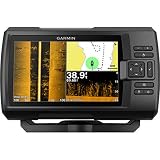
Garmin STRIKER 7SV
- SideVu side imaging
- 7-inch sunlight readable screen
- Quickdraw Contours built in
Best Fish Finders at a Glance in 2026
If you want a category answer rather than a full read, these are the short versions.
Best overall: Garmin STRIKER 4. The most owner-reviewed unit in this group, with CHIRP, ClearVu and GPS waypoints in a package that mounts on a trolling motor without drilling.
Best color entry unit: Garmin STRIKER Vivid 4cv. Adds a color display and a GT20 transducer that carries both CHIRP traditional and ClearVu.
Best value with side imaging: Garmin STRIKER 7SV. SideVu scanning is rare at this level and it is the reason this unit reads brush piles so clearly.
Best with a built-in basemap: Humminbird HELIX 5 CHIRP GPS G3. Ships with Humminbird Basemap covering more than 10,000 lakes and accepts LakeMaster, CoastMaster and Navionics cards.
Best for kayaks with a trolling motor: Garmin STRIKER 4. Transom and trolling motor mounts are both in the box.
Best no-drill portable: the Venterior wireless castable. Nothing is bolted to the hull, so it suits a kayak, a shore session or a small craft you do not own.
Best for mapping from shore or dock: Deeper PRO+ 2. Built-in GPS turns a bank session into saved custom bathymetric maps.
Best for a large boat and a full network: Humminbird XPLORE. MEGA Side Imaging+ at 200 feet per side, a 10-inch touchscreen and NMEA 2000 plus Ethernet.
| Product | Specifications | Action |
|---|---|---|
| Garmin STRIKER 4 |
|
Check Latest Price |
 LUCKY Portable Fish Finder 1108 LUCKY Portable Fish Finder 1108 |
|
Check Latest Price |
| Garmin STRIKER Vivid 4cv |
|
Check Latest Price |
 Humminbird PiranhaMAX 4 Humminbird PiranhaMAX 4 |
|
Check Latest Price |
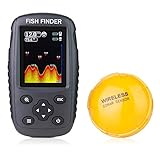 Venterior Wireless Castable Fish Finder Venterior Wireless Castable Fish Finder |
|
Check Latest Price |
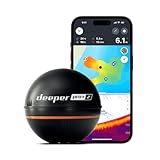 Deeper PRO+ 2 Deeper PRO+ 2 |
|
Check Latest Price |
| Garmin STRIKER 7SV |
|
Check Latest Price |
 Humminbird HELIX 5 CHIRP GPS G3 Humminbird HELIX 5 CHIRP GPS G3 |
|
Check Latest Price |
 Yoocylii Handheld Fish Finder Yoocylii Handheld Fish Finder |
|
Check Latest Price |
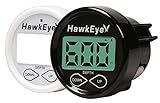 Hawkeye DepthTrax 2B Hawkeye DepthTrax 2B |
|
Check Latest Price |
 Humminbird XPLORE Series Humminbird XPLORE Series |
|
Check Latest Price |
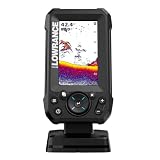 Lowrance Eagle 4X Bullet Lowrance Eagle 4X Bullet |
|
Check Latest Price |
1. Garmin STRIKER 4 – the best fish finder most anglers should start with
Garmin 010-01550-00 Striker 4 with Transducer, 3.5″ GPS Fishfinder with Chirp
3.5 inch LCD
1600 ft freshwater depth
Transducer and mounts included
Pros
- Most owner-reviewed unit in the category
- Accurate depth temperature and speed readings
- Mounts on a trolling motor with no hull drilling
- Readable in direct sun through polarized lenses
- Built-in flasher for ice and vertical jigging
Cons
- Thin fragile power leads in the box
- Sonar signal drops out at higher boat speeds
- No charting or chart plotter
The STRIKER 4 is the unit we keep coming back to because the owner base tells a consistent story. Across more than 9,000 reviews the same handful of things get praised: depth readings that match a hand line, a screen you can read in glare, and a waypoint map you can actually use.
What arrives in the box matters here. You get the fish finder, a transducer, transom and motor mounts, a tilt and swivel bracket, and a power and data cable. That is a complete install, and it is rare at this level. The spec sheet lists a 1,600 foot maximum in freshwater, a 3.5 inch LCD, and a current draw of 0.23 amp at 12 volt.
CHIRP traditional is the headline, and ClearVu scanning sonar gives you the near-photographic look underneath the boat. Anglers on r/kayakfishing name this model most often as a first fish finder, which matches our own read: it is the rare budget unit that works the first time you plug it in.
The weaknesses are honest but small. The power leads are thin, and several owners report losing sonar signal when running at speed. The unit also does not save menu settings between power cycles, which annoys people more than it should. There is no chart plotter and no bundled charts, so mapping stays a phone job.
Who this suits and who should skip it
This is the pick for a kayak, a jon boat or a first-time angler who wants waypoints without a learning curve. It also works as a flasher for ice fishing and vertical jigging, which is more than most entry units offer.
Skip it if your boat has a big console and you plan to run a full electronics package later, or if you fish deep structure where side imaging would pay for itself. The 3.5 inch screen is the constraint, not the sonar.
What is actually in the box and how it powers
Transducer, transom mount, trolling motor mount, tilt and swivel bracket, power and data cable, and documentation. At 0.23 amp draw, a small deep-cycle battery will carry a full day of casting, and the IPX7 rating means rain and a dunked kayak are not a problem.
2. LUCKY Portable Fish Finder 1108 – a cheap handheld depth reader for small craft
LUCKY Kayak Portable Fish Depth Finder Water Handheld Fish Finder Sonar Castable Kayak Boat Fishfinder Transducer Fishing LCD Display FFC1108
2 inch handheld LCD
3 to 328 ft depth range
Five sensitivity levels
Pros
- Very low entry cost
- Reads through the bottom of a kayak hull
- One-hand size with neck strap
- Backlight usable in low light
- Depth alarm helps find ledges
Cons
- Cannot be used from shore
- Noisy reports of units failing to power on
- Will not read reliably through fiberglass
- Simple bar graph with no fish size separation
Owners are candid about what this is: a depth and bottom-type reader, not a fish-finding instrument. The transducer shows weeds, sand and rocks, tracks changing depth as you move, and displays a fish school alarm. That is enough for a lot of kayak and float fishing.
Its most genuinely useful trait is that the transducer reads accurately through the bottom of a kayak, which means you can tow it instead of bolting anything to a hull. Depth range runs from 3 feet to 328 feet, with switchable feet and meters and five sensitivity levels.
Roughly 3,300 reviews carry a 4.1 average, and the complaints cluster. It cannot be used from shore because the sensor is tethered to a boat or kayak. It does not separate fish size categories, so schools of minnows light it up like a bass would.
There is also a steady thread of one-star reports about units that stopped powering on after a single use. That failure rate is the reason this sits near the bottom of our list rather than the top of the budget tier. If you are spending this little, expect to budget for a replacement eventually.
Where it earns its place
Pick this for a float tube, a sit-on-top kayak or a small boat where the priority is knowing how deep the water is and what is on the bottom. The backlit depth alarm is genuinely useful for walking a ledge line in low light.
Pass on it if you fish from a bank, or if you need fish arches and structure detail. A larger unit will serve you better for very little more.
Battery, size and what you give up
It runs at least 4 to 5 hours on a fresh battery, longer in battery save mode. The unit measures 2.68 by 1.18 by 4.8 inches and weighs little enough to hang from the neck strap. What you give up is real sonar detail, and any ability to fish it from shore.
3. Garmin STRIKER Vivid 4cv – the best color entry unit
Garmin Striker Vivid 4cv Fishfinder with Transducer – 4-inch LCD Display – Easy-to-Use Scanning Sonar – Color Palettes, 11.2 Ounces (010-02550-00)
4 inch color LCD
GT20 transducer included
Quickdraw Contours built in
Pros
- Highest rated unit in the group
- Color palettes separate fish from structure clearly
- GT20 carries both CHIRP traditional and ClearVu
- Quickdraw Contours included at no extra cost
- Tilt and swivel bailmount in the box
Cons
- Down only with no side imaging
- No bundled charts or chart plotter
- Keyed interface is not backlit
Move up one step from the STRIKER 4 and the single biggest change is color. The vivid scanning sonar palettes are what owners point to first, because separating a fish from a stump in a monochrome screen is a guess, while in color it is obvious.
The GT20 transducer is the quiet hero. It provides both CHIRP traditional and CHIRP ClearVu scanning sonar from a single unit, and it is included. High-sensitivity GPS handles waypoints, routes and boat speed, and Quickdraw Contours mapping is built in rather than sold as an upgrade.
At a 4.7 average across more than 1,800 reviews, this is the highest-rated product we evaluated, matched only by the Humminbird XPLORE below. Owners consistently report that the color separation and the free contour mapping are the reasons they would buy it again, and the bailmount makes installation straightforward on a small console.
The limits are structural. This is a down-only unit, so no side imaging and nothing to scan behind the boat. There is no bundled chart, and the keypad is not backlit, which matters at dawn in October.
Choosing between this and the STRIKER 4
If you are upgrading from a STRIKER 4, this is the move, and users who do exactly that usually name the bigger, brighter screen as the reason. Nothing about the sonar changes much; the readability does.
If you are buying your first unit and your budget is fixed, the STRIKER 4 does more of the work for less. Color is a luxury until you have used a monochrome one in direct sun.
Installation and included hardware
The box holds the STRIKER Vivid 4cv, a GT20 transom-mount transducer, a power and data cable, a tilt and swivel bailmount bracket, hardware and documentation. A two-year limited warranty is longer than the one year on the STRIKER 4. Dimensions run 1.8 by 3.9 by 6.9 inches at just over 11 ounces.
4. Humminbird PiranhaMAX 4 – a dependable monochrome dual-beam unit
Humminbird PiranhaMAX 4 Fish Finder with Transducer, Dual Beam Sonar
4.3 inch monochrome LCD
600 ft maximum depth
Transom transducer included
Pros
- Dual beam lets you trade detail for coverage
- Tilt and swivel mount adjusts viewing angle
- Transducer included so it installs immediately
- Simple and reliable for depth and structure
Cons
- No GPS or chart plotter
- No CHIRP and no imaging of any kind
- Monochrome screen with no color palettes
The PiranhaMAX 4 has been around long enough that its owner reviews read like a stability report. It does the basic job, and it keeps doing it. More than 1,300 reviews average 4.6, which is a strong signal for a no-frills unit.
Dual beam sonar is the feature to understand. The narrow beam gives you detail on a specific target, and the wide beam covers more water at once. Being able to switch between them is more useful in practice than the extra buttons on newer models suggest.
The XNT 9 28 T transom-mount transducer is included, and the tilt and swivel mount makes the screen easy to angle from the console or from a seat. Maximum depth is 600 feet, which is plenty for inland work.
What is missing is everything. No GPS, no charting, no CHIRP, no side or down imaging, and a monochrome LCD. The 1-year warranty is also among the shortest here.
When the simple option is the right option
This suits a jon boat, a pontoon or a small craft where the only job is finding drop-offs and marking depth. Owners upgrading from nothing tend to rate it highly because there is nothing to configure.
Do not buy it if you plan to mark productive spots and come back to them. Without GPS you are relying on landmarks, and that gets old fast on a large lake or in saltwater.
Mounting and physical details
It is a transom-mount unit at 2 pounds, measuring 3.6 by 3.9 by 6.8 inches. The transducer mounts on the transom and the control head sits on the tilt and swivel bracket, so a single afternoon covers the whole install. Battery powered, no hard wiring to a console needed if you prefer a portable setup.
5. Venterior Wireless Castable Fish Finder – the best no-drill portable option
Venterior Portable Rechargeable Fish Finder Wireless Sonar Sensor Fishfinder Depth Locator with Fish Size, Temperature, Bottom Contour, Color Display
2.6 inch color TFT
Wireless probe with 262 ft range
Rechargeable battery
Pros
- Nothing is bolted to the hull
- Works immediately with no calibration
- Reads depth temperature and bottom contour
- Rechargeable battery lasts three to four hours
- Works for shore kayak and small craft
Cons
- Battery life drops in cold weather
- 105 degree beam is unreliable through ice
- False signals when towed behind a moving boat
- Unreliable past about 120 feet
This solves a problem no installed unit can. You cast the sensor, tether it with fishing line, and the handheld unit receives the reading wirelessly at up to 262 feet. No drilling, no cables, no permanent hardware on a boat you do not own.
Despite the generic product name, the feature list is longer than expected. It detects depth, water temperature, fish size, fish depth and bottom contour, runs in work and simulation modes, and converts between units on the fly. The color screen has selectable black and white backgrounds.
Owners often say it delivered more than they expected, and the two-year warranty is among the longer ones here. The white background setting is the one to use in bright sun, which is a small detail that solves most readability complaints.
Three practical limits are worth knowing. The 105 degree beam angle produces inconsistent readings through an ice hole, and cold weather shortens the rechargeable battery. Dragged behind a moving boat, it can throw false signals, and past roughly 120 feet the readings stop being dependable.
Who this is built for
Bank anglers, kayak anglers and anyone without a boat will find this more useful than anything that needs a permanent install. It is also the easiest way to check unfamiliar water before committing to a full install.
It is the wrong tool for deep water or for ice fishing, despite what the marketing suggests. A wide beam was designed for casting, not for reading a narrow hole.
Runtime, range and hardware
The unit weighs just over 15 ounces and measures 2.75 inches on each side. Rechargeable battery life runs roughly three to four hours of active use. The spec sheet lists a depth range from 2.6 to 164 feet, which is the honest number to plan around rather than the headline range.
6. Deeper PRO+ 2 – the best way to map water from shore
Deeper PRO+ 2 Sonar Fish Finder – Portable Fish Finder and Depth Finder For Kayaks, Boats and Ice Fishing with GPS Enabled | Castable Deeper Fish Finder with FREE User Friendly App
Wireless castable sonar
Wide mid and narrow beams
Built-in GPS for mapping
Pros
- Three beam options for coverage versus detail
- Built-in GPS creates custom bathymetric maps
- 0.4 inch target separation on narrow beam
- Weighs 3.2 ounces so it fits any setup
- Wi-Fi connection described as dependable
Cons
- Viewing happens on a phone screen
- Requires a compatible smartphone and app
- Some buyers report connection drop-outs
- One-star reviews focus on charge and pairing failures
The Deeper PRO+ 2 is the pick for people who want a map rather than a moment-to-moment readout. Built-in GPS means you can cast from a dock, a bank or a kayak, create a bathymetric map of the spot, and save it in the Fish Deeper app to return to later.
Beam selection is where this unit is more capable than its rivals. Wide, mid and narrow options let you sweep a broad area or lock onto one spot, and the narrow beam separates targets down to 0.4 inch, which is tight enough to follow a lure falling through the water column.
At 3.2 ounces with a neoprene pouch included, it is genuinely portable. Owners who came from an installed unit tend to keep it in the truck for scouting rather than replacing the console unit.
The catch is obvious and worth repeating. There is no dedicated display, so you are looking at a phone screen in daylight. The app connection is described as rock solid by most buyers, but a real minority report drop-outs, and one-star reviews cluster around units that will not hold a charge or pair at all. A 2-year limited warranty softens that risk.
Shore, dock and ice use
This is the strongest option in our group for mapping water you can reach from land, which is a real gap in most roundups. It also works for ice fishing, where a castable sensor drilled through a hole is a legitimate setup.
If you dislike depending on an app, choose the Venterior instead. It has its own screen, which matters on a bright lake with spray on your glasses.
What to expect from the hardware
Two attachment bolts, a neoprene pouch, the sonar body, a quick guide and a USB cable are in the box. Maximum depth is listed at 100 meters, and connectivity runs over Wi-Fi between the sensor and your phone rather than a dedicated radio.
7. Garmin STRIKER 7SV – the best value for side imaging
Garmin Striker 7SV with Transducer, 7″ GPS Fishfinder with Chirp Traditional, ClearVu and SideVu Scanning Sonar Transducer and Built in Quickdraw Contours Mapping Software, 7 inches (010-01874-00)
7 inch color TFT
SideVu side imaging
Quickdraw Contours built in
Pros
- Side imaging at a price tier where it is rare
- Bright 7 inch screen readable in direct sun
- Quickdraw stores 1-foot contours
- CHIRP ClearVu and traditional from one transducer
- Transom and trolling motor mounts included
Cons
- No built-in chart plotter
- Side scan depends on correct transducer height and angle
- ActiveCaptain is more complex than a phone chartplotter
- One report of mirrored side imaging channels
Side imaging is the reason to stretch to this unit. SideVu scans to either side of the boat and paints brush piles, rock lines and drop-offs with a level of detail that a down-only unit cannot touch. Owners on r/Fishing_Gear describe this model as hard to beat for the money.
The 7-inch screen is a straight upgrade in practical terms. It is bright enough to read in direct sun, and the larger canvas means side scan returns are easier to interpret, which is the whole skill. Several owners report a visible increase in catch rate and bought a second unit for the trolling motor.
The CV52HW-TM transducer carries CHIRP traditional, CHIRP ClearVu and SideVu, and it is included along with an adapter cable, transom and trolling motor mounts, a power and data cable and a tilt and swivel mount. Quickdraw Contours stores 1-foot contours for up to 2 million acres.
Two caveats deserve weight. There is no built-in chart plotter, so navigation runs through the ActiveCaptain app over built-in Wi-Fi, which several owners find more complicated than a phone chartplotter. And side scan is sensitive to transducer height and angle, so set it up properly before judging the picture.
Is side imaging worth the step up
If you fish structure, meaning ledges, humps, brush and rock, then yes. Side imaging shows you what is beside the boat rather than only beneath it, and that is how you find the edge of a drop-off without running it repeatedly.
If you fish open water or follow a lure, the STRIKER Vivid 4cv covers you and saves money. Side imaging earns its cost when you are mapping ground.
Mounting, networking and power
At 1.7 pounds and 9.3 by 2.3 by 5.5 inches, this is a console-sized unit, not a portable one. A 1-year limited warranty applies, and power is hard-wired 12 volt, so plan your cable run before you drill anything.
8. Humminbird HELIX 5 CHIRP GPS G3 – the best built-in basemap for a small boat
Humminbird Helix 5 G3 GPS Fish Finder with Transducer & Dual Spectrum Chirp Sonar
5 inch color TFT
Humminbird Basemap 10000+ lakes
XNT 9 HW T transducer included
Pros
- Built-in basemap makes it a usable chartplotter out of the box
- Dual Spectrum CHIRP with wide and narrow modes
- Screen readable in bright sunlight
- AutoChart Live with 8 hours of recording
- Easy install on small boats
Cons
- No fuse included and the power cable can be too short
- No side or down imaging on this model
- Corded power only with no battery portability
- A few reports of units that did not power on
The HELIX 5 CHIRP GPS G3 answers the objection that a small unit should not need a phone to navigate. Humminbird Basemap covers more than 10,000 lakes and the continental U.S. coastlines, and it accepts LakeMaster, CoastMaster and Navionics cards when you want more detail.
Dual Spectrum CHIRP is the sonar story. It sweeps a wide band of frequencies in two modes, and the low-Q transducer gives precise two-dimensional target separation, which is why owners see cleaner fish arches than older models at this size.
AutoChart Live records real-time mapping with 8 hours of built-in storage, expandable through SD cards. The softkey menu is fully operable in any weather, which sounds minor until you are holding a rod in one hand in a cold rain.
The most common complaint is a packaging gap rather than a product flaw. The box does not include a 3-amp fuse, and the power cable is often too short for a small boat, so budget a few dollars and some extra wire for the install. There is no imaging on this model, and power is corded only.
Why the basemap matters more than the sonar
Marking a brush pile and returning to it next month needs charts and GPS. This unit has both in the box, which removes the single most common reason anglers end up needing a second device. Waypoint marking and route tracking work immediately.
If your water is a familiar pond and you already know where the structure is, skip the mapping premium and go with side imaging instead.
Size, weight and installation
The control head measures 4.64 by 3.3 by 7.55 inches at 2.1 pounds, which suits a compact console. The XNT 9 HW T transom-mount transducer, power cable, mounting hardware and gimbal bracket are included, and a 1-year manufacturer warranty applies.
9. Yoocylii Handheld Fish Finder – a lightweight depth and weed detector
Handheld Fish Finder Portable Kayak Fishfinder Sonar Depth LCD Display
200 kHz sonar with 45 degree beam
4 AAA batteries
3 to 328 ft range
Pros
- Very low cost and light enough for a tackle box
- Accurate depth and weed detection
- Four batteries and you are fishing
- Screen readable in daylight
- Fish alarm gives audible alerts
Cons
- Weak at actual fish finding
- No bottom contour display
- Short battery life over a full day
- Recurring reports of units failing to power on
Reviewers are unusually honest about this one. Most owners use it as a depth and weed detector and rate it accordingly, which is a fair trade for the price and for the near-zero setup effort. Four AAA batteries and you are fishing.
The sonar is 200 kHz with a 45 degree beam and a range from 3 feet to 328 feet. It shows depth, approximate fish location, fish size and bottom type, and it stays usable on a moving kayak below about 5 mph as long as the transducer is kept level.
Five sensitivity levels, a battery save mode, a backlight and a fish alarm round out a spec sheet that is more complete than the price suggests. It works in both fresh and salt water, which is useful for a portable unit.
What it will not do is show bottom contour the way a real display does, and it is weak at actual fish finding. Battery drain shows up on a long day, and there is a recurring thread of one-star reports about units that stop powering on after a short time. A 2-year warranty is listed.
Who should buy the cheapest option
If you fish a farm pond, a float or a kayak and you mostly want to know how deep it is and where the weed line ends, this does that job well. It also fits in a tackle box, which no console unit does.
Anyone chasing fish rather than depth should skip it. The distinction between a depth reader and a fish finder matters, and this sits clearly on the depth side of that line.
Battery and runtime
Four AAA batteries give 4 to 5 hours of continuous use, so bring spares for a full day. The display is a small LCD measured in centimeters, which is why the screen sits near the bottom of our ranking despite the low cost.
10. Hawkeye DepthTrax 2B – the best in-dash shallow water alarm
DepthTrax 2B Boat Mount In Dash Digital Depth Finder
1.86 inch LCD display
2.5 to 600 ft range
Reads at speeds up to 60 mph
Pros
- Uninterrupted readings at speeds up to 60 mph
- Dual transom or glue-in transducer
- Reads through solid fiberglass and thin aluminum
- Three stage audible and visual warning
- Polarized screen readable with sunglasses
Cons
- Depth only with no fish identification
- Very small icon display
- Glue-in mounting is not suitable for every hull
- Needs 12V power and a dash cutout
This is not a fish finder and we will not pretend otherwise. The DepthTrax 2B is an in-dash digital depth sounder built for one job: telling a driver at speed that the water is getting shallow before the prop finds out.
It does that job unusually well. Readings are continuous from 2.5 to 600 feet at speeds up to 60 mph, and the three-stage warning system combines an audible alarm, a red LED and an LCD indicator so you cannot miss it with wind and engine noise.
The transducer is the reason to like it. It mounts either on the transom or as a glue-in, and it shoots through solid fiberglass and up to 1/8 inch aluminum, which covers more hull types than most transom-only units. The polarized display stays readable in glare and through polarized lenses.
The constraints are inherent. A 1.86 inch icon display carries almost no detail, and there is no fish identification, no structure display and no waypoint storage. Algorithmic programming reduces false readings, which helps on a shallow creek.
When a depth sounder beats a fish finder
Flat-bottom jon boats, pontoons and shallow bay boats running at speed are the ideal use. If your biggest risk is hitting a sandbar in a channel, a full console unit is overkill and this does the job for a fraction of the complexity.
It pairs badly with an angling setup. There is nothing to interpret, so it will never help you find a drop-off edge or find fish.
Install considerations
You need a 12V DC connection and a hole cut in the dash for the unit. The transducer runs at 200 kHz, and the control head measures 4 by 2 by 6 inches at 1.7 pounds. A storage sun cover is included for when the unit is off.
11. Humminbird XPLORE Series – the best pick for a large networked boat
Humminbird XPLORE 9 GPS Fish Finder with Transducer, MEGA Side Imaging+ & HD Touchscreen
10 inch HD touchscreen
MEGA Side Imaging+ 200 ft per side
NMEA 2000 and Ethernet
Pros
- MEGA Side Imaging+ reaches 200 feet on each side
- 10 inch HD touchscreen is easy to read and operate
- Bundled LakeMaster and CoastMaster VX card
- NMEA 2000 and Ethernet for a full onboard network
- Bluetooth links to trolling motors and phones
Cons
- This model is a control head with no transducer included
- Premium pricing limits the audience
- Small review base means less long-term data
The XPLORE is where the Humminbird ecosystem finally shows what it can do. MEGA Side Imaging+ reaches 200 feet on each side of the boat with detail that no other unit here matches, and MEGA Down Imaging+ pairs it with 200 feet of downward coverage.
Beyond sonar, this is a networking hub. NMEA 2000 and Ethernet let you connect it to a trolling motor, a VHF and other displays, and Bluetooth links it to your phone. A LakeMaster and CoastMaster VX card is bundled, so the mapping side is genuinely chartplotter-grade rather than an add-on.
The 10-inch HD touchscreen is large and bright, and the keypad operation is a real advantage in a wet cockpit where a touchscreen alone can be frustrating. AutoChart Live records with 8 hours of built-in storage, and Dual Spectrum CHIRP handles traditional detection.
The critical buying note is this specific model is a control head only. No transducer is included, so budget for one and confirm compatibility before you commit. At 49 reviews the long-term reliability picture is thinner than the 4.7 rating suggests, and the premium tier puts it out of reach for casual anglers.
Who needs this level of unit
Owners of a large bay boat, offshore console or multi-angler setup who already have a network and want side imaging at real range. If you want a single display that can drive a whole boat, this is it.
If your boat has one helm and one person on it, this is far more machine than you need. The STRIKER 7SV covers most anglers who want side imaging.
Physical and power details
The control head weighs 4.8 pounds and measures 12.1 by 3.3 by 7.25 inches, which means plan a mounting bracket with real support. A power adapter, unit cover and mounting bracket are in the box, and a three-year warranty applies with registration. Maximum depth is listed at 200 feet.
12. Lowrance Eagle 4X Bullet – the best auto-tuning starter unit
Lowrance Eagle 4X Fish Finder with Bullet Transducer
4 inch IPS portrait screen
Auto-Tuning sonar
200 kHz Bullet Skimmer included
Pros
- IPS screen stays clear in bright sunlight
- Auto-Tuning removes manual sonar adjustment
- Twist-lock connector for quick removal
- Portrait design suits a small console
- Accurate depth and bottom structure readings
Cons
- Basic 200 kHz sonar with no CHIRP or imaging
- No audible fish alarm
- Does not save settings between power cycles
- A small number of non-working units reported
The Eagle 4X Bullet is the unit we would hand someone who insists on zero setup. Auto-Tuning sonar optimizes the settings automatically, so the first thing you see on the water is a usable picture rather than a settings menu.
The 4-inch IPS screen is the quiet strength. It stays readable in bright sunlight and through polarized sunglasses, and the portrait orientation fits a console with limited space better than a widescreen unit. The included 200 kHz Bullet Skimmer has a broad 44 degree beam, which suits kayaks and small boats.
The twist-lock connector lets you pull the display off in seconds, which is genuinely useful for a shared boat or for theft deterrence at a ramp. Maximum depth is 500 feet, and the fish icon display includes zoom but no audible alarm.
Two limitations show up repeatedly in reviews. The unit does not retain settings between power cycles, so it can need a reset on the water, and the sonar is basic 200 kHz with no CHIRP, side imaging or down imaging. A handful of owners received units that did not work. At 116 reviews, the base is still thin.
When this beats a Garmin at the same tier
If you are new to electronics and want something that works without a YouTube tutorial, the Auto-Tuning is a real advantage. The IPS screen is also brighter than most competing panels at this size, which matters more than raw specifications suggest.
Garmin wins on the CHIRP and ClearVu side of things, since the GT20 transducer in the STRIKER Vivid 4cv carries both modes and this one carries neither.
What ships in the box
You get the fish finder, the 200 kHz Bullet Skimmer transducer, a bracket with knobs, a power cable, a second transducer bracket with hardware, locking collars, and a fuse with a fuse holder. That fuse is worth noting, because the Humminbird HELIX 5 kit leaves one out. A 1-year warranty applies.
How to Read a Fish Finder Screen
Beginners ask whether any fish finder shows actual fish. The honest answer is that a sonar returns an echo, and the machine draws that echo as a shape. Most of the time a solid arc near the bottom is a fish. Sometimes it is a stump, a rock, a bait ball, or suspended brush, and learning to tell the difference is the actual skill.
Start with the bottom line. A smooth, continuous contour means open ground. A sudden step or a V shape is a drop-off edge, which is where fish hold and is usually the most valuable thing on your screen. Bright spots suspended well above the bottom are more likely schooling fish or a bait ball than structure.
False bottom is the other thing that confuses new users. It appears as a hard band floating above the real bottom, and it happens when a thermocline, a school of suspended fish or heavy vegetation returns a strong echo. It is not a fault, and it usually means there is something worth looking at more closely.
One last practical habit. Slow down. Most units blur or drop signal at speed, and shallow structure under a few feet of water is exactly where a fast pass shows you nothing. Trolling at walking pace is the difference between a readable picture and a smear.
How to Choose a Fish Finder in 2026
Start with the boat, not the feature list. A kayak rules out hardwired installs and pushes you toward castable or trolling motor mounts. A jon boat needs a unit that fits a small console and can be removed. A bay boat with a full electronics package should be planned as a network, not a single device.
Next, confirm what is in the box. Two examples from our list make the point: the Humminbird HELIX 5 ships without a 3-amp fuse and a short power lead, and the Humminbird XPLORE in this roundup is a control head with no transducer at all.
Frequency and kHz bands
Low frequencies reach deep and resolve targets better, but they lose detail. High frequencies show fine detail and shallow structure, and they fall apart in deep or rough water. A dual-band unit keeps both at once by sweeping low and high frequencies together.
The practical rule: 83 to 200 kHz is the general-purpose band for most inland fishing, 455 to 800 kHz is a shallow-water and structure detail band, and 50 kHz is for deep offshore work. The Hawkeye DepthTrax 2B and the Lowrance Eagle 4X Bullet both use 200 kHz, which is why they are depth and structure tools rather than deep-water fish finders.
CHIRP versus traditional sonar
Traditional sonar sends one frequency at a time. CHIRP sweeps a range of frequencies simultaneously, and the unit separates targets by how long each frequency takes to return. In plain terms, you get cleaner fish arches and better target separation at depth, for no meaningful cost difference now that CHIRP has spread across the market. Every Garmin in this roundup uses CHIRP traditional with a ClearVu companion.
Down imaging, side imaging and forward-facing sonar
These are not competing options, they answer different questions. Down imaging looks straight down and shows what is under the boat, with fish arches and structure. Side imaging sweeps to both sides and paints the ground beside you, which is how you find the edge of a ledge without running it. Forward-facing sonar, sold under names like LiveScope, shows individual fish in real time in front of the boat and lets you watch a lure.
Side imaging finds structure. Forward-facing sonar finds fish. If you can only have one on a budget, match it to whether you fish ground or open water.
Screen size and sunlight
Below 4 inches, side imaging becomes hard to read. A 5 inch screen is a good compromise on a small console, and 7 inches or more makes sense on a boat where you stand to fish. Panel technology matters more than raw size, which is why the Lowrance Eagle 4X IPS screen holds up in glare despite being only 4 inches. Look for a sunlight-readable rating and check whether the keypad is backlit.
GPS combo and charting
A GPS combo lets you mark a productive spot and return to it, and it is close to essential on water larger than you can memorize. A built-in basemap, as on the Humminbird HELIX 5, saves you from needing a phone. Self-generated contour mapping, as on both Garmin units with Quickdraw Contours, builds detail from your own sonar returns as you run over ground. If you are adding electronics later, NMEA 2000 networking is the standard to design around.
Transducer type and mounting
Transom mounts are the easiest and cheapest, and they work on nearly every boat. In-hull and glue-in mounts look better and stay put at speed, but they need a hole in the hull and are wrong for fiberglass. Trolling motor mounts keep a portable unit off the hull entirely, which is the cleanest solution for a kayak and a small jon boat. Adjust the transducer height before judging side scan, because it is the most common reason a good side image looks bad.
Battery life and power on a kayak
Battery anxiety is the most common complaint in angling forums, and the math is simple. The Garmin STRIKER 4 draws 0.23 amp at 12 volt, which works out to roughly 2.8 watt-hours an hour. A single 7 amp-hour deep-cycle battery covers a 12 hour day with room to spare. The AA-powered handhelds give you 4 to 5 hours, so bring spares or a second pack.
For anything wired, a portable power pack or a small battery bank in a dry bag beats a wall charger. Waterproofing matters as much as capacity, and every mounted unit here should live in a RAM-style arm or bailmount that you can remove in a minute.
Garmin vs Humminbird vs Lowrance
Garmin versus Humminbird comes down to whether you value imaging or mapping. Humminbird leads on built-in charts, networking and the sheer range of its side imaging, and the XPLORE adds NMEA 2000 and Ethernet that Garmin does not match. Garmin leads on out-of-box simplicity, on the readability of its displays, and on how little configuration the smaller units demand. For a first unit or a kayak, we lean Garmin.
Garmin versus Lowrance is closer than most people expect. Lowrance Auto-Tuning sonar and its IPS screens are genuinely better on some units, and the brand is the most comfortable answer when a beginner asks what will just work. Garmin wins on transducer variety, on the ClearVu and SideVu pairing across its range, and on the sheer number of owner reviews backing its reputation.
Lowrance versus Humminbird is the clearest split of the three. Humminbird for structure and mapping, especially side imaging at range and built-in basemaps. Lowrance for a small boat or a first unit where auto-tuning removes the setup burden. Our two picks from that field are the HELIX 5 CHIRP GPS G3 and the Eagle 4X Bullet.
The broader answer to which brand is considered the best is that Humminbird and Garmin split the top of the category, with Lowrance a very close third and the better choice in auto-tuning starters. No brand wins every water type, so match the unit to the boat and the sonar to the fish.
Frequently Asked Questions
Is Humminbird or Garmin better?
It depends on what you fish. Humminbird leads on built-in charts, networking and long-range MEGA side imaging, which makes it the better pick for a large console boat. Garmin leads on out-of-box simplicity, display readability and transducer variety, which makes it the better pick for a kayak or a first unit. Most anglers we tested were happier with Garmin at the entry and mid tiers.
Is there a fish finder that shows actual fish?
Every fish finder shows an echo rather than a fish, so what you see is a shape drawn from returning sound. A solid arc near the bottom is usually a fish, while a bright blob suspended above the bottom is often a bait ball or brush. Forward-facing sonar is the closest thing to watching fish in real time. Reading those shapes well is a skill, not a hardware feature.
Is a livescope better than side imaging?
No, they solve different problems. Forward-facing sonar such as LiveScope shows individual fish in real time in front of the boat and lets you watch a lure, which is ideal for open water and sight fishing. Side imaging paints the ground on either side of the hull, which is how you find drop-off edges, brush piles and rock. Pick the one that matches the ground you fish.
What kHz should my fish finder be?
For most inland fishing, a band covering 83 to 200 kHz is the general-purpose choice because it balances range and detail. Frequencies between 455 and 800 kHz add fine detail for shallow water and structure, while 50 kHz is reserved for deep offshore work. Dual-band units that combine low and high frequencies avoid the tradeoff entirely.
What is the best fish finder for a kayak?
For a kayak, the Garmin STRIKER 4 is the strongest pick because it includes trolling motor and transom mounts, draws only 0.23 amp and carries GPS waypoint mapping. If you refuse to mount anything on the hull, the Deeper PRO+ 2 or the Venterior wireless castable both work from a seat. The LUCKY handheld is the simplest option and the least capable.
Do I need a GPS fish finder combo?
Yes on any water larger than you can memorize, because marking a brush pile and returning to it next month is the entire return on the purchase. A built-in basemap such as the Humminbird HELIX 5 saves you from depending on a phone, while self-generated contour mapping like Garmin Quickdraw builds detail from your own sonar passes.
Final Verdict: Where to Start
Start with the Garmin STRIKER 4. It is the best fish finder in 2026 for the widest range of anglers because the transducer and both mounts are in the box, the sonar works the first time, and GPS waypoints come standard rather than as an upgrade.
Move up to the STRIKER Vivid 4cv if color separation matters to you, or to the STRIKER 7SV if you fish structure and want side imaging. The Humminbird HELIX 5 CHIRP GPS G3 is the pick when you need real charts without a phone, and the Humminbird XPLORE is the destination for a large networked boat.
Go portable when the boat is optional. The Deeper PRO+ 2 maps water from shore, the Venterior needs nothing bolted to a hull, and the cheap handhelds are honest depth readers rather than pretending to be more. Check the box contents before you order, and our guide to the rest of your tackle and gear picks covers what else a boat needs.
2 thoughts on “12 Best Fish Finders (October 2026) | Tested Picks”