
Imagine eating a heart-healthy diet, exercising regularly, and still having dangerously high cholesterol. For millions of people worldwide, this frustrating reality stems from a single gene called PCSK9. I have spent months reviewing the research on this fascinating genetic player, and what I found could change how we think about cholesterol management forever.
The PCSK9 gene controls how your body processes LDL cholesterol, often called “bad cholesterol” because of its link to heart disease. When this gene works overtime, it can send your cholesterol levels skyrocketing regardless of lifestyle choices. Understanding how PCSK9 functions has already led to revolutionary medications and may soon offer one-time genetic cures for inherited high cholesterol.
In this guide, I will explain exactly what the PCSK9 gene does, how it affects your cholesterol levels, and why the medical community is so excited about PCSK9-targeted therapies. Whether you have high cholesterol, a family history of heart disease, or simply want to understand the latest science, this article covers everything you need to know.
Table of Contents
- What Is the PCSK9 Gene and What Does It Do?
- How PCSK9 Regulates Cholesterol in Your Body
- PCSK9 Mutations and Familial Hypercholesterolemia
- PCSK9 Inhibitors: How These Medications Work
- PCSK9 Inhibitors vs Statins: Key Differences
- Gene Therapy and CRISPR Advances for PCSK9
- Who Should Consider PCSK9 Inhibitors?
- Frequently Asked Questions About PCSK9
- Conclusion
What Is the PCSK9 Gene and What Does It Do?
PCSK9 stands for proprotein convertase subtilisin/kexin type 9, a mouthful that describes a specific enzyme your body produces based on instructions from the PCSK9 gene. This gene lives on chromosome 1 and primarily operates in your liver cells, where cholesterol processing happens.
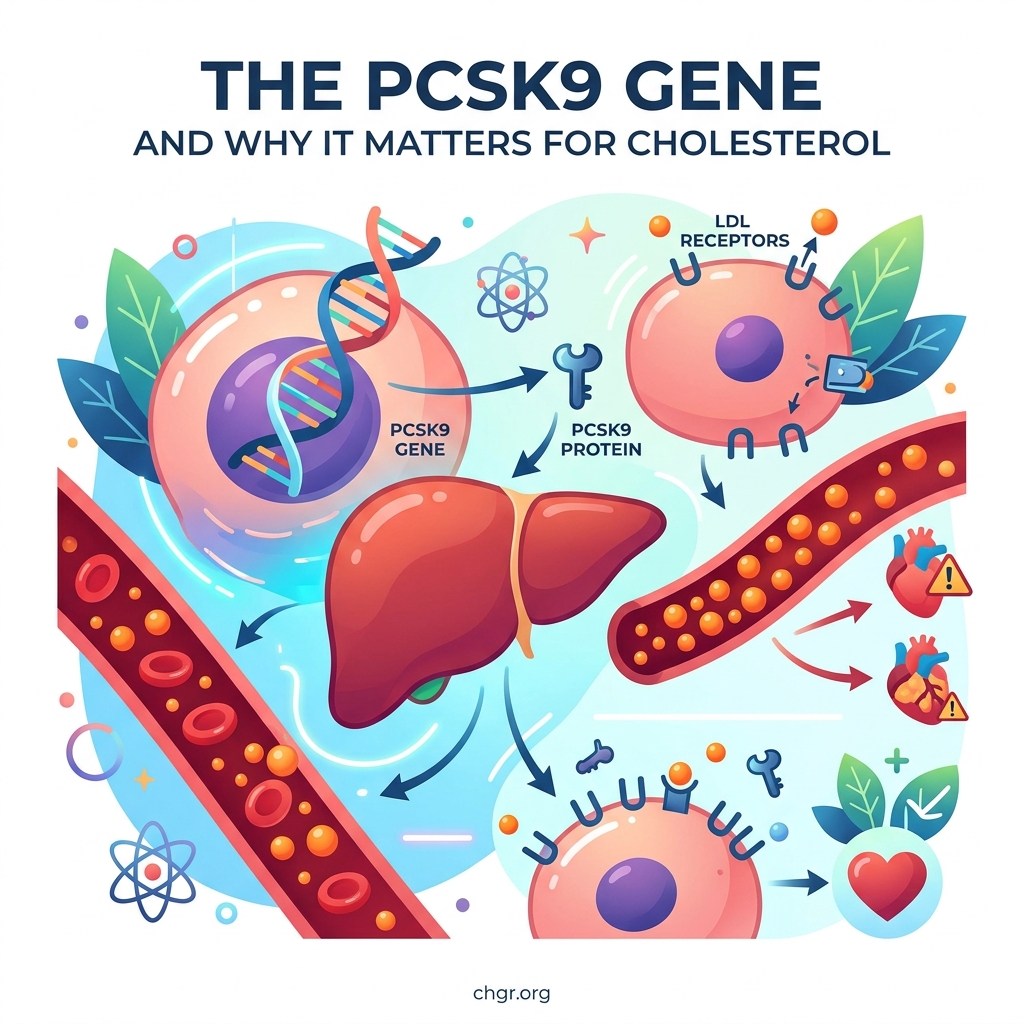
The PCSK9 protein functions as a serine protease, which means it cuts other proteins. But here is the twist: its most important job is not cutting cholesterol directly. Instead, PCSK9 controls how many LDL receptors sit on the surface of your liver cells. These receptors act as docking stations that pull LDL cholesterol out of your bloodstream.
Your liver produces about 70% of your body’s cholesterol, making it the central control point for blood cholesterol levels. The PCSK9 gene acts like a traffic controller, deciding how many LDL receptors remain available to clear cholesterol from circulation. When researchers discovered this mechanism in the early 2000s, it opened an entirely new approach to treating high cholesterol.
The gene itself produces an inactive precursor protein that undergoes autocatalytic cleavage inside liver cells. This process creates the active PCSK9 protein, which then gets secreted into the bloodstream. From there, it travels to the surface of liver cells where the real action happens.
How PCSK9 Regulates Cholesterol in Your Body
The relationship between PCSK9 and your cholesterol levels works like a molecular tug-of-war. LDL receptors on liver cells grab cholesterol particles from your blood and bring them inside the cell for processing. More active receptors mean lower blood cholesterol. PCSK9 determines how long those receptors survive.
Here is the mechanism in simple terms. When PCSK9 protein binds to an LDL receptor, it marks that receptor for destruction. The receptor gets pulled inside the cell through a process called endocytosis and heads straight to the lysosome, the cell’s recycling center. Once destroyed, that receptor can no longer remove cholesterol from your blood.
Without PCSK9 interference, LDL receptors would recycle back to the cell surface after delivering their cholesterol cargo. They could keep working for hours or days, continuously clearing cholesterol. PCSK9 short-circuits this recycling process, essentially throwing the receptors in the trash after one use.
People with naturally low PCSK9 activity have more LDL receptors on their liver cells. These extra receptors aggressively pull cholesterol from the blood, resulting in remarkably low LDL levels. Some individuals with specific genetic variations maintain LDL cholesterol below 20 mg/dL their entire lives without any medication.
The flip side is equally dramatic. When PCSK9 runs too active, receptors disappear faster than the liver can replace them. Cholesterol piles up in the bloodstream because too few receptors remain to clear it. This explains why some people follow perfect diets yet still battle cholesterol levels above 200 mg/dL.
PCSK9 Mutations and Familial Hypercholesterolemia
Genetic variations in the PCSK9 gene fall into two categories that have opposite effects on your cholesterol. Gain-of-function mutations make the protein work too well, destroying receptors faster and raising cholesterol dangerously high. Loss-of-function mutations do the reverse, reducing PCSK9 activity and creating naturally low cholesterol.
The most notorious gain-of-function mutation, called D374Y, changes a single amino acid in the PCSK9 protein. This tiny alteration makes the protein bind to LDL receptors ten times more tightly than normal. People carrying this mutation often develop familial hypercholesterolemia, a condition where LDL cholesterol exceeds 190 mg/dL from childhood.
Familial hypercholesterolemia affects about 1 in 250 people worldwide, making it surprisingly common for a genetic disorder. PCSK9 mutations account for a smaller percentage of FH cases compared to LDL receptor mutations, but they produce equally severe outcomes. Untreated FH patients face heart attack risks decades earlier than the general population.
Loss-of-function mutations tell an equally interesting story. In 2005, researchers discovered that some African Americans carried PCSK9 variants that reduced protein function by 50%. These individuals had LDL cholesterol levels 28% lower than average and showed 88% lower risk of coronary heart disease. They lived completely normal lives with cholesterol levels that would normally require medication.
Understanding these mutation types matters for treatment decisions. Genetic testing can identify whether you carry a PCSK9-related variant, which helps doctors choose the most effective therapy. If you have a gain-of-function mutation, PCSK9 inhibitors work especially well because they directly counteract your overactive protein.
PCSK9 Inhibitors: How These Medications Work
The discovery of PCSK9’s role in cholesterol regulation led to a new class of drugs that specifically target this protein. Unlike statins, which slow cholesterol production, PCSK9 inhibitors prevent the protein from destroying LDL receptors. More receptors survive, more cholesterol gets cleared, and blood levels drop dramatically.
Three FDA-approved medications currently target PCSK9, each using slightly different mechanisms. Alirocumab (Praluent) and evolocumab (Repatha) are monoclonal antibodies that bind to circulating PCSK9 protein in your bloodstream. Inclisiran (Leqvio) uses RNA interference technology to prevent liver cells from producing PCSK9 in the first place.
Clinical trials have shown remarkable results. PCSK9 inhibitors typically reduce LDL cholesterol by 47% to 60% when used alone. Combined with statins, they can push LDL below 25 mg/dL, levels previously thought impossible to achieve safely. The FOURIER trial demonstrated that evolocumab reduced cardiovascular events by 15% beyond what statins alone achieved.
The mechanism differs from statins in a crucial way. Statins block an enzyme called HMG-CoA reductase that produces cholesterol. Your body compensates by increasing LDL receptor production, which actually raises PCSK9 levels. This is why adding a PCSK9 inhibitor to statin therapy creates such powerful combined effects.
Administration happens through subcutaneous injection, typically every two to four weeks depending on the specific drug. Some patients self-inject at home after training, while others prefer clinic visits. The injections cause minimal discomfort compared to traditional intravenous medications.
PCSK9 Inhibitors vs Statins: Key Differences
Both drug classes lower cholesterol, but they work through completely different pathways. Understanding these differences helps explain why some patients benefit more from one approach versus the other, and why doctors sometimes prescribe both together.
Statins have dominated cholesterol treatment for over 30 years. They reduce LDL by 30% to 50% in most patients, cost pennies per pill, and have extensive long-term safety data. However, up to 10% of patients experience muscle pain or weakness that makes statins intolerable. Others need more LDL reduction than statins alone can provide.
PCSK9 inhibitors produce deeper cholesterol reductions without the muscle side effects that plague statin therapy. They work through the liver’s receptor system rather than interfering with cellular energy production, which explains the better muscle tolerance. For statin-intolerant patients, these drugs offer a genuine alternative rather than a compromise.
Safety profiles differ in other ways. PCSK9 inhibitors occasionally cause injection site reactions or flu-like symptoms during the first few doses. Neurological effects like confusion were initially concerns but have not materialized in large studies. Long-term safety data extends over seven years now, showing no unexpected risks.
Cost remains the biggest practical difference. Generic statins cost under $10 monthly. PCSK9 inhibitors originally carried price tags near $14,000 annually, though insurance coverage and manufacturer discounts have improved access significantly. Many patients now pay copays comparable to other specialty medications.
Gene Therapy and CRISPR Advances for PCSK9
The most exciting frontier in PCSK9 research involves permanently disabling the gene itself. Using CRISPR gene-editing technology, scientists can make one-time changes to liver cells that eliminate PCSK9 production forever. This approach could offer a permanent cure for genetic high cholesterol rather than ongoing medication.
Verve Therapeutics leads this research with their VERVE-101 therapy currently in clinical trials. The treatment uses base editing, a refined CRISPR technique that changes a single DNA letter without cutting both strands of the genetic code. This reduces risks while still knocking out PCSK9 function.
Early trial results have been stunning. In 2024, the first human patient received VERVE-101 and showed dramatic PCSK9 reduction. The therapy uses lipid nanoparticles to deliver the gene-editing machinery specifically to liver cells, sparing other tissues from modification. If successful, one infusion could provide lifelong protection.
Beyond CRISPR, researchers are developing oral PCSK9 inhibitors that would eliminate injections entirely. These small-molecule drugs would block PCSK9 from binding to LDL receptors without requiring biologic manufacturing. An experimental pill called enlicitide showed 50% LDL reduction in early trials, comparable to injectable options.
The implications extend beyond cholesterol management. Success with PCSK9 gene editing would prove that liver-directed genetic therapies work safely, opening doors for treating other genetic conditions. It represents a shift from managing chronic disease to potentially curing it at the source.
Who Should Consider PCSK9 Inhibitors?
Not everyone with high cholesterol needs PCSK9 inhibitors. These medications serve specific populations where they provide the greatest benefit compared to other options. Understanding whether you fit these categories helps inform discussions with your healthcare provider.
People with familial hypercholesterolemia represent the clearest candidates. FH patients often need LDL reductions of 60% or more to reach safe levels, which exceeds what statins alone typically achieve. The 2018 guidelines specifically recommend adding PCSK9 inhibitors when FH patients cannot reach targets with other therapies.
Patients with established cardiovascular disease who remain at high risk also benefit. If you have had a heart attack or stroke and your LDL stays above 70 mg/dL despite maximum statin therapy, PCSK9 inhibitors provide additional protection. The ODYSSEY OUTCOMES trial showed alirocumab reduced recurrent events by 24% in this population.
Statin intolerance creates another indication. Some patients genuinely cannot tolerate statin muscle side effects, while others have contraindications like active liver disease. PCSK9 inhibitors offer potent cholesterol lowering without the mechanism that causes statin myopathy.
Genetic testing can help identify PCSK9-related high cholesterol before starting treatment. If testing reveals a gain-of-function mutation, you know PCSK9 inhibitors will work particularly well. Testing also helps family members, since FH inheritance patterns mean siblings and children may share the same risk.
Frequently Asked Questions About PCSK9
Is PCSK9 safer than statins?
PCSK9 inhibitors and statins have different safety profiles rather than one being universally safer. Statins occasionally cause muscle pain, liver enzyme elevations, and diabetes risk. PCSK9 inhibitors avoid muscle problems but require injections and may cause injection site reactions. Large clinical trials show both drug classes have excellent safety records when used appropriately. Your individual risk factors determine which option suits you better.
Which parent do you inherit high cholesterol from?
Familial hypercholesterolemia follows autosomal dominant inheritance, meaning you only need one affected parent to inherit the condition. If one parent carries a PCSK9 or LDL receptor mutation, you have a 50% chance of inheriting it. Some severe cases occur when both parents pass on mutations. Genetic testing of both parents helps clarify inheritance patterns in families with FH.
What are the new cholesterol guidelines in 2026?
Current cholesterol guidelines emphasize personalized risk assessment rather than universal LDL targets. High-risk patients, including those with cardiovascular disease or familial hypercholesterolemia, generally aim for LDL below 70 mg/dL. PCSK9 inhibitors are recommended when statins alone cannot achieve these goals. Guidelines continue evolving as new evidence emerges about optimal cholesterol levels for different populations.
Is there a gene therapy for PCSK9?
Gene therapy for PCSK9 is in clinical trials but not yet FDA approved. Verve Therapeutics is testing VERVE-101, a CRISPR-based treatment that permanently disables PCSK9 in liver cells. Early results show dramatic cholesterol reduction from a single infusion. If trials continue successfully, this could become the first approved gene therapy for cardiovascular disease, potentially offering permanent protection without ongoing medication.
Can diet and exercise fix PCSK9-related high cholesterol?
Lifestyle changes help but often cannot fully overcome genetic PCSK9 overactivity. People with gain-of-function mutations may see modest improvements from diet and exercise, but their cholesterol typically remains dangerously high without medication. However, lifestyle remains crucial because it addresses other cardiovascular risk factors and may allow lower medication doses. Never abandon healthy habits even when taking cholesterol medications.
How do I know if my high cholesterol is genetic?
Several clues suggest genetic high cholesterol: LDL above 190 mg/dL in adults, cholesterol problems since childhood, family history of early heart disease, cholesterol that does not respond to lifestyle changes, or visible cholesterol deposits around eyes or tendons. Genetic testing can confirm PCSK9, LDL receptor, or APOB mutations. A lipid specialist can evaluate whether testing makes sense for your situation.
Conclusion
The PCSK9 gene represents one of the most important discoveries in cardiovascular medicine over the past two decades. Understanding how this single gene controls cholesterol levels has transformed treatment options for millions of people with difficult-to-manage high cholesterol. From revolutionary monoclonal antibodies to potential one-time gene therapies, PCSK9-targeted approaches are reshaping what is possible in heart disease prevention.
If you struggle with high cholesterol despite your best efforts, the PCSK9 gene might explain why. Talk to your doctor about whether genetic testing or PCSK9 inhibitor therapy makes sense for your situation. The science continues advancing rapidly, with new oral medications and gene therapies on the horizon that could make cholesterol management easier and more effective than ever before.
Taking control of your cholesterol starts with understanding the biological factors at play. Armed with knowledge about PCSK9 and its role in your body, you can have more informed conversations with healthcare providers and make better decisions about your cardiovascular health. Your genes may influence your cholesterol, but they do not have to determine your fate.