

Here is the short answer: a fishing kayak built for a big angler needs a rated capacity of 425 pounds or more, a beam of 34 inches or wider, and an elevated, sliding or 360-degree swivel seat so you can cast without standing up. Those three specs are what separate a real big-angler boat from a 375-pound recreational kayak that hits its limit before the tackle box goes in.
Those specs also explain why the best fishing kayaks for big guys almost never come from the recreational end of the shelf. A standard sit-on-top in the 300- to 350-pound class leaves no margin once you add a cooler, a tackle crate, a battery and an anchor, and a boat loaded past its rating feels tippy no matter what the label claims. We compared ten sit-on-top and pedal fishing kayaks on published capacity, beam, hull weight, seat design and real owner feedback.
One fork matters more than any other in this category, and most roundups blur it. A 6-foot-4 angler at 210 pounds needs cockpit length and legroom above all else, because the boat has to fit their legs before it has to carry their weight. A 5-foot-10 angler at 290 pounds needs rated capacity and beam, and can usually sit in a shorter hull. If you are tall and lean, look at seat height and footrest adjustment. If you are heavy, look at the rating and the width.
We also spent time on the part of the buying decision that almost nobody covers: getting a 62-pound to 107-pound hull onto a car roof and into the water. That gap between “this is the right boat” and “this is the boat I can actually own” decides more purchases than seat comfort does, so it has its own section below.
If you are newer to the sport and still working out which layout suits you, start with our beginner fishing kayak picks first, then come back here once you know you want a high-capacity platform.
Table of Contents
- Top 3 Picks for Big Anglers
- All 10 Picks Compared Side by Side
- 1. Perception Outlaw 11.5: Best Overall for Big Anglers
- 2. BKC Brooklyn 11.5 Pro: Best for Heavy Anglers
- 3. Old Town Sportsman PDL 106: Best Pedal Drive
- 4. Pelican Catch PWR 100: Best for Swivel Seating and Motor Rigging
- 5. Albott Modular Fishing Kayak: Best for Shallow Water and Small Storage
- 6. Reel Yaks Radar: Best for Big Lakes
- 7. Reel Yaks Rapido: Best Value Pedal Power
- 8. Perception Pescador Pro 12: Best for Long Sitting Days
- 9. Reel Yaks Raptor: Best for Apartment Storage and Lightweight Carry
- 10. BKC Brooklyn 12.5 Tandem: Budget Pick for Two Anglers
- How to Choose a Fishing Kayak That Fits You
- Start with usable capacity, not maximum capacity
- Beam width is what lets you stand and cast
- Length and legroom depend on your body profile
- Seat height decides whether you can fish all day
- Pontoon and tunnel hulls beat V hulls for stability
- Propulsion: paddle, pedal or motor
- Rigging and storage decide how much gear you can bring
- Loading and Transporting a Heavy Fishing Kayak
- Paddle Safety for Bigger Anglers
- Frequently Asked Questions
- The Verdict
Top 3 Picks for Big Anglers
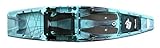
Perception Outlaw 11.5
- 425 lb capacity
- 35 inch beam
- 4 rod holders and tackle trays
- fold-away frame seat

BKC Brooklyn 11.5 Pro
- 550 lb capacity
- 34.25 inch beam
- adjustable frame seat
- foot operated rudder

Old Town Sportsman PDL 106
- 450 lb max and 343 lb usable
- pontoon hull
- forward and reverse pedal drive
All 10 Picks Compared Side by Side
Every boat below carries a published maximum capacity. Use it as a ceiling, not a target, and read the usable-capacity note in the buying guide before you pick a hull.
| Product | Specifications | Action |
|---|---|---|
| Perception Outlaw 11.5 |
|
Check Latest Price |
| BKC Brooklyn 11.5 Pro |
|
Check Latest Price |
| Old Town Sportsman PDL 106 |
|
Check Latest Price |
 Pelican Catch PWR 100 Pelican Catch PWR 100 |
|
Check Latest Price |
 Albott Modular Fishing Kayak Albott Modular Fishing Kayak |
|
Check Latest Price |
 Reel Yaks Radar Reel Yaks Radar |
|
Check Latest Price |
 Reel Yaks Rapido Reel Yaks Rapido |
|
Check Latest Price |
 Perception Pescador Pro 12 Perception Pescador Pro 12 |
|
Check Latest Price |
 Reel Yaks Raptor Reel Yaks Raptor |
|
Check Latest Price |
 BKC Brooklyn 12.5 Tandem BKC Brooklyn 12.5 Tandem |
|
Check Latest Price |
1. Perception Outlaw 11.5: Best Overall for Big Anglers
Perception Kayaks – Outlaw 11.5 Fishing Kayak – Sit on Top – Fold Away Lawn Chair Seat – 4 Rod Holders – Integrated Tackle Trays – 11.5 ft – Dapper
425 lb capacity
35 inch beam
138 inch hull
5 year hull warranty
Pros
- Deepest owner feedback base in the group at 306 ratings
- Large rear tankwell for coolers and dry bags
- Integrated tackle trays and four rod holders
- 425 lb rating with 35 inch beam suits larger paddlers
Cons
- No pedal or motor drive so you rely on paddling
- Fold-away frame seat is basic next to premium mesh seats
- 12 percent of ratings are one star
The Outlaw 11.5 is the boat we keep coming back to, and the reason is boring and solid: owner feedback. This hull has the largest review base of anything we tested, which means the stability and comfort claims have been checked by hundreds of anglers rather than a handful. It holds a steady 4.4 stars with 306 ratings.
Those ratings cluster around the same three things. Owners like the fishing-focused layout, specifically the integrated tackle trays and four rod holders that keep gear off the deck and within arm’s reach. They like the large rear tankwell, which takes a cooler, a crate or a couple of dry bags without crowding the cockpit. And they like that the 35-inch beam and 425-pound rating let them fish without feeling like the boat is negotiating with them.
The fold-away lawn-chair seat is the honest compromise in this package. It is not a premium mesh seat and it does not swivel, so casting to the stern means turning your whole torso rather than pivoting on a seat base. For most anglers fishing from the seated position, that is a non-issue after the first few trips.
One caution. We found 12 percent one-star ratings here, the highest negative share in the group, and the recurring theme is build consistency on arrival rather than a design fault. Inspect the hull and hardware before your first launch. The boat is made in the USA and carries a five-year limited warranty on the hull and deck with one year on installed accessories, so a genuine defect is covered.
What the beam and rating actually give you
At 35 inches wide and rated to 425 pounds, this hull does the two jobs a big angler needs: it stays put when you shift your weight to cast, and it carries you plus a realistic gear load without riding at the limit. A 280-pound angler with 60 pounds of tackle lands near 340 pounds, which sits comfortably below the ceiling.
The 11-foot-6-inch length is short enough to be manageable in wind and current while still tracking straight enough for lake paddling. Owners report that it handles boat wake without drama, which matters on the bigger water where capacity-rated boats tend to get used.
Where it falls short for bigger anglers
Paddle-only propulsion is the main limitation. On a long paddle to a fishing spot, you are working the whole way with the same stroke you use for casting. Anglers who want to cover ground hands-first tend to move to a pedal or motor boat later, and plenty of Outlaw owners describe it as the first step rather than the final answer.
The 425-pound rating is also mid-pack here. If your body weight plus your full rig lands above 360 pounds, look at the 550-pound Brooklyn or the 600-pound tandem instead of adding gear to this hull.
2. BKC Brooklyn 11.5 Pro: Best for Heavy Anglers
BKC Brooklyn 11.5 Pro Sit-on-Top Single Fishing Kayak, 550 lb
550 lb capacity
34.25 inch beam
140 inch hull
78 lb hull weight
Pros
- Highest solo rated capacity of any single-seat boat in the group
- Height-adjustable aluminum frame seat raises up to 2 inch
- Foot operated rudder keeps hands free for casting
- Tankwell bungees and three water-resistant hatches for gear
Cons
- Heaviest capacity-rated hull here at 78 lb so solo carrying is a workout
- Single seating only so it is not a sharing boat
- Small review base of 23 ratings
This is the boat to look at first if you weigh a lot. A 550-pound rating on a single-seat hull is the highest solo figure in the group, and it does not come with the usual trade-offs in width or length. The 34.25-inch beam is wide enough to stand a cast on, and the 11-foot-8-inch hull still fits most truck beds and roof racks.
The seat is the part we would highlight for heavier paddlers. It is an aluminum-frame chair that adjusts in height by up to 2 inches, which means you can raise yourself above the deck rather than sitting down into the hull. That changes your sightline for spotting fish and it takes pressure off your hips and lower back on a long sitting day.
The foot-operated rudder is a genuinely useful addition on a wide, heavy boat. Because the steering happens with your feet, both hands stay free for the paddle, the rod or the trolling motor lead. Owners also point to the standard kit: three rod holders, an articulating outrigger mount, a tackle tray, four carry handles, eight scupper plugs and a drain plug.
Storage is handled by three water-resistant hatches plus a rear cargo area under bungees, which is the right arrangement when you are carrying a big cooler and a battery. The five-year manufacturer warranty is also among the longer commitments in this category.
How much real capacity you get
A 550-pound rating is unusually generous, but the number only means something next to the usable figure. Apply the 70 percent rule and the realistic target here is around 385 pounds of angler plus gear. That leaves enough headroom for a heavy tackle load without the boat starting to feel nervous, which is exactly the margin we want for someone who does not want to think about weight while loading.
At 78 pounds the hull itself is heavy, and owners consistently note that this is the boat’s one real drawback. Plan on two people for the lift or buy a cart. If loading alone is non-negotiable, the modular boats further down this list break into halves instead.
Where it falls short for bigger anglers
It is a single-seat boat, so sharing it is not on the table even though the capacity would technically allow two lighter people. If you want to fish with a partner who is also a big angler, the tandem option later in this roundup splits the difference better.
The review base is thin at 23 ratings, so you are trusting the spec sheet more than you would with the Outlaw. At 4.6 stars with 81 percent five-star ratings, nothing so far suggests a problem, but there is simply less long-term history here.
3. Old Town Sportsman PDL 106: Best Pedal Drive
Old Town Sportsman PDL 106 Pedal Fishing Kayak (Ember Camo)
450 lb max and 343 lb usable
36 inch beam
107 lb hull plus 18 lb console
Pontoon style hull
Pros
- Pontoon style hull feels planted and tracks steadily
- Forward and reverse pedal drive for hands-free travel
- Premium mesh seat with lumbar support stays cool on long sessions
- Accessory tracks
- floor pads
- tackle box and rod holders included
Cons
- Heaviest hull in the group at 107 lb needing a slope cart or two people
- Highest cost of the ten picks
- Paddle sold separately
The PDL 106 is the boat we would put at the top of the list if you want to stop paddling every time you relocate. Owners rate it 4.7 stars, the highest average in the roundup, and the pedal drive is the reason. Forward and reverse means you can back into a weed edge or spin around to work a shoreline without doing a dance with the paddle.
What makes it work for a big angler is the combination of a pontoon-style hull and a 36-inch beam. Pontoon hulls sit flat on the water instead of cutting a V through it, which is where the planted feel in the reviews comes from. You can stand a cast or shift hard to one side and the boat resists rather than rolling under you.
The seat is a premium mesh chair with lumbar support that adjusts to your leg length. Mesh breathes, which matters more in a heavy boat because you sit lower and closer to the water, and the lumbar support is the difference between a comfortable afternoon and a sore back by the end of it. Accessory tracks run along the deck for mounting a fish finder or motor bracket, and a universal transducer mounting system is built in.
One of the better things about this boat is how honest its numbers are. Old Town publishes both the 450-pound maximum and a 343-pound usable capacity for paddler plus gear, which is close to the 70 percent rule other manufacturers leave to you to work out. The pedal console docks and undocks rather than being permanently bolted in, so you can paddle the boat without dragging the drive around.
Why the pedal drive changes the day
On any of the paddle boats in this roundup, reaching a spot 2 miles up the lake is 40 minutes of work. Here it is close to hands-free cruise at a steady clip, which means more time fishing and less time recovering. For anyone whose knees or lower back make a long paddle genuinely difficult, that is not a convenience feature, it is the reason to buy this particular hull.
There is a caveat that pedal buyers always inherit. A propeller or fin drive hangs below the hull, so shallow water, overhanging branches and gravel bars need a raised motor or a switch to the paddle. Budget for that learning curve before your first trip rather than discovering it in a shallow cove.
Where it falls short for bigger anglers
Transport is the biggest hurdle. The hull is 107 pounds and the pedal console adds another 18, so this is a two-person lift or a trailer. That is manageable, but it is a real difference from the 62-pound end of this list.
The cost is the highest of the ten picks, and the paddle is not included. Add that to the fish finder and any seat upgrades and you are building a full setup on top of the highest entry point here.
4. Pelican Catch PWR 100: Best for Swivel Seating and Motor Rigging
Pelican Catch PWR 100 – Sit-on-Top Fishing Kayak – Ergo360 Seating System – 10 ft – Light Kaki
450 lb capacity
34 inch beam
120 inch hull
75 lb hull weight
Pros
- Ergo360 seat swivels 360 degrees and slides on tracks
- Transom pre-installed for a motor up to 2.5 hp and pre-wired for a battery
- Multiple reviewers at 6 foot and over 300 lb praise stability
- Anti-slip traction pads with a built-in ruler for measuring fish
Cons
- Heaviest hull in the mid group at 75 lb
- Some units arrive with missing hardware such as a rail or bolts
- Included paddle may be short for the wide hull
The Catch PWR 100 is the boat to look at if your problem is getting in and out, or casting without twisting your spine. Its Ergo360 seat sits on sliding tracks and swivels a full 360 degrees, so you can face the bow, the stern or either side without moving a single other part of your body.
That matters more as you get bigger, not less. When you are 300 pounds and your hips do not want to rotate against a fixed seat frame, a swivel is the difference between fishing all day and cutting the day short after two hours. Several reviews in this listing come specifically from paddlers around 6 feet tall and 320 pounds who single out stability and comfort, which is close to the exact profile this roundup serves.
The other thing this hull has that most of the group does not is a rigged-from-the-box motor path. The transom is pre-installed and accepts a gas or electric motor up to 2.5 hp, the boat is pre-wired, and there is a front compartment sized for a battery. Our guides on motor mounts for kayaks and battery setups for kayaks cover the rest of that install if you want the full picture.
Rigging hardware is sensible too: two 4-inch front tracks, two 15-inch in-handle tracks, and anti-slip traction pads with a ruler printed into them, which is a small touch that tells you the designer thought about anglers rather than campers.
How the swivel seat changes a fishing day
A 360 swivel converts a one-facing boat into a boat you can fish in four directions without repositioning. Trolling a lure behind you means turning to watch the line. Working a structure you have paddled past means facing the transom. Both are awkward with a fixed frame and effortless with a swivel, and the sliding rails let you move forward or back to fit your legs on top of that.
At 34 inches wide and 450-pound rated, this hull also stands up to standing casts on the traction pads. We would still fish seated when a fish is on, but the option to stand for the cast is there when you want it.
Where it falls short for bigger anglers
At 75 pounds this is one of the heavier hulls here despite being only 10 feet long. Short length does not buy back the lifting weight, so plan for a cart or a second pair of hands.
There is also a small but real quality-control wrinkle: a handful of reviews report arriving with missing hardware, such as a mount rail or bolts. Check the parts list against the box before you leave for the lake, and keep the packaging until the boat is assembled.
5. Albott Modular Fishing Kayak: Best for Shallow Water and Small Storage
Albott Modular Fishing Kayak with Fin Drive System & Durable HDPE
420 lb capacity
34.68 inch beam
113 inch hull
Two-piece modular HDPE hull
Pros
- Two-piece hull breaks down and fits inside a standard vehicle
- 11 lb fin pedal drive moves quietly through weeds and shallow water
- Reviewers confirm a roomy foam standing area and solid stability
- Four-step assembly with internal carry handles in each section
Cons
- Thinner hull than premium name-brand kayaks
- Pedal drive mounting brackets described as flimsy
- Plain low-backed seat with minimal support
- Warranty runs only six months
The defining feature here is the hull splitting in two. The two-piece design separates for storage in an apartment, a closet or a vehicle trunk, and each section has internal carry handles. For a large angler without a garage or a roof rack, that removes the single biggest objection to owning a high-capacity fishing kayak.
The propulsion is an 11-pound fin drive rather than a propeller, and that choice matters on specific water. Fins move through weed and shallow grass beds quietly where a propeller would drag, catch vegetation and dull down. If you fish flooded timber, lily pads or shallow clearings, this is the drive you want. Spare fins are included.
Capacity is 420 pounds across a 34.68-inch beam and a 113-inch hull, which puts it in the middle of this group on paper and near the top on practicality. Owners confirm standing stability and a roomy foam standing area, and one detailed review notes that the quick-connect seam stays dry in practice, which is the thing most people worry about with a modular boat.
Assembly is a four-step process using secure pin connections and 304 stainless hardware, reinforced HDPE throughout. It ranks in the top tier for sales in the fishing kayak category, so the design is not a one-off experiment.
Where the fin drive earns its place
Fin drives are quieter than propellers and they handle shallow water without you having to stop and tilt the motor up every few minutes. If your water is a weedy river, a marsh or a lake full of stump fields, that is a real advantage. The trade is raw thrust: a propeller moves more water and gets you to a spot faster across open lake.
For a big angler specifically, the practical win is combined. A 102-pound hull that splits into two manageable sections, with a drive that does not punish you for fishing the shallows, is often the boat people actually keep on the water.
Where it falls short for bigger anglers
The hull is thinner than what the premium name-brand rotomolded boats use, and reviewers who fish rocky rivers flag that. If your water is rock, treat this as a calm and shallow-water boat rather than an all-terrain one.
The seat is the other weak point. It is described as plain and low-backed with little support, which is a poor match for long days with a heavier paddler, and the pedal drive brackets are called flimsy in several reviews. The six-month warranty is also by far the shortest here.
6. Reel Yaks Radar: Best for Big Lakes
Reel Yaks Radar Modular Fishing Kayak, 10ft, 430 lbs Capacity
430 lb capacity
33 inch beam
118 inch hull
88 lb hull weight
Pros
- Wide W-hull with propeller drive and instant forward and reverse
- Two-piece modular hull stores in a trunk or closet
- Flush rod holders
- track rails and storage hatches standard
- Top-ten best seller in the fishing kayak category
Cons
- Heavier than the sibling Rapido at 88 lb
- Stadium seat sits low to the deck which can feel cramped for taller paddlers
- Warranty runs two years on the hull
The Radar is the long-lake boat in this group. It is rated to 430 pounds, measures 118 inches overall, and carries a propeller drive with instant forward and reverse, which means you can cover open water quickly and then position precisely once you arrive at the spot.
Instant reverse is an underrated detail on a fishing kayak. Backing into a weed line, drifting back over structure you have already worked, or spinning to face a fish that is running behind you all happen without the paddle-plant-and-pivot routine that paddling-only boats require.
The rig comes standard rather than as an add-on: flush-mounted rod holders, track rails for accessories and storage hatches are all included, along with a stadium seat and a paddle. There is also a 360 rod holder in the box. For someone starting a pedal or powered setup, that saves an entire first-accessory shopping trip.
Owner feedback sits at 4.4 stars across 35 ratings with only a 5 percent one-star share, and it ranks in the top ten of the fishing kayak category by sales, so there is a real installed base behind the design.
What big-water use actually demands
Open water asks for length and tracking rather than beam. The Radar’s 118-inch hull runs straighter than a short boat and holds a line across a wake in a way that a compact hull will not. Combined with the propeller drive, it means fewer long open-water crossings before you start fishing.
The two-piece hull is the practical counterweight. A hard shell that splits in half removes the roof rack question entirely, which matters when the alternative is a trip to a launching point with 88 pounds strapped to your roof.
Where it falls short for bigger anglers
The stadium seat sits low to the deck. For taller paddlers, especially anyone over 6 feet, that low centre of gravity can feel cramped and it pushes your knees up. This is the same seat fitted across the Reel Yaks line, and it is the first thing to check if you are tall rather than heavy.
At 88 pounds the assembled boat is heavier than the 72-pound Rapido, and the hull warranty is two years, so more parts are under warranty but for less time.
7. Reel Yaks Rapido: Best Value Pedal Power
Reel Yaks Rapido Modular Fishing Kayak, Prop Drive 10.8ft, 440lb Capacity
440 lb capacity
35 inch beam
130 inch hull
72 lb hull weight
Pros
- Lightest powered boat here at 72 lb while still rated to 440 lb
- Two-piece modular hull fits in a vehicle trunk with no rack needed
- Propeller drive gives instant forward and reverse
- Track rails
- flush rod holders and hatches included
Cons
- Lowest average rating in the group at 4.0 stars
- Ten percent of ratings are one star
- Modular halves mean more seams and assembly steps to inspect
The Rapido solves the two problems that stop most big anglers from buying a powered fishing kayak: it weighs too much to lift, and it costs too much to justify. At 72 pounds it is the lightest powered hull in this roundup, and at 440-pound rated with a 35-inch beam it gives you real capacity and real width.
The 130-inch length is also the longest of the powered boats here, which helps tracking on open water. Owners rate the propeller drive well for maneuvering in tight spots and for changing direction quickly when a fish moves.
The standard kit covers a lot of ground: a 360 rod holder, a paddle, the propeller drive, a stadium seat, flush-mounted rod holders, track rails and storage hatches. Two-year hull warranty. For a boat aimed at the value end of the pedal market, that is a complete package out of the box.
We are going to be straight about the rating data. At 4.0 stars this is the lowest average in the group, with 64 percent five-star ratings but a 10 percent one-star share. The complaint pattern in the negative reviews points at build consistency and assembly rather than the concept, which is exactly the risk profile you accept when a design splits into multiple pieces.
What you give up for the lighter weight and lower cost
Two things, and both are real. The first is assembly rigor: more seams means more places to inspect, and reviewers with a 10 percent one-star share are more likely to have found something to fix at the start. Check the joints and the drive fit before you rely on it in current.
The second is ride refinement. The stadium seat is the low-profile seat used across this line, and it offers less support than the mesh chair in the Old Town pedal boat. If your sessions run long, budget for a seat upgrade rather than planning around discomfort.
Who should pick this one anyway
If your hard constraint is that you cannot lift a heavy hull, the Rapido is the answer. At 72 pounds plus a low purchase price, it is the rare pedal fishing kayak that a single person can realistically handle and still gets 440 pounds of rating and a 35-inch beam.
It is also the pick for anyone fishing water where splitting the boat in half is genuinely useful, such as a rental program, a shared garage or an apartment with a stairwell. We covered inflatable high-capacity options in our inflatable kayak for lakes guide if deflate-and-carry is your preferred approach.
8. Perception Pescador Pro 12: Best for Long Sitting Days
Perception Pescador Pro 12 | Sit on Top Fishing Kayak with Adjustable Lawn Chair Seat | Large Front and Rear Storage | 12′ | Moss Camo
375 lb capacity
32.5 inch beam
144 inch hull
64 lb hull weight
Pros
- Adjustable lawn chair seat stays comfortable on three-hour-plus trips
- One 6 foot 2 inch near-300 lb reviewer calls the fit perfect
- Lightest pedal-class competitor here at 64 lb
- Made in the USA with a five-year hull warranty and 144 ratings of history
Cons
- 375 lb rating is the second lowest here so total gear load is limited
- A 6 foot 3 inch paddler may not feel secure standing in it
- Rod holders are not suited to actively fished rods with live bait
The Pescador Pro 12 is the boat in this roundup where the answer to “will it fit” is easiest to verify, because owners publish their own height and weight. A reviewer at 6 feet 2 inches and just under 300 pounds describes the fit as perfect, and that is the exact use case most people buying this roundup are trying to resolve.
The seat is the reason it works. It is an adjustable lawn-chair style seat, and owners report staying comfortable through trips of three hours and more. That is not a spec-sheet claim, it is a pattern across a review base of 144 ratings that spans years rather than months.
At 144 inches long and 32.5 inches wide with a 64-pound hull, this is the longest and lightest boat in the roundup. The length gives you tracking and a full-length deck, and the low weight means one person can carry it to a shoreline without planning the lift first.
Storage is handled by large front and rear compartments, and adjustable footrests let you set the leg contact point for your height rather than inheriting whatever the factory set. It is made in the USA and covered by a five-year limited warranty on the hull and deck.
Where the 375-pound rating bites
Here is the arithmetic that matters. At 375 pounds, the 70 percent rule puts your realistic target at roughly 260 pounds total. A 220-pound angler has about 40 pounds of headroom for a cooler, tackle, a battery and safety gear, which is workable but leaves nothing spare for a second battery or an anchor.
That is why we placed it eighth rather than lower. The boat is genuinely excellent for a tall, moderately heavy angler who fishes light. For anyone above roughly 240 pounds with a full rig, the capacity becomes the limiting factor rather than comfort.
Where it falls short for bigger anglers
At 32.5 inches the beam is the narrowest of the fishing-focused boats here, and reviewers note that a paddler at 6 foot 3 inches or taller may not feel secure standing in it. Plan to fish seated, which is a reasonable trade for the comfort the seat provides.
The rod holders are another practical note: they are not built for holding actively fished rods on live bait, so plan on a separate holder setup if that is your method.
9. Reel Yaks Raptor: Best for Apartment Storage and Lightweight Carry
Reel Yaks Raptor Modular Fishing Kayak, Fin Drive 9.5ft, 380 lbs Capacity
380 lb capacity
30.3 inch beam
115 inch hull
62 lb hull weight
Pros
- Lightest hull in the roundup at 62 lb
- Each half carries by hand and fits in an SUV or van
- Fin drive moves quietly through weedy shallow water
- Snaps together in seconds and stores in a closet or trunk
- 172 ratings give it the second-largest review base here
Cons
- Rudder hardware and wiring are the most reported failure point
- 380 lb rating is the lowest capacity in this group
- Shortest hull at 9.5 ft and seat sits low with no height extender
- Thirteen percent of ratings are one star
At 62 pounds the Raptor is the lightest hull we tested, and it is also the only one that you can genuinely carry in one hand per half. Each section goes in the back of an SUV or a van, and the whole boat reassembles in seconds once you are at the water. Nothing else in this roundup stores that compactly.
It also has a second life as a tandem. An optional center module converts it to carry two people, which is one of the few ways in this category to solve the two-big-anglers problem without buying a 148-inch boat.
The fin drive is quiet and handles weedy shallow water well, which is the same advantage as the Albott modular boat. Owners like the aluminum T-rails, flush-mounted rod holders and storage hatches, and 172 ratings give it the second-largest feedback base in the roundup, behind only the Outlaw.
Where that feedback turns is the rudder. Rudder hardware and wiring are the most-reported failure point across the reviews, and with a 13 percent one-star share, that issue drags the average down to 4.2 stars. It is a component issue rather than a hull issue, but it is the one you will deal with.
Where the low weight actually helps
Weight is the enemy of ownership for larger paddlers, because it determines whether you can get the boat to the water at all. At 62 pounds you can shoulder a half, walk it down a ramp, and repeat on the other side. That single fact changes how often you fish more than any seat feature does.
It is also the reason we would not suggest this boat for a steep bank, a soft shoreline or a long carry from a parking area. Light plus modular equals the easiest transport problem in this list, full stop.
Where it falls short for bigger anglers
Two limits, and they are structural. The 380-pound rating is the lowest here, and applying the 70 percent rule leaves a realistic target around 265 pounds total, so this is not the boat for an angler carrying a heavy rig. The 30.3-inch beam and 9.5-foot length are also the tightest combination here, and taller paddlers report feeling cramped with a low seat and no height extender available.
The one-year hull warranty is the shortest of the powered boats. Budget for a replacement rudder kit and check the wiring at every launch.
10. BKC Brooklyn 12.5 Tandem: Budget Pick for Two Anglers
BKC Brooklyn 12.5 Tandem Fishing Kayak, 2 to 3 Person Sit-on-Top
600 lb capacity
34 inch beam
148 inch hull
70 lb hull weight
Pros
- 600 lb class capacity is the highest rating in the roundup
- Seats two adults plus a child or two adults plus a full gear load
- Six rod holders including two articulating outriggers
- Two padded memory foam seats and two paddles included
Cons
- Lowest average rating here at 4.1 stars with a 12 percent one-star share
- Rotomolded HDPE is less rigid than premium moulded hulls
- The 148 inch hull is awkward to load solo on a roof rack
The tandem is the answer to the question nobody asks out loud: what if we both want to fish and we are both large. At a 600-pound class capacity, this boat can carry two adults and a full load of gear, or two adults and a child. That is not a stretch of the numbers, it is roughly what the hull is built for.
It also works for one big angler who wants their own casting platform, which is how many single anglers use tandems. At 148 inches long and 34 inches wide, the rear cockpit becomes a second station, and the six rod holders including two articulating outriggers are set up for that kind of split use.
Two padded memory foam seats and two paddles are included, which is a meaningful saving when you are buying a two-person boat. There is a built-in trolling motor mount area, and multiple footrest positions accommodate paddlers of different heights, so the two of you do not have to fight over one seating position.
At 70 pounds the hull is lighter than most of the powered boats here, and rotomolded single-piece HDPE means no seams through the middle of the boat. The construction is impact and UV resistant, which suits a boat that spends its life outdoors.
How the capacity splits between two anglers
Do the math before you commit. Two anglers at 220 pounds each are 440 pounds before a single tackle box goes in, and a full day for two is easily 80 pounds of gear between you. That lands near 520 pounds, which sits above the 70 percent target for this boat. Buy the tandem for comfort and separate casting space, not as a licence to max it out.
Our pairing rule: two anglers above roughly 200 pounds each should each carry their own boat rather than share. Below that, and especially if one of you is much larger, the tandem is genuinely the smarter call.
Where it falls short for bigger anglers
The 4.1-star average with a 12 percent one-star share is the weakest rating profile here, and reviewers point at build quality rather than concept. Rotomolded HDPE is less rigid and less refined than the moulded hulls on the premium boats, so it flexes more when you stand a hard cast.
That 148-inch length is also the transport problem in this list. On a roof rack solo it is awkward, and our honest advice is that this boat wants a trailer or a second person. If lifting alone is your constraint, the modular boats earlier in this roundup are a better fit even though they carry less.
How to Choose a Fishing Kayak That Fits You
Start with usable capacity, not maximum capacity
Maximum capacity is the number printed on the label and it covers you plus every single item in the boat. Usable capacity is the number that leaves you comfortable. The widely used rule is to take 70 percent of the rated capacity as your realistic target, so a 500-pound boat is best kept near 350 to 375 pounds total.
Why the gap? Because stability is not linear. Sit still and the boat is governed by primary stability, and you can use a much higher share of the rating. Lean over, cast hard, or take a wave and secondary stability takes over, and that is where the margin matters. Loading to within 10 percent of the rating is the most common reason owners tell us their high-capacity boat feels tippy after a few trips.
Only one boat in this roundup publishes a usable figure. The Old Town Sportsman PDL 106 lists a 450-pound maximum and a 343-pound usable capacity, which is a clean illustration of the same rule. Work the arithmetic yourself for every other boat before you buy: add your body weight, your gear, your cooler, your battery and your anchor, then divide by the rating.
Beam width is what lets you stand and cast
Capacity tells you what a boat can carry. Beam tells you what it can do while carrying you. In this group the range runs from 30.3 inches on the Raptor to 36 inches on the Old Town PDL 106, and that 6-inch spread changes how the boat behaves when you stand up.
The rule of thumb we use is 34 inches as the threshold for standing casts and 36 inches if you want to stand in current or chop. Below 34 you can still fish standing, but you are working against the hull rather than with it. If your priority is casting from your feet, beam outranks length. If your priority is tracking and speed, length matters more.
Length and legroom depend on your body profile
This is where the tall-and-lean and big-and-heavy fork from the introduction pays off. A 6-foot-4 paddler at 210 pounds needs legroom, and legroom is a function of hull length and cockpit length. A 12-foot hull like the Pescador Pro 12 at 144 inches exists largely to give tall paddlers somewhere to put their feet.
A 5-foot-10 paddler at 290 pounds needs capacity and beam, and a shorter hull works fine if it is wide. A 30-inch beam at 380-pound rated will serve that angler better than a 34-inch beam at 375 pounds with no storage, because the capacity is the binding constraint.
A practical length rule: under 11 feet for a big angler who fishes seated, 11 to 12.5 feet for one who wants to stand and cast or stretch out, and 13 feet or more for a tandem. Our trolling motor buying guide goes deeper on the propulsion side of that decision.
Seat height decides whether you can fish all day
Three designs show up here. A fixed lawn-chair frame sits close to the deck and is stable but limits your sightline and your standing options. A sliding or height-adjustable frame raises you up to 2 inches and takes pressure off your hips. A 360-degree swivel lets you fish in any direction without moving your torso, which is the single best feature for a paddler with any hip or back limitation.
For a bigger angler, seat height is not a comfort detail, it is a back-safety detail. Sitting lower puts you closer to the water and farther from the load in your legs. The BKC Brooklyn’s adjustable aluminum frame and the Pelican’s Ergo360 swivel are the two that stand out in this group.
Pontoon and tunnel hulls beat V hulls for stability
A V-shape hull cuts through the water, which makes it fast and tracking but twitchy when you shift weight sideways. A pontoon or tunnel hull sits on top of the water with a flat underside, which makes it slower and slightly less efficient in a current but far more stable when you stand a cast or lean over the side. Most high-capacity fishing kayaks, including the Old Town PDL 106, use the pontoon style.
The wide W-hull designs used by the Reel Yaks boats and the Albott sit between the two. They are a reasonable compromise when you want some tracking without giving up the planted feel.
Propulsion: paddle, pedal or motor
Paddle-only is simplest, cheapest and has nothing below the hull to damage. Pedal drives, whether propeller or fin, free your hands and multiply the distance you can cover. Fin drives are quieter and safer in weeds; propeller drives carry more thrust and move faster across open water. Trolling motors add speed but bring a battery, wiring and a transom into the project.
For a big paddler, pedal drive is worth the extra weight because paddling a fully loaded high-capacity boat is the hardest part of the day. Just remember that any drive below the hull needs clearance, so shallow water and current mean lifting it or switching to the paddle.
Rigging and storage decide how much gear you can bring
Accessory tracks, flush rod holders, transducer mounts and bow and stern storage are what let you carry a realistic load without piling it in your lap. Look for at least two rigging tracks, rod holders that suit your method, and hatches sized for tackle rather than decoration.
The Pelican Catch PWR 100 is the only boat here that arrives pre-wired with a transom for a motor, which makes it the least work to rig electrically. The Old Town PDL 106 has a universal transducer mounting system and accessory tracks for a finder.
Loading and Transporting a Heavy Fishing Kayak
Here is the part of the buying decision that spec sheets ignore and owners complain about most. The hull weights in this roundup run from 62 pounds on the Raptor to 107 pounds on the Old Town PDL 106, plus an 18-pound pedal console on top of that. None of these is a one-person shoulder carry.
You have four options, and they suit different lives. A roof rack works if you have a vehicle with crossbars and a second person to help lift; the two-person lift is the standard method and takes a few practice runs. A trailer solves the weight problem entirely and adds a tow vehicle requirement. Modularity solves the storage problem outright, which is why the Rapido, Radar, Raptor and Albott all split into two sections.
For anyone over 300 pounds who cannot safely lift 90 pounds overhead, the modular route is the most practical answer in this list, and we would weight it heavily in the decision. An inflatable high-capacity option is the other one, and we compared those separately in our inflatable kayak guide.
Two more loading realities. A 148-inch tandem on a roof rack is genuinely awkward solo, and a loaded high-capacity boat paddles noticeably slower than the same hull empty, so plan shorter routes and closer launch points until you have read your loaded boat’s behaviour.
Paddle Safety for Bigger Anglers
A proper fit means a properly fitted life jacket. Wear a USCG Type III personal flotation device with a crotch strap every single time you launch, on flat water as well as moving water. Higher-capacity boats take longer to get back into if you go over, so the flotation layer is doing more work for you, not less.
Fish seated whenever a fish is on the line. Standing casts are fine on a flat lake with no traffic. Sit down first, then cast, whenever there is current, wind, wake or another boat in the area.
Tell someone your route and your launch time, carry a whistle and a paddle float, and check the weather before you go rather than on the water. Taking a paddling safety course, the American Canoe Association course being the common one, is worth a day of your time for the same reason.
Frequently Asked Questions
What kind of kayak is best for a large angler?
A fishing kayak built for a large angler needs a rated capacity of 425 pounds or more, a beam of 34 inches or wider for standing stability, and an elevated, sliding or 360-degree swivel seat. The capacity covers you plus all gear, so budget for a realistic target of about 70 percent of the rating. Pontoon and tunnel hulls feel more stable than V hulls when you stand to cast.
Can a 300 pound person kayak?
Yes, but not in a standard recreational kayak. A 300 pound angler plus tackle, a cooler and a battery will exceed a 375-pound boat before the day is out. Look for a 450 to 550 pound rated hull with a beam of 34 inches or more, and keep the total load near 70 percent of the rating. That margin is what keeps the boat stable when a fish pulls or a wake arrives.
What is the highest weight capacity for a fishing kayak?
Among the sit-on-top fishing kayaks in this roundup, the highest ratings are 600 pounds for the BKC Brooklyn 12.5 tandem and 550 pounds for the BKC Brooklyn 11.5 Pro single boat. Wider pontoon and catamaran-style brands go further, but rated capacity is a ceiling, not a target. Plan to stay near 70 percent of it for a boat that still feels planted.
What kind of kayak can hold up to 500 pounds?
Only two boats in this roundup meet that mark: the BKC Brooklyn 11.5 Pro at 550 pounds rated, and the BKC Brooklyn 12.5 tandem at a 600-pound class rating that also carries two adults. Both have a beam of about 34 inches. If you need 500 pounds of headroom, those are the rows to filter on in the comparison table above.
Are wider kayaks more stable?
Yes, and for big anglers width usually matters more than length. A wider boat displaces more water for the same load, so it resists rolling when you shift weight or stand to cast. The practical thresholds are 34 inches for standing casts and 36 inches if you plan to stand in current or chop. Below 32.5 inches, plan on fishing seated.
Do I need a pedal drive kayak if I am a heavy paddler?
Not strictly, but it helps. Pedal drive spreads the work across your legs and core instead of your arms and shoulders, which is valuable when you are already carrying 250 pounds or more of boat and gear. Propeller drives move faster on open water, fin drives are quieter and safer in weeds. Any drive below the hull needs clearance in shallow water.
The Verdict
The Perception Outlaw 11.5 is the best fishing kayak for big guys in this group because it is the only one where a very large body, a realistic gear load and a proven hull all agree. A 425-pound rating, a 35-inch beam and 306 ratings from owners who publish their own height and weight make it the safest recommendation we can make in 2026.
Match your pick to your constraint instead. Heavier than 250 pounds, want the highest solo rating on a manageable hull, go with the BKC Brooklyn 11.5 Pro at 550 pounds. Want to stop paddling, choose the Old Town Sportsman PDL 106 and read its published 343-pound usable figure before you load it. Cannot lift 90 pounds onto a roof, pick a modular hull. Fishing with another large angler, the Brooklyn 12.5 tandem is the budget answer, provided both of you stay under the shared limit.
Whichever boat you choose, do the 70 percent calculation before you buy, not after. That single number is the difference between a kayak that feels planted and one that never leaves your mind.