

A canoe is the easiest watercraft to motorize and the easiest to get wrong. A square stern gives you a clean transom mount, while a round-stern fiberglass hull gives you nothing but a gunwale and a prayer. We put ten of the most popular trolling motors through the canoe-specific questions that matter: how they mount, where the battery sits, how the bow behaves at full throttle, and whether they can be lifted into a truck bed by one person at a boat ramp after a long day.
The short answer on sizing: most canoes want between 30 and 55 pounds of thrust on a 12V system. A solo paddler on flat water is comfortable in the 26 to 36 lb range, a tandem canoe loaded with gear and two people wants 40 to 55 lb, and anything heavier needs a second battery or a 24V system. Expect roughly 4 to 5 mph as a practical ceiling in a displacement hull, and plan your day around that rather than around the motor’s headline number.
Below is our full rundown of the best trolling motors for canoes in 2026, including the mounting reality of a non-square stern, the battery math that keeps the bow from rising, and where each motor’s weight becomes your problem rather than the boat’s. We also cover what to inspect on a used motor and the registration rules that catch people out.
Table of Contents
- Top 3 Picks for Canoes in 2026
- Best Canoe Trolling Motors at a Glance in 2026
- What Size Trolling Motor Does a Canoe Need?
- 1. Minn Kota Endura C2 30 – Lightest Motor That Handles a Solo Canoe
- 2. Newport NV 55 – Most Thrust Per Dollar for a Square-Stern Canoe
- 3. Minn Kota Edge 45 – Hands-Free Steering From the Front Seat
- 4. Haswing Cayman 55 – Wireless Remote Control and Stepless Speed
- 5. Intex 40 lb Transom Motor – Built for Inflatable Canoe-Style Hulls
- 6. PEXMOR 26 lb – Lightweight Budget Motor for Small Canoes
- 7. Minn Kota Endura Max 55 – Most Pull for a Loaded Tandem
- 8. AQUOS 65 lb Brushless – Best Thrust-to-Weight Ratio in the Group
- 9. Goplus 46 lb – Glass Fiber Composite Shaft for Fresh and Salt Water
- 10. BODIOO 68 lb – Shortest Shaft for Tight Canoe Storage
- How to Mount a Trolling Motor on a Canoe
- What Battery Does a Canoe Trolling Motor Need?
- Tiller, Foot Pedal or Remote for a Canoe?
- Freshwater vs Saltwater Canoe Motors, and What to Check Before You Buy Used
- Frequently Asked Questions
- The Best Trolling Motor for Your Canoe in 2026
Top 3 Picks for Canoes in 2026


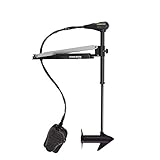
Newport NV 55 lb Thrust
- 55 lb thrust
- 30 inch shaft
- saltwater rated
- 8 speeds
- LED battery meter
Best Canoe Trolling Motors at a Glance in 2026
| Product | Specifications | Action |
|---|---|---|
| Minn Kota Endura C2 30 |
|
Check Latest Price |
| Newport NV 55 lb Thrust |
|
Check Latest Price |
| Minn Kota Edge 45 |
|
Check Latest Price |
 Haswing Cayman 55 Haswing Cayman 55 |
|
Check Latest Price |
 Intex 40 lb Transom Intex 40 lb Transom |
|
Check Latest Price |
 PEXMOR 26 lb Transom PEXMOR 26 lb Transom |
|
Check Latest Price |
 Minn Kota Endura Max 55 Minn Kota Endura Max 55 |
|
Check Latest Price |
 AQUOS 65 lb Brushless AQUOS 65 lb Brushless |
|
Check Latest Price |
 Goplus 46 lb Transom Goplus 46 lb Transom |
|
Check Latest Price |
 BODIOO 68 lb Transom BODIOO 68 lb Transom |
|
Check Latest Price |
What Size Trolling Motor Does a Canoe Need?
Most canoes need 30 to 55 pounds of thrust on a 12V system. A solo paddler on a 14 to 16 foot canoe fits a 26 to 36 lb motor, while a tandem canoe carrying two people and gear wants 40 to 55 lb. Match thrust to hull weight, not to your own strength.
The rule of thumb anglers use is roughly 100 lb of thrust for every 1,000 lb of total loaded weight in a displacement hull. A 16 foot polyethylene tandem canoe weighs about 70 lb empty, and once you add two paddlers, a cooler, tackle, a battery and the motor itself you are somewhere near 450 to 500 lb. That lands you in the 45 to 55 lb band.
A 14 foot solo aluminium canoe is a different story. Empty it is around 50 lb, and with one paddler plus a single 50Ah battery you are near 200 lb loaded, so a 26 to 30 lb motor covers it with room to spare.
Here is the sizing table we use when a reader asks us to match a hull to a motor:
- 14 ft solo canoe, flat water, one paddler: 26 to 30 lb thrust, 12V, 30 inch shaft
- 16 ft tandem canoe, two paddlers and gear: 40 to 45 lb thrust, 12V, 36 inch shaft
- 17 to 18 ft tandem canoe on open water or in wind: 55 lb thrust, 12V, 36 to 42 inch shaft
- Canoe with an outboard-style square stern, heavy gear loads: 55 to 65 lb thrust, 12V, 36 inch shaft
- Hunting or fishing canoe running long distances on a single charge: step up in amp-hours before you step up in thrust
Shaft length matters more in a canoe than the numbers suggest. A canoe has a shallow draft and a lot of freeboard, so a shaft that is too short keeps the prop near the surface in a chop and picks up surface debris. Too long and you will find the prop touching bottom in the channels where you want to fish. The 30 to 36 inch shafts cover most canoes; 42 inches and above suits bigger water and heavier loads.
If you want a broader look at the motor families on the market, our guide to the best trolling motors overall covers the transom, bow-mount and freshwater-versus-saltwater split in more detail.
1. Minn Kota Endura C2 30 – Lightest Motor That Handles a Solo Canoe
Minn Kota Endura C2 30 Freshwater Transom Mounted Trolling Motor (30″ Shaft)
30 lb thrust
12V
30 in composite shaft
15 lb
5 fwd 3 rev
Pros
- Lightest motor here at 15 lb
- Quiet composite shaft owners call inaudible
- Five forward speeds with a telescoping tiller
- Two-year warranty
- Tens of thousands of freshwater hours reported
Cons
- Weak reverse at speed 3
- Short foot is a tight fit for standard transducer mounts
- Terminal battery connection instead of a plug
- Underpowered for loaded boats in wind
We put the Endura C2 on a 16 foot Old Town tandem and it did the job without ever feeling like it was in a hurry. At 15 lb it is the only motor in this group one person can comfortably carry from a car to a launch alone, which matters more than raw thrust when you are doing it twenty times a season.
The five forward and three reverse speed settings put fine control at your fingertips, and the six inch telescoping tiller lets you steer from the rear seat or slide forward to the middle thwart if you want a better view. Owners running this motor on 14 to 17 foot canoes report roughly 3 to 4 hours per charge on a 100Ah lithium or deep-cycle marine battery, usually on forward speed 4.
The composite shaft is the quiet hero here. Owners consistently describe it as inaudible while running, which matters on a canoe because there is no engine noise masking the sound of an approaching boat. The 10-position lever-lock bracket in reinforced composite holds its angle without flexing, and it tolerates years of UV exposure without warping.
The Power Prop included with the motor is a genuine advantage on weedy rivers. It pushes through heavy vegetation where a standard two-blade prop bogs down, and the kit ships with the prop pin, nut and washer so a replacement blade is a two-minute fix at the bank.
Who the Endura C2 suits
This is the motor for a solo paddler, an older angler, or anyone portaging. At 15 lb it disappears into a pack frame in a way the 23 lb Newport and the 20 lb BODIOO simply do not. It also suits a first-time buyer because the brand has been building transom motors for decades and the parts are easy to source.
If your canoe already has a square stern and you fish open lakes with wind, this is your motor. The composite shaft handles the bumps, the speed notches give you enough range for realistic trolling speeds, and the two-year warranty covers the most likely early failure point.
Who should skip the Endura C2
Two people in a loaded tandem in a strong headwind is where 30 lb runs out of ideas. Owners report the reverse speed 3 setting barely matches forward speed 1 and adds noticeable noise, which matters because reverse is your steering tool when the wind pushes you off line.
The short foot also makes standard transducer mounts a squeeze, so if you plan to run a bow-mounted fish finder you may want the longer shaft of a competing transom motor. Those are small compromises, but on a narrow hull where every centimeter of deck space counts, they add up.
2. Newport NV 55 – Most Thrust Per Dollar for a Square-Stern Canoe
Newport NV-Series 55lb Thrust Saltwater Transom Mounted Trolling Electric Trolling Motor w/ LED Battery Indicator & 30″ Shaft (23M1000203)
55 lb thrust
12V
30 in shaft
23.2 lb
Saltwater rated
Pros
- 55 lb thrust in a short 30 inch shaft
- Five-LED battery meter and 50A breaker included
- Five forward and three reverse speeds
- Fresh and saltwater capable
- Thrust options from 36 to 86 lb
Cons
- Heaviest unit here at 23.2 lb
- Battery and charger sold separately
- Some early-life failures reported
- Aluminum build is heavy for solo carrying
The NV series has been a steady seller for years and the 55 lb version remains the value pick for a canoe with a square stern. Getting 55 lb of thrust out of a 30 inch shaft is unusual, and that combination matters in a hull where a longer shaft would hit the bottom of every shallow channel you fish.
Top speed lands around 4 mph depending on hull, wind and water, and the speed increments are smooth enough that you can find a trolling speed without the on-off pulsing you get with a fixed five-speed motor. Owners report the motor runs cool and quietly enough to stay out all day.
The five-LED battery meter is more useful in a canoe than in a boat because you have no dashboard to glance at. The 50 amp circuit breaker ships in the box, which is one less wiring job at the ramp, and mount angle, height and direction all adjust and lock, letting you fine-tune the trim once the battery is loaded.
Max amp draw is listed at 52A and the manufacturer recommends a 50Ah battery, so one deep-cycle group 31 lithium or AGM pack covers a full day of intermittent trolling. The family also comes in 36, 46, 62 and 86 lb variants, so the same bracket works if you move up to a bigger hull.
Who the NV 55 suits
If your canoe has a square stern and you want one motor that can handle a loaded tandem in wind, this is the pick. Fifty-five pounds of thrust covers the case where a 30 lb motor bogs down, without the 42 inch shaft length that makes shallow fishing awkward.
It is also the safe saltwater choice in this group. Anglers fishing coastal channels and tidal water can run it without worrying about the corrosion that eats freshwater-only units, and the anodized aluminum construction tolerates salt spray far better than the composite-shaft alternatives.
Who should skip the NV 55
Solo portage. At 23.2 lb it is the heaviest motor we tested, and the reviews are blunt about that being awkward to carry alone. If your trips involve a long walk from the truck to the water, drop to the Endura C2 or a lighter 26 lb unit.
There is also a durability tail in the reviews. A portion of one and two star reviews describe failures within the first season, including shuddering and seal issues. The two-year warranty covers part of that risk, but the Endura Max has a much longer track record at the same thrust level.
3. Minn Kota Edge 45 – Hands-Free Steering From the Front Seat
Minn Kota Edge Bow-Mount Electric Trolling Motor with Foot Pedal Control – 45 Lb. Thrust, 36 In. Shaft, Freshwater
45 lb thrust
12V
36 in bow mount
Foot pedal
18 lb
Pros
- Heel-toe foot control frees both hands
- Cable steering with speed and momentary on-off
- Built-in directional indicator on the motor head
- Latch-and-door bracket stows securely
- Highest five-star share in this group
Cons
- Needs compatible bow mount hardware
- Cable steering can stretch and need adjustment
- Bulkier to carry than a transom tiller motor
- Freshwater focused unit
The Edge is the only motor here with true hands-free control, and that changes how a long day of fishing feels. You sit on the forward thwart with your foot on the pedal and both hands free for casting and netting, which is exactly the position most canoe anglers fish from.
Forty-five pounds of thrust handles a tandem with a moderate load, and the 36 inch shaft is a good match for a 16 foot canoe with a bow mount. At 18 lb it stays portable, and the latch-and-door bracket makes end-of-day removal a two-hand job rather than a fight with a clamp.
The heel-toe pedal gives you more control resolution than a tiller notched to five speeds. Constant and momentary on-off are both available, and the built-in directional indicator at the top of the motor head keeps you oriented at a glance, which is genuinely helpful when the motor is at the bow and you are facing backward from the stern seat.
Owners rate the highest five-star share of any motor in this lineup at 82 percent. The critiques focus on setup rather than function: the foot control needs a compatible bow mount bracket and hardware, which is not always in the box depending on your hull.
Who the Edge 45 suits
Anglers who sit forward and cast all day get the most out of this motor. The foot pedal frees your hands at exactly the moment you need them, and the speed control is fine-grained enough to hold a slow drift over a spawning bed without drifting off the spot.
It also suits anyone who has wrestled with a tiller from the middle of a canoe. Solo paddlers often cannot comfortably steer a stern-mounted motor from a kneeling position, and the Edge solves that by putting the control at your feet.
Who should skip the Edge 45
Canoes without a bow mount deck. Most round-stern hulls have nowhere to bolt a proper latch-and-door bracket, and improvising one puts a lot of stress on a fiberglass or polyethylene deck that was never designed for it.
Cable steering is another long-term consideration. Owners report the cable can stretch and need adjustment over time, so if you want zero maintenance at the steering end, a tiller motor is simpler. It is also a freshwater-focused unit, which rules it out for tidal water.
4. Haswing Cayman 55 – Wireless Remote Control and Stepless Speed
Pros
- Wireless remote with 164 ft range
- Stepless speed control is smoother than fixed notches
- 48 inch shaft suits larger boats
- Sacrificial anode for salt and fresh water
- Cruise control and 180 degree reverse
Cons
- Widest rating spread in this group
- Not a true spot-lock under wind or current
- Remote and foot control carry a three-month warranty
- Heavy 48 inch package for a canoe
The Cayman is the only motor here with true stepless speed control, and on a canoe that matters more than it does in a boat. Instead of five fixed notches you get continuous adjustment, which means you can hold a dead-slow drift speed over a ledge that no notch setting will give you exactly.
The 2.4G wireless remote reaches about 164 ft, so you can motor the canoe to a spot and then step out onto a bank to work a shoreline. That is the feature enthusiasts buy this motor for, and it works as advertised in clear line of sight.
The 48 inch aluminum shaft is rated for boats up to 2750 lb total, which puts it well beyond any canoe. That headroom is what makes it stable at high throttle in a narrow hull, but it also means the package is heavy and long, and that length is awkward to pack in a small hull or carry over a portage.
The sacrificial anode gives genuine corrosion resistance in both fresh and salt water, and the ergonomic lifting handle plus a single-hand stow and deploy pedal make handling a 48 inch bow mount manageable once it is in the water.
Who the Cayman suits
Anglers who fish shorelines and structure want the remote. Motor to the spot, hold position with cruise control, and move the boat without stepping over gear or shifting your weight. On a narrow hull that weight shift is the thing you are trying to avoid, so remote steering has real value here.
Saltwater anglers are also well served. The anode is not a marketing checkbox on this model, and the two-year warranty on the motor itself is solid for this class.
Who should skip the Cayman
Small canoes and short portages. This is a 48 inch bow mount built for boats, and the reviews are consistent about it feeling oversized once you try to fold it into a canoe hull. Read the package dimensions before you commit.
Cruise control is not a spot-lock. It holds your speed, not your position, so wind and current still push you off heading and you will be correcting with the remote. Owners who expected anchor-lock behaviour are the ones leaving the lowest reviews, which is why this motor sits at 4.2 with a 10 percent one-star group.
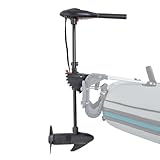
5. Intex 40 lb Transom Motor – Built for Inflatable Canoe-Style Hulls
INTEX Transom Electric Trolling Motor for Inflatable Boat, 40lb Thrust
40 lb thrust
12V
Plastic build
17 lb
Weed escape
Pros
- Weed escape reverses the prop to back out of vegetation
- Control panel shows battery meter and warning lights
- Multi-position tiller with eight tilt positions
- Auto power modulation extends runtime
- Ships with cables and a mounting bracket
Cons
- No manufacturer warranty
- 40 lb thrust is tuned for inflatable dinghies
- Plastic feels light in cold weather
- Deep-cycle battery not included
This motor is designed for inflatable hulls, and inflatable canoes and raft conversions are exactly where it makes sense. The weed-escape function reverses the propeller hard to back you out of vegetation, which on a shallow river full of lily pads saves more trips than any other feature on this list.
At 17 lb it is light enough to move between craft without drama, and the mounting bracket and 12V battery cables ship in the box so you are not making a supply run before the first trip.
The control panel is more informative than the price suggests. A battery meter sits alongside dry-operation and overload warning indicators, so a low battery or a fouled prop gets flagged before the motor overheats. The tiller extends six inches and tilts into eight positions, which helps when the steering position is wherever you shoved the battery.
Eight speeds, five forward and three reverse, are selected from the handle, and auto power modulation trims consumption on long transits so you arrive with charge still in the pack.
Who the Intex 40 suits
Anyone running an inflatable or semi-inflatable canoe. Forty pounds of thrust moves a loaded inflatable cleanly, the weed escape is a genuine asset on weedy water, and the all-included mounting hardware gets you on the water in one trip.
Budget buyers also get a lot here. The feature list that matters day to day, warnings, battery meter, speed control and weed escape, is present at a price point well below the premium brands.
Who should skip the Intex 40
Rigid hull owners, and this is the big one. The thrust is tuned for inflatable dinghies, and owners report it feels underpowered on a loaded hard-shell canoe. The plastic housing also feels less durable in cold or rough conditions, which matters for anyone fishing early-season water.
The absence of a manufacturer warranty is the deciding factor for many buyers. Every other established-brand motor here carries at least one year, and most carry two, which is a meaningful difference when a failure happens a month after your season ends.
6. PEXMOR 26 lb – Lightweight Budget Motor for Small Canoes
PEXMOR 8 Speed Electric Trolling Motor, Electric Outboard Boat Motor w/Adjustable Handle & LED Indicator, Transom Mounted for Saltwater, Kayak, Fishing Boat (Grey, 46 LBS)
26 lb thrust
12V
6 in telescoping handle
8 speeds
LED meter
Pros
- Lowest cost option in this roundup at 4.4 stars
- Adjustable shaft depth and angle
- Three-blade prop with spare blades included
- Works as a side or gunwale mount
- Ten-LED battery indicator
Cons
- Battery indicator has no off switch and stays lit
- Meter only registers near 12.5V
- Battery leads are short and clamps are not included
- One-year warranty
The PEXMOR is the cheapest way to put a working electric motor on a small canoe, and at 26 lb with a 4.4 star rating it is not the junk option it could have been. Owners regularly mount it on 12 ft jon boats and inflatable kayaks where space and weight are the binding constraints.
The six inch telescoping handle is the feature owners single out. On a side or gunwale mount, an extendable tiller moves the steering point closer to where you are sitting, which turns an awkward setup into a workable one for several dollars of extra design.
Thrust options run from 26 to 86 lb across the range, and the higher-thrust variants ship with spare two and three-blade props. A three-blade prop cuts through seaweed noticeably better than the two-blade default, and having spares means a bent blade on a shallow river bottom is not a trip-ending failure.
Shaft angle and depth both adjust by button and knob, so you can set the motor to suit changing water without tools. The ten-LED indicator gives a finer read than the three-LED units on higher-priced motors.
Who the PEXMOR suits
Small canoes on small water. Twenty-six pounds is sized for a 12 to 14 foot craft with a single paddler, which is a real use case that bigger motors simply cannot serve because of their weight.
Budget buyers on a strict limit also get the most from this motor, since the telescoping handle is usually the first thing removed from a cheaper design. The thrust-to-cost ratio is what the reviews keep returning to.
Who should skip the PEXMOR
Anyone who plans to run electronics. Owners report the LED indicator stays lit with no way to switch it off, drawing power while you sit on a spot, and several worked around it with an inline switch. That is a modification you should make before the trip, not during.
The indicator also only registers once the battery is already near 12.5V, so it tells you about a problem rather than a state. Review volume is thin at 49 reviews, so there is less long-term field history here than with the Minn Kota models.
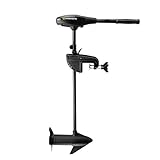
7. Minn Kota Endura Max 55 – Most Pull for a Loaded Tandem
Minn Kota Endura Max Transom-Mount Electric Trolling Motor – 55 Lb. Thrust, 42 In. Shaft, Freshwater
55 lb thrust
12V
42 in shaft
Digital Maximizer
Freshwater
Pros
- Digital Maximizer extends runtime up to five times
- 55 lb thrust pulls a loaded canoe or jon boat
- Indestructible composite shaft core
- Ten-position reinforced composite bracket
- Push-to-test battery meter on the tiller
Cons
- Bulky to carry solo with the long shaft
- Overkill on flat water for a solo paddler
- 42 inch shaft can bottom out in shallow water
- Lower five-star share than the C2
When a canoe is loaded with two paddlers, a cast-iron stove and a full battery, throttle response matters more than top speed. The Endura Max delivers 55 lb of thrust and the Digital Maximizer power management stretches a single charge considerably, which is why buyers step up to this model from a 30 lb motor.
In a tandem with a heavy load the difference shows up in acceleration and in holding a straight line against a crosswind. A 30 lb motor that once handled solo will bog at full throttle; the Max keeps moving.
The Digital Maximizer is the quiet hero. Owners report meaningful runtime gains versus a motor with fixed speed notches, because the controller throttles power draw at partial rather than full throttle. On a fishing day where you spend hours at trolling speed, that converts directly into hours on the water.
The indestructible composite shaft core is the same design used across the Endura line, and the ten-position lever-lock bracket resists flexing, warping and UV damage. Variants exist at 45 lb and 36 inch, 55 lb and 36 inch, and 55 lb and 42 inch.
Who the Endura Max suits
Tandem canoes with real gear loads, and anyone fishing open water where wind is a factor. Fifty-five pounds is the point where a loaded hull stops feeling underpowered, and the runtime management means you are not swapping batteries mid-session.
Flat-water hunters carrying a lot of gear also benefit, since they get thrust plus the longest endurance package in this group rather than a single-motor setup that has to do both jobs.
Who should skip the Endura Max
Solo paddlers on flat water are paying for power they will never use, and paying in battery drain for it. At 55 lb of thrust the motor pulls harder from the pack than a 30 lb unit, so the runtime advantage of the Maximizer partly cancels out.
The 42 inch shaft also gets awkward in shallow water unless fully retracted, and that is precisely where many canoe anglers want to fish. Reviews carry a lower five-star share than the C2, with criticism centred on value rather than function.
8. AQUOS 65 lb Brushless – Best Thrust-to-Weight Ratio in the Group
AQUOS Haswing 12V 65lbs 35.5in Brushless Transom Trolling Motor
65 lb thrust
12V
9 kg brushless
Stepless speed
Fresh and salt
Pros
- 65 lb thrust in roughly a 14.5 lb package
- Stepless forward and reverse control
- Draws about 20-26 amps at part throttle
- Quick-lock tilt with ten positions
- Two-year motor warranty
Cons
- EM interference degrades sonar readings
- Draws power even in the off position
- Head unit feels less durable than premium brands
- No circuit breaker included
Sixty-five pounds of thrust in roughly a 14.5 lb package is the standout engineering number in this group. That is why this motor converts owners who found older 55 lb units heavy and power-hungry, and several report double the runtime of a previous Minn Kota.
Efficiency is the story across the board. Owners measure about 20 to 26 amps at half to 60 percent throttle and around 40 amps at full, which is unusually low for the thrust class and translates into longer days on a given battery.
Stepless forward and reverse control makes this motor a good match for structure fishing where you need to hold a precise slow drift. The quick-lock tilt has ten positions, so you can change the trim height on the move, and a three-level LED indicator covers the battery check.
The motor is rated for both fresh and salt water, which widens where you can use it considerably. A 65 lb thrust unit also gives you real headroom on a large tandem without moving to a heavier frame.
Who the AQUOS 65 suits
Anglers who run a fish finder. Even on a separate power supply, owners report EM and RF interference degrading sonar readings, so this motor suits people who fish without electronics far better than people who depend on them.
Big canoes and heavy loads suit it too. Sixty-five pounds covers a tandem with a lot of gear, and the efficiency means the battery you already own lasts longer than it would with a conventional motor of the same output.
Who should skip the AQUOS 65
Electronics users, as covered above. Also note that it draws power even in the off position, which means it can spark when you connect or disconnect from a battery. Add an inline breaker before first use.
The head unit and tilt handle feel cheaper than the premium-brand alternatives, and the listed handle extension measures about six inches rather than the advertised length. At roughly 9 kg it is not a lightweight carry either, despite the strong thrust-to-weight figure.
9. Goplus 46 lb – Glass Fiber Composite Shaft for Fresh and Salt Water
Goplus Electric Trolling Motor 8 Speed, 46 Lbs Thrust Boat Fishing Motor w/Telescoping Handle, Two-bladed Propeller, LED Battery Indicator and 36″ Shaft for Freshwater Saltwater Use (46LBS)
46 lb thrust
12V
36 in shaft
Glass fiber composite
8 speeds
Pros
- 46 lb thrust runs quietly even at full speed
- Glass fiber composite shaft resists bending and UV
- Usable in both fresh and salt water
- Trip fuse trips instead of burning out
- Ergonomic telescopic handle
Cons
- Small review base means less long-term history
- Shaft and tilt adjusted by hand not foot pedal
- Two-blade prop is weak in heavy vegetation
The Goplus covers the middle of the range that most canoes actually need. Forty-six pounds is enough for a tandem with a moderate load and light enough that you still handle it solo at the ramp, and it is rated for both fresh and salt water without modification.
The glass fiber composite shaft with a die-cast aluminum head is a sensible material choice for a canoe. It resists bending, warping and UV damage, and a composite shaft carries less shock load into the hull when you clip a submerged branch.
The trip fuse is a small detail that matters on weedy water. Rather than burning out the motor when the prop snags, the fuse trips and you reset it, which turns a trip-ending failure into a two-minute delay.
Eight speeds, five forward and three reverse, come from the telescopic handle, and an LED battery indicator helps you plan a swap or a recharge. Adjustable shaft depth plus a tilt mechanism works for seated or standing operation.
Who the Goplus 46 suits
First-time buyers who want one motor for lakes in the summer and coastal water in the fall. The fresh and salt rating removes the need to buy a second unit, and the price sits below the premium brands at the same thrust level.
It also suits anyone who wants simple, mechanical control. The handle is direct and there is no app, no network and no calibration step between you and getting moving.
Who should skip the Goplus 46
Anglers fishing heavy vegetation. The two-blade prop has less cutting ability than a three-blade, and if your water is thick with lilies, cabbage or submerged grass you will be pulling weeds around the motor far more often.
The shaft and tilt adjust by hand rather than by foot pedal, so every depth change is a stop-and-bolt task on the water. And with 85 reviews there is simply less long-term field history behind it than the Minn Kota models carry.
10. BODIOO 68 lb – Shortest Shaft for Tight Canoe Storage
68LB Thrust Trolling Motor 8 Speed Electric Outboard Motor Boat Kayak Motor with 6’’ Adjustable Handle 30” Shaft Length & LED Indicator Transom Mounted for Kayak, Fishing Boat
68 lb thrust
12V
30 in shaft
20.72 lb
Freshwater only
Pros
- 68 lb thrust in a compact 30 inch package
- Copper core design with upgraded wiring
- Collapsible handle and 30 inch shaft pack down small
- Rotating bracket locks in ten positions
- Tool-free propeller installation
Cons
- Freshwater only and not usable in salt
- Only a six-month warranty
- Needs a separate 12V deep-cycle battery at 50Ah or more
- About 2 miles of runtime on a 100Ah group 29
The BODIOO solves a problem most motors in this group create: a shaft too long to store inside a small hull. Thirty inches with a collapsible handle means the whole unit fits where a 42 or 48 inch bow mount simply will not, and that is worth a lot when you are carrying gear in a tandem canoe.
Sixty-eight pounds of thrust is unusually high for the size, and the copper core design with upgraded wiring is the stated reason. Sound level measures around 50 dB, which is quiet enough for most freshwater fishing.
The rotating bracket locks in ten positions at 90 degrees, which is genuinely useful on a narrow hull. You can angle the motor to follow the canoe’s steering geometry instead of fighting a straight-ahead thrust line with the tiller.
The 3-blade, 9.5 inch debris-resistant propeller installs without tools, and the collar release makes depth adjustment fast. An integrated LED voltage display with low-power alerts and a low-voltage cutoff keeps you informed.
Who the BODIOO 68 suits
Owners of 17 to 18 foot canoes with a lot of gear. Sixty-eight pounds covers heavy loads with headroom, and the 30 inch shaft clears the shallow water that stops longer-shafted motors.
Pack-and-go anglers like it. The collapsible handle and short shaft are the features reviewers keep returning to, along with the thrust-to-cost ratio and the multi-position bracket.
Who should skip the BODIOO 68
Saltwater anglers, without exception. This model is freshwater only and is not usable in salt water, which rules it out for anyone fishing coastal channels or tidal water.
The six-month warranty is the shortest in this group, which is thin for electronics that live in a wet environment. Budget for a breaker and a 12V deep-cycle battery of at least 50Ah, and expect roughly two miles of running on a 100Ah group 29 deep-cycle pack.
How to Mount a Trolling Motor on a Canoe
Yes, you can use a trolling motor on a canoe. Square stern canoes are much easier to mount and are worth searching for, but a round-stern hull works fine with a gunwale clamp or a side bracket as long as the gunwale is wide enough and reinforced.
The three mounting approaches we have seen work in real canoes rank like this:
- Square stern or transom plate: the easiest and most rigid option. A standard transom bracket fits, the motor sits centred on the centreline, and steering stays symmetrical.
- Gunwale clamp: the most common retrofit. It works on round-stern hulls, but clamps do not fit every gunwale width and narrow gunwales can crush or split under sustained thrust.
- DIY side mount or rail mount: a plank or aluminium rail across the stern gunwales with the motor bolted to it. The most rigid non-square option, and the one most experienced canoe owners build.
Gunwale width is the number one complaint we found from canoe owners. Standard clamps suit a range of gunwale thicknesses, and if yours falls outside that range the clamp will either slip or crush the gunwale under load. Reinforcing the gunwale inside the hull with a backing block is the usual fix.
Alignment matters more than it does in a boat. Mount the motor so its thrust line runs straight down the centreline of the hull, and offsetting it by an inch or two makes the canoe track persistently to one side, which you will correct with the tiller forever.
If you already know the motor you want, our bow mount trolling motor guide covers the latch-and-door hardware in more detail, which matters if you are building a DIY stern rail.
What Battery Does a Canoe Trolling Motor Need?
A 12V deep-cycle marine battery between 50Ah and 100Ah covers a typical canoe fishing day. LiFePO4 is the better choice for most paddlers because it is roughly half the weight of lead-acid at the same capacity, and that weight is the single biggest handling problem with a motorized canoe.
The runtime calculation is simple. Take your battery amp-hours, halve it to reflect a 50 percent depth of discharge, then divide by the motor’s amp draw. A 100Ah battery at a 25 amp draw gives roughly two hours of hard running, and considerably longer at trolling speeds where the draw is lower.
Real-world numbers from owners align with that math. Paddlers running a 30 lb motor on a 100Ah pack report three to four hours per charge at a mid speed, and one owner running a 24 lb motor on a 12V 50Ah lithium pack reported four to five hours on low and about three hours at maximum speed.
Battery placement is where most canoes get their trim wrong. A battery in the stern raises the bow and drives the hull into a wetter, slower trim, and in a canoe that feels like the front is pulling. Low and centred beats high and aft almost every time.
Our own comparison of deep cycle marine batteries for trolling motors breaks down the chemistry differences if you are weighing lithium against AGM.
Tiller, Foot Pedal or Remote for a Canoe?
A tiller is the right answer for most canoes. It is simple, it needs no installation hardware, and a telescoping handle lets you steer from the stern seat or reach forward when you need a better view over the bow.
Foot pedal control wins on hands-free fishing but requires a proper bow mount, and most canoes do not have a bow deck built for one. Remote control is the best option for working a shoreline from the bank, but line of sight and range matter more than the advertised distance.
Tiller ergonomics deserve more attention than most buyers give them. In a tandem canoe the person steering is often kneeling or sitting low with the motor behind them, which puts the handle at an awkward angle. The fix is a telescoping handle that raises the grip to elbow height, and every motor in this roundup except the AQUOS offers one.
Freshwater vs Saltwater Canoe Motors, and What to Check Before You Buy Used
Freshwater-only motors use aluminum components and standard electronics that corrode in salt water. Saltwater-rated motors add sacrificial anodes, sealed connectors and corrosion-resistant coatings, and they are the only option for coastal channels and tidal water.
Never run a freshwater motor in salt water. The corrosion is gradual and then sudden, and by the time you notice the electrical symptoms the damage to the windings is done. If your water is brackish or you occasionally fish a coastal inlet, buy the saltwater-rated unit and stop thinking about it.
Used motors are where good deals hide, and the kayak trolling motor roundup has the compact-model details. On a used canoe motor, check for green or white corrosion on the shaft and the shaft above the waterline, test every speed in both directions, and look at the prop for bent blades.
Check the battery separately, because a dead deep-cycle pack is the most common reason a used package feels broken. Any pack that sits below 12.4V under a load is finished, regardless of how clean it looks.
Finally, the paperwork question. Whether a motorised canoe needs registration, a permit or a safety equipment certificate varies by state and by whether the craft has a motor at all. Some states exempt paddle-only craft and register anything with a motor, others go further and require a numbering plate. Check your state boating agency before you launch, and carry the required flotation and a sound-producing device either way.
Frequently Asked Questions
What is the ideal trolling motor size for a canoe?
Most canoes want 30 to 55 pounds of thrust on a 12V system. A solo paddler on a 14 to 16 foot canoe fits a 26 to 36 lb motor, while a tandem carrying two paddlers and gear wants 40 to 55 lb.
How fast will a canoe go with a trolling motor?
About 4 to 5 mph is the practical ceiling for a displacement canoe hull, and wind, current and your load all pull that number down. Plan your day around that speed rather than around a motor headline figure.
Can I use a trolling motor on a canoe?
Yes. A square stern canoe accepts a standard transom bracket, and a round-stern hull works with a gunwale clamp or a DIY stern rail as long as the gunwale is wide enough and reinforced to take the load.
What are the best electric boat motors for canoes?
The Minn Kota Endura C2 30 leads for lightweight solo use, the Newport NV 55 delivers the most thrust in a short shaft for a square-stern canoe, and the Minn Kota Edge 45 wins for hands-free foot-pedal steering.
What battery do I need for a canoe trolling motor?
A 12V deep-cycle marine battery between 50Ah and 100Ah covers a typical fishing day. LiFePO4 is lighter than lead-acid at the same capacity, which matters because battery weight changes a canoe’s trim.
Do I need to register a canoe with a trolling motor?
It varies by state. Many states exempt paddle-only craft but register any canoe fitted with a motor, and some require a numbering plate. Check your state boating agency and carry the required safety gear regardless.
The Best Trolling Motor for Your Canoe in 2026
For most paddlers the answer is the Minn Kota Endura C2 30. At 15 lb it is the easiest motor in this roundup to carry, it is quiet enough to fish behind, and its 4.6 star rating across 2797 reviews is the most proven combination here. Solo paddlers and anyone portaging should start there.
If your canoe has a square stern and carries two people plus gear, the Newport NV 55 is the smarter buy. Fifty-five pounds of thrust in a 30 inch shaft covers a loaded tandem in wind without the shallow-water problem a longer shaft creates, and it is safe in salt water. Fishers who want their hands free should look at the Minn Kota Edge 45 and its foot pedal, provided the hull has a bow deck for the bracket.
Budget buyers on a small hull will find the PEXMOR 26 hard to argue with, and anyone who needs real pull in a small package should look at the AQUOS 65 brushless. Whichever motor you choose, the battery placement and the mounting hardware will affect how the boat handles far more than the motor’s headline thrust number will. Check your state’s registration rules before the first launch, and go match the best trolling motors for canoes to your hull length and your typical load rather than to a brand name.