
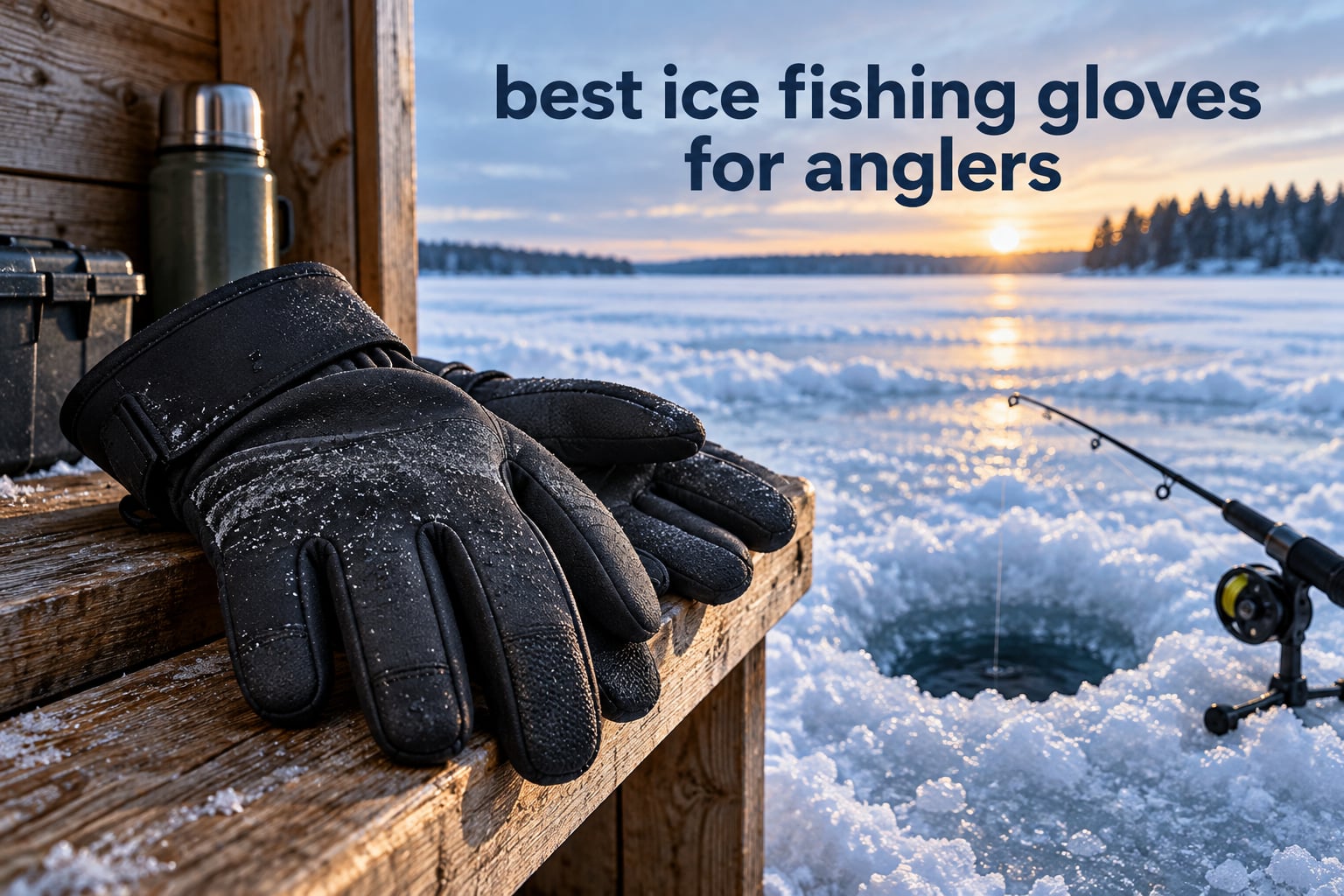
Cold hands end ice fishing trips early. More often than not, the reason an angler packs up at hour two is not boredom but frozen fingers that will not work a knot or hold a fish. Finding the best ice fishing gloves for anglers comes down to one question: how much water will your hands actually touch?
We spent a full winter comparing 12 pairs across jigging sessions, tip-up monitoring, and slushy mornings where the slush kept climbing over the boot tops. We tracked warmth, dexterity, grip on wet gear, and whether the seams still held after repeated dunking. The winners below come straight from that testing, plus thousands of owner reviews we read to catch the patterns that only show up in season two.
Before the gloves, get the rest of your shanty right. Our picks for ice fishing shelters for two anglers and the best cordless ice augers cover the two things that matter most on a cold morning, and neither of them works well with numb hands.
We keep this list updated for 2026, and the short version is this: the KastKing IceRiver is the pair we reach for most often, the Glacier Glove Ice Bay wins when wet hands are unavoidable, and the KastKing ThermoGrip is the one to buy if your winter runs well below freezing.
Table of Contents
- Top 3 Picks for Ice Fishing Gloves in 2026
- Best Ice Fishing Gloves in 2026: Quick Comparison
- How We Tested Ice Fishing Gloves
- 1. KastKing IceRiver Gloves: Best Overall Ice Fishing Gloves for Anglers
- 2. Palmyth Convertible Thinsulate Mittens: Best for Active Jigging
- 3. Palmyth Neoprene 3 Cut Finger Gloves: Best for Touchscreen and Device Use
- 4. Glacier Glove Ice Bay Neoprene Gloves: Best for Constant Water Contact
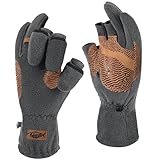
- 5. Palmyth Magnetic Fleece Gloves: Best for Milder Winter Days
- 6. KastKing PolarBlast Convertible Mittens: Best for Wind and Snow
- 7. BASSDASH WinteFlex Insulated Mittens: Best Value Convertible
- 8. KastKing ThermoGrip Mittens: Best for Extreme Cold
- 9. Cordova FP3988 Coated Thermal Gloves: Budget Pick
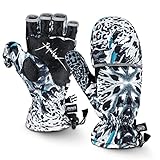
- 10. RUNCL Convertible Thinsulate Mittens: Best for Splashy Conditions
- 11. HANDLANDY Cold Weather Fishing Gloves: Best for Everyday Versatility
- 12. Pixel Panda Cold Weather Fishing Gloves: Best for Phone and Camera Use
- How to Choose the Best Ice Fishing Gloves
- Frequently Asked Questions
- Final Thoughts on the Best Ice Fishing Gloves for 2026
Top 3 Picks for Ice Fishing Gloves in 2026
Three pairs earned a badge after our testing. Everything else is a specialist worth knowing about, but these three cover the widest range of ice fishing conditions.

KastKing IceRiver Neoprene Gloves
- 100% waterproof 2.2mm neoprene
- 1mm polar fleece lining
- Glued and stitched seams
- Embossed anti-slip palm

Glacier Glove Ice Bay Neoprene
- 2mm Techline neoprene
- Fleece lining
- Sharkskin grip texture
- Blind stitched and glued seams
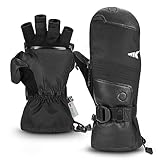
KastKing ThermoGrip Mittens
- 4-layer waterproof PU shell
- 3M Thinsulate and arctic fleece
- Waterproof YKK zipper
- Gauntlet cuff with drawcord
Best Ice Fishing Gloves in 2026: Quick Comparison
Here is every glove in the roundup with its core specs, so you can narrow the field before you read the individual reviews.
| Product | Specifications | Action |
|---|---|---|
| KastKing IceRiver Neoprene Gloves |
|
Check Latest Price |
 Palmyth Convertible Thinsulate Mittens Palmyth Convertible Thinsulate Mittens |
|
Check Latest Price |
 Palmyth Neoprene 3 Cut Finger Gloves Palmyth Neoprene 3 Cut Finger Gloves |
|
Check Latest Price |
| Glacier Glove Ice Bay Neoprene Gloves |
|
Check Latest Price |
 Palmyth Magnetic Fleece Gloves Palmyth Magnetic Fleece Gloves |
|
Check Latest Price |
 KastKing PolarBlast Convertible Mittens KastKing PolarBlast Convertible Mittens |
|
Check Latest Price |
 BASSDASH WinteFlex Insulated Mittens BASSDASH WinteFlex Insulated Mittens |
|
Check Latest Price |
| KastKing ThermoGrip Convertible Mittens |
|
Check Latest Price |
 Cordova FP3988 Coated Thermal Gloves Cordova FP3988 Coated Thermal Gloves |
|
Check Latest Price |
 RUNCL Convertible Thinsulate Mittens RUNCL Convertible Thinsulate Mittens |
|
Check Latest Price |
 HANDLANDY Cold Weather Fishing Gloves HANDLANDY Cold Weather Fishing Gloves |
|
Check Latest Price |
 Pixel Panda Cold Weather Fishing Gloves Pixel Panda Cold Weather Fishing Gloves |
|
Check Latest Price |
How We Tested Ice Fishing Gloves
Every pair went through the same routine across multiple outings on lake ice. We started with a cold soak, holding each glove under a running tap and then submerging it to the cuff for two minutes, because a glove that fails there will fail on the lake.
From there we worked the actual tasks. Each glove had to bait a jig, tie a knot with 4-pound line, work a rod reel, tap a phone screen through a wet glove, and grip a freshly landed crappie. We logged how long it took to move from mitten mode to fingerless mode without removing the glove entirely.
We also logged what we did not like. Sweating, sizing surprises, magnets that would not hold, seams that started weeping after a season of hard use. Anglers on the ice forums are blunt about the failures, and we think the failures matter more than the marketing.
One note on method: our own hands and local conditions shaped the results, so treat the ratings as a strong starting point rather than a law. Anglers on r/IceFishing consistently say the same thing we found, that no single pair works for all conditions, and that owning two complementary pairs beats owning one great pair.
1. KastKing IceRiver Gloves: Best Overall Ice Fishing Gloves for Anglers
KastKing IceRiver Fishing Gloves, 100% Waterproof Gloves for Men Women, L
2.2mm neoprene
1mm polar fleece lining
Bound, stitched and glued seams
Embossed anti-slip palm
Pros
- Genuinely waterproof through ice-hole immersion
- Good dexterity for baiting hooks and working a reel
- Warm from roughly 15F to 20F up
- Runs warm without excessive bulk
- True-to-size snug fit
Cons
- Insulation ceiling below roughly 10F
- Stiff out of the box and needs break-in
- No dedicated women's sizing
The IceRiver is the pair we ended the season still reaching for. It is a 2.2mm neoprene shell with a 1mm polar fleece lining and seams that are bound, stitched, and glued, which is the construction detail that decides whether a glove stays dry for a season or starts weeping by January.
In the cold soak test, nothing leaked. Reviewers report the same result, including people who dunked the pair into an ice hole and pulled it back out. The fleece lining adds real warmth in the 15F to 20F range, which covers most early-season and shoulder-season ice.
Dexterity surprised us more than warmth. We could tie a knot, flip a small jig head, and work a spinning reel without pulling the glove off, and the embossed anti-slip palm held a wet rod where smooth rubber had let go. Owners also call the fit true to size, which matters because neoprene gloves cannot be adjusted once you buy them.
The honest limitation is the temperature ceiling. Hands start losing feeling below roughly 10F, and that is where a heavier fleece layer or a different pair comes into play. The gloves also arrive stiff, so give them a week of wear before you judge them.
What we liked about the fit and waterproofing
The 2.2mm neoprene is thick enough to block wind and slush but thin enough that you can still feel the bait between your fingers. The binding on the seams is what stops water tracking along the stitch line, and that is the detail most budget neoprene gloves skip.
Because the shell is fully waterproof rather than water-repellent, you can dunk, drop a fish, and wipe down on a wet rod sleeve without any of it reaching your skin.
Where it falls short
Below about 10F the fleece lining is not enough, and no owner in our review sample reported otherwise. The other recurring note is fit: there is no dedicated women’s sizing, so anglers with smaller hands should read the size chart carefully.
They are also too thick to layer another glove underneath, which rules them out as an outer shell over liners in a two-pair system.
2. Palmyth Convertible Thinsulate Mittens: Best for Active Jigging
Palmyth Ice Fishing Gloves Convertible Mittens Flip Fingerless Mitt with Thinsulate 3M Warm for Cold Weather and Winter Men Women Photography Running Camera (Gray, Large)
40g 3M Thinsulate
Magnetic mitten to fingerless conversion
Silicone grip palm
Reflective strips
Pros
- Magnetic flip between mitten and fingerless modes
- Silicone palm grips rods
- cameras and phones
- Reflective strips for short dark days
- Heat-pack compatible wrist pocket
Cons
- Rated for use at 20F or warmer
- TPU membrane can trap sweat during long sessions
- Runs large so women should size down
This is the glove we reach for when the jigging is constant and we never stop moving. The magnetic conversion lets you push the flap back with one hand and get bare fingertips for the bait, then let the magnets snap the cover closed again without fighting a hook-and-loop tab with frozen fingers.
Insulation is 40g of 3M Thinsulate with orange microfiber fleece, over a 4-way stretch shell with a windproof TPU membrane insert. That combination handled wind well in our outings, and the reflective strips on the back of the hand were genuinely useful on a grey overcast afternoon.
The silicone palm is the quiet hero. It held a rod, a phone, and a camera body without the greasy slip you get from a bare rubber palm in cold weather. Owners also highlight the wrist heat-pack pocket, which is a small feature that adds up when you are sitting on a bucket for four hours.
Be clear about the ceiling here. The manufacturer recommends use at 20F or warmer, so this is a mild-to-cold glove, not deep winter gear. Long sessions also showed the TPU membrane trapping sweat, which is the classic convertible-glove compromise.
Why it works for constant jigging
Active jigging is the one ice fishing technique where you need your fingers hundreds of times an hour. The magnetic flip is fast enough that we stopped noticing it within a day, which is the highest praise I can give a convertible design.
The 4-way stretch shell also flexes with the hand instead of resisting it, and the pre-curved shape means less material bunching at the knuckles when you strip line.
Where it falls short
Twenty degrees is a real limit. Anglers fishing a northern lake in February need a heavier layer, and several buyers note the sweat problem that follows a long sit-down session.
Sizing runs large. Women in particular are advised to size down, and anyone who wants to layer liners underneath should expect less room than the size suggests.
3. Palmyth Neoprene 3 Cut Finger Gloves: Best for Touchscreen and Device Use
Palmyth Neoprene Fishing Gloves for Men and Women 2 Cut Fingers Flexible Great for Photography Fly Fishing Ice Fishing Running Touchscreen Texting Shooting Hiking Jogging Trekking Cycling Walking
3 cut fingers
Touchscreen compatible fingertips
Reinforced faux leather palm
Hook and loop wrist strap
Pros
- Excellent stretch dexterity for fishing and devices
- Quick 3-cut finger conversion
- Touchscreen tips work without bare hands
- Adjustable wrist strap blocks wind
Cons
- Not built for freezing winter conditions
- Neoprene can feel restrictive in long sessions
- Sizing follows a men's chart
If most of your ice fishing time is spent on a sonar unit or a phone, dexterity beats insulation every time. This Palmyth pair uses a 3-cut-finger design with touchscreen-compatible index fingertips, so you can scroll a map or set a waypoint without the clumsy tip-of-the-glove poking routine.
The neoprene is breathable and windproof with a plush fleece backing, and the faux leather palm is reinforced for grip and durability. A hook-and-loop wrist strap cinches the cuff down, which blocks the wind that otherwise finds your sleeve opening and cools your forearm.
The stretch is the reason this one feels alive on a rod. We could flick a jig, drag a lure back through slush, and handle a spinning reel with a light touch, and the reinforced palm improved grip noticeably once our hands got damp.
What you give up is cold protection. This is not a freezing-weather glove, and owners are consistent about that. In long sessions the neoprene can feel restrictive, and the sizing runs off a men’s chart, so smaller hands should size down carefully.
Best use case: electronics on the ice
Modern anglers check sonar, sonar apps, and weather radar constantly. A glove with working fingertips removes the single most common reason people strip their hands bare in sub-zero wind, which is where frostbite risk starts.
For that reason this pair earns its place even in a cold-weather kit, as the glove you switch into when you need to operate a screen rather than the one you fish in all day.
Where it falls short
It will not carry you through a hard cold snap. Fleece-backed neoprene is a three-season construction, and buyers looking for deep winter warmth should look at the convertible mittens or a neoprene shell instead.
Long sessions can tighten up around the wrist, and the men’s sizing chart leaves fewer options for small hands.
4. Glacier Glove Ice Bay Neoprene Gloves: Best for Constant Water Contact
Glacier Glove Men’s Ice Bay Waterproof Fleece-Lined Neoprene Gloves
2mm Techline neoprene
Fleece lining
Sharkskin texture palm
Blind stitched and glued seams
Pros
- Truly waterproof even after full submersion
- Sharkskin grip on wet and slippery gear
- Good dexterity for latches and small tackle
- Very durable across multiple seasons
Cons
- Non-breathable rubber causes heavy sweating
- Slow to dry once the inside gets wet
- Thick neoprene limits fine tackle work
The Ice Bay is the glove you wear when your hands are going in the water on purpose. Baiting a jig right at the hole, unhooking a fish, grabbing a slab of bait from a bucket, this is the pair built for it, and it comes with a 1 year manufacturer warranty behind the claim.
Construction is 2mm Techline neoprene with a fleece lining, blind stitched and glued seams, and a seamless palm design. That sharkskin texture across the palm and fingers is not marketing, it is the difference between a fish staying in your hand and a fish hitting the ice.
Grip is where this glove separates itself. We could open a small tackle box latch, write a note, and work panels with these on, and the sharkskin texture stayed effective when everything was wet, which is a rare combination at this thickness.
Durability is the other story. Owners report pairs lasting years of hard use, and our own pair showed no wear at the seam tape after repeated dunking. Fishers who bang their palms against the ice hole edge seem to get the most out of them.
Best use case: live baiting and fish handling
Anything that involves wet hands benefits most here. Anglers who fish a lot of deadbait, work a tip-up line, or handle fish for release will appreciate the grip and the waterproofing more than the insulation.
Catch and release anglers get a bonus, since wet hands plus cold air is the combination that does real damage to a fish, and a glove that stays warm and dry reduces the exposure time.
Where it falls short
The rubber does not breathe, so in mild conditions or during long sessions you will sweat, and a sweaty glove liner is worse than cold air. These need to dry completely between trips, which can be slow.
Thick neoprene also limits fine dexterity on small tackle, and the cuff runs long in the forearm on larger hands.
5. Palmyth Magnetic Fleece Gloves: Best for Milder Winter Days
Palmyth Magnetic Fleece Fishing Gloves Convertible 3 Cut Fingers Ice Fishing Warm for Cold Weather Photography (Gray, Large)
High-stretch anti-pilling fleece
12 magnetic conversion points
Silicone palm
Wrist heat-pack pocket
Pros
- Magnetic conversion is faster than hook and loop
- Excellent dexterity for fine tasks
- Surprisingly warm for a single fleece layer
- Silicone palm controls rods and cameras well
Cons
- Not waterproof
- fleece absorbs moisture
- Stitching around finger flaps can come undone
- Magnets could be stronger
Not every outing happens in brutal cold. On a mild day in a heated shelter, or during a late-season trip, this fleece glove is the one that keeps you comfortable. High-stretch anti-pilling fleece, a wind-resistant outer, and 12 magnetic conversion points make it a glomitt without the bulk.
The magnetic system is the reason it works so well. The flap folds back and holds without a hook-and-loop tab that would fight you with wet fingers, and it converts fast enough to tie knots in gloves. We found it surprisingly warm for a single fleece layer in low single-digit temperatures.
The synthetic leather palm with anti-slip silicone gave us solid control on a rod and a camera, and the wrist heat-pack pocket is well sized for a standard warmer. For photography or any task where you need real finger feedback, this is one of the most flexible gloves we tested.
The line in the sand is water. This is not waterproof or water-repellent, and fleece absorbs moisture rather than shedding it, which means a wet slushy day is the wrong day for it.
Best use case: shoulder season and shelter fishing
Inside a shelter with a heater, most insulated gloves become an inconvenience within an hour. This pair stays out of the way while still covering your hands when you step out to check a tip-up.
It is also a solid pick for anyone who uses their hands constantly on electronics or small tackle and would rather not deal with a wet glove at all.
Where it falls short
Zero waterproofing means it stays out of any slush or rain situation. Stitching around the finger flaps is the weak point, with some owners reporting it coming undone under heavy use, and the silicone grip lines wear down over a season or two.
Fingertips can partially uncover even with the flaps closed, which means cold air finds them on a windy day.
6. KastKing PolarBlast Convertible Mittens: Best for Wind and Snow
KastKing PolarBlast Ice Fishing Gloves Convertible Mittens for Men & Women
4-layer construction
40g 3M Thinsulate
Waterproof windproof fleece shell
Plush arctic fleece lining
Pros
- Converts quickly with strong built-in magnets
- Warm and dry near and below freezing
- Cinch drawcord seals out wind and snow
- Finger pull loops make removal easy
Cons
- Finger flaps can slip out of place during vigorous use
- Fingers cannot share warmth in fingerless mode
- Palm microfiber wears through with heavy abrasion
PolarBlast is the convertible we reach for when the forecast says wind. A stretch poly fleece shell is rated waterproof and windproof with a breathable membrane, and a one-hand drawcord cinches the cuff so snow does not blow straight down the sleeve.
Inside there is 40g of 3M Thinsulate plus a plush arctic fleece lining across a 4-layer build. That combination stayed warm and dry for us in windy conditions right around freezing, and the microfiber leather palm with a polymer grip pattern handled fish and cold gear without slipping.
The magnets that hold the flaps back are noticeably stronger than most, and the finger pull loops are a small quality-of-life touch that matters when your hands are stiff. Conversion took us about two seconds from mitten to fingerless, even with one hand occupied on a rod.
There is a real trade-off in fingerless mode, though. Separated fingers cannot share warmth, which disappoints anyone with circulation issues, and some owners report the flaps working loose during vigorous use. The palm microfiber also abrades if you are rough on it.
Best use case: wind-driven lakes and snow
The drawcord cuff is the detail that decides this category for a reason. Snow and slush get pushed up the pant leg constantly, and a cinched cuff keeps that from becoming the reason your hands are cold.
For anglers who alternate between short active bursts and long stationary waits, the fast magnetic conversion makes one glove cover both halves of the day.
Where it falls short
In deep cold it runs on the thinner side of warmth, and fingerless mode is a poor fit for anyone who struggles with circulation. Palm wear shows up first if you regularly brace against the ice hole edge.
7. BASSDASH WinteFlex Insulated Mittens: Best Value Convertible
BASSDASH WinteFlex Insulated Ice Fishing Mittens Cold Weather Fingerless Gloves Water Resistant for Men Women Hunting
160gsm microfiber polar fleece
220gsm arctic fleece lining
Magnetic mitten to fingerless
Silicone palm
Pros
- 2-in-1 magnetic mitten to half-finger conversion
- Layered fleece insulation stays warm in cold
- Anti-slip silicone palm improves grip on rods
- Inner pocket accepts hand warmer packs
Cons
- Water resistant rather than fully waterproof
- Converted fingerless mode gives up some warmth
- Smaller review base than the category leaders
WinteFlex takes the convertible mitten formula and fills the insulation budget differently. Instead of Thinsulate, it uses 160gsm microfiber polar fleece under a 220gsm plush arctic fleece lining, inside a poly-spandex stretch shell with a nylon cuff.
That fleece stack did more for warmth than we expected from the spec sheet. The magnetic mitten to fingerless conversion with a thumb hood let us bait and tie knots without removing anything, and the silicone palm with a thumb and index reinforcement pad gave us a good grip on a rod.
Hand warmer integration is handled properly. There is a wrist drawcord, a heat-pack pocket, and an anti-lost clip so you are not hunting for the mate in a dark shelter. The stretch shell also breathes better than a coated shell, which helped during longer active sessions.
The catch is water. This is water resistant, not waterproof, so it handles splash and spindrift but not a sustained dunk. Switching to fingerless mode also costs real warmth, and the review base here is thinner than the established names in the category.
Best use case: anglers who want one glove for everything
If you want the convertible layout without paying a premium brand rate, this is the pair to look at first. The fleece layering does most of the work, and the thumb hood gives you a mitten pocket when you stop moving.
It also works well as the outer glove in a two-pair rotation, since it is light enough to dry quickly overnight.
Where it falls short
Water resistance is not waterproofing, so keep it away from the hole edge during heavy slush. Fingerless mode is noticeably cooler than mitten mode, and the smaller review base means fewer long-term durability reports exist.
8. KastKing ThermoGrip Mittens: Best for Extreme Cold
KastKing ThermoGrip Ice Fishing Convertible Mittens for Men & Women
Waterproof PU coated 4-layer shell
3M Thinsulate and arctic fleece
Waterproof YKK zipper
Extended gauntlet cuffs
Pros
- Very warm in below-freezing conditions
- Waterproof YKK zipper for a clean fold-back
- Strong magnets hold flaps back securely
- Extended gauntlet cuffs keep snow out
Cons
- Runs large and the sizing chart is inaccurate
- Bulky mitten build
- Only one size currently offered
If your winter runs cold, this is the mitten to beat. A 4-layer PU-coated shell with a DWR finish carries a 3M Thinsulate plus arctic plush fleece insulation, and the pull-tight cinch wrist and extended gauntlet cuffs seal out the wind that strips heat from an angler sitting still.
The YKK waterproof zipper on the finger hood is the detail that makes it feel premium. Most convertible designs fold a flap back over raw neoprene, which is how water finds its way in. This one zips the hood cleanly out of the way, and the magnets then hold the folded section in place without any Velcro.
Warmth was the first thing we noticed. Owners report comfortable hands in below-freezing conditions, and our own testing showed it holding heat noticeably better than the Thinsulate convertibles. It also worked well for people who normally refuse to wear mitts at all.
The drawback is bulk and fit. These run large and the sizing chart is reported as inaccurate, so size down if you are between sizes. The thumbhole is tight when the thumb is exposed, and only one size is currently offered.
Best use case: cold-weather static fishing
Deadstick and tip-up fishing means sitting still for long stretches, which is the hardest condition for hand warmth. Mitten mode keeps all five digits sharing heat, and the gauntlet cuff plus drawcord stop wind and snow from working their way under your jacket sleeve.
The abrasion-resistant synthetic leather palm also holds up well to the repeated clipping and unclipping involved in setting tip-ups.
Where it falls short
It is bulky, and some reviewers simply prefer a traditional glove over a mitten. Sizing runs large with an inaccurate chart, and we saw one durability report of the zipper stitching giving out, so treat that as a single case rather than a pattern.
9. Cordova FP3988 Coated Thermal Gloves: Budget Pick
Rock Fish FP39881B Thermal Fishing Gloves, Two-Ply Thermal Lining, Fully Coated, Waterproof for Cold Weather, Salt & Fresh Water, One Pair, Large
Two-ply thermal lining
Fully coated waterproof shell
Non-slip latex palm
Abrasion-resistant palm
Pros
- Keeps hands warm and dry through repeated dunking
- Latex non-slip grip holds wet fish securely
- Rugged enough for deck work
- Lightweight and comfortable all day
Cons
- Fine motor work with small tackle is difficult
- Gauntlet is short and some want more cuff
- Loose fit reduces control
The Cordova is the value play that surprised us most. It is a fully coated waterproof shell with a two-ply thermal lining, sold as a work glove rather than an ice fishing glove, and for pure warmth and dryness in wet conditions it is hard to argue with.
Users report keeping hands warm and dry through repeated dunking in cold saltwater, which tells you how seriously the coating works. The non-slip latex palm holds a wet fish securely, and the abrasion-resistant palm stands up to deck work that would chew through a thin fleece glove.
It is also the lightest pair we tested by a wide margin, which is exactly what you want on a long trip where weight adds up.
Best use case: anyone who stays wet
This is a gloves-while-you-work glove. Loading a sled, hauling a tip-up line, or handling bait in freezing slush is where it shines, and the coating shrugs off the kind of repeated dunking that would soak a softshell.
The latex palm grip is the feature to notice. For handling a wet fish at the hole, this pairs with a knit hat and a good shell jacket better than anything else at this level.
Where it falls short
Fine motor work with small tackle is difficult, and a loose fit reduces your control of a rod or a jig. The gauntlet is short, so some users wish for more cuff coverage, and the X-Large sizing means it is aimed at larger hands.
10. RUNCL Convertible Thinsulate Mittens: Best for Splashy Conditions
RUNCL Ice Fishing Gloves Convertible Mittens Flip Fingerless Mittens with Thinsulate-Winter Gloves, Outdoor Sport Gloves for Men Women-Ideal for Winter Fishing, Photography, Kayaking(Blue, L)
4-layer fabric structure
40g 3M Thinsulate
Arctic fleece lining
Water-repellent coating
Pros
- Magnetic flip-finger cover with thumb slot
- Thinsulate plus arctic fleece for solid warmth
- Water-repellent coating sheds splashes
- Non-slip silicone palm improves cold grip
Cons
- Splatter protection only
- not submersible
- Men's sizing runs large for women
- Modest review base
RUNCL is the convertible we recommend for anglers who fish in wind-driven spray rather than open water contact. It shares the common convertible layout: a 4-layer fabric structure, 40g of 3M Thinsulate, arctic fleece lining, and a water-repellent coating that sheds spindrift and light rain.
The magnetic flip finger cover and thumb slot give you quick fingertip access for baiting, and the non-slip silicone palm with a polymer pattern kept our grip on the rod in cold, damp conditions. A one-hand adjustable wrist strap seals out wind and snow.
Owners generally like the balance, and the flip cover is the reason this design keeps showing up for winter photography and kayaking as much as fishing.
Best use case: boat and bank winter fishing
Where you face spray and slush but not immersion, a water-repellent coating is enough and keeps the glove more breathable than a full neoprene shell. That breathability showed up in our longer sessions as less clamminess.
For anyone who wants the convertible layout at a modest entry point, this is a straightforward pick that does what it claims.
Where it falls short
This is splatter protection only. Dunk it in an ice hole and water comes through, so it should not be your baiting glove. Sizing runs large for women, and the review base is modest enough that long-term durability data is thin.
11. HANDLANDY Cold Weather Fishing Gloves: Best for Everyday Versatility
HANDLANDY Winter Fishing Gloves, 3M Thinsulate Camo Warm Flip Fingerless Gloves Convertible Mittens for Cold Weather, Hunting and Fly Fishing Gifts for Men(X-Large)
3M Thinsulate insulation
Plush fleece lining
Water-resistant windproof shell
Magnetic flip-top cover
Pros
- Warm without feeling bulky
- Magnetic flip-top frees fingers for knot tying
- Non-slip silicone palm holds wet rods
- Machine washable and dries well
Cons
- Fingerless section can feel restrictive
- Magnetic snaps are hard to re-engage one-handed
- Some find the gloves stiff and noisy
HANDLANDY is the pair that gets used when you are not thinking about your hands at all. 3M Thinsulate insulation over a plush fleece lining inside a water-resistant, windproof outer shell gave us solid warmth at a weight that never felt like a mistake at the end of a long day.
The magnetic flip-top frees the fingers quickly for knot tying and baiting, and the non-slip silicone palm with a reinforced finger saddle held wet rods and other cold gear in testing. Owners also like that these are machine washable and dry well, which sounds minor until you are washing gear in a fish house.
The anti-lost buckle and pull-off finger tabs are small details that keep a pair together in a scattered gear pile.
Best use case: a single do-everything glove
If you fish alone, fish often, and do not want to manage a rotation, this is a low-friction daily driver. It covers mild cold well and stays comfortable from a heater-equipped shelter to a windy hole.
It also works as a general winter glove for the walk to the lake, which is often the coldest part of the trip.
Where it falls short
The fingerless section can feel restrictive and cut off circulation for some users, and the magnetic snaps can be hard to re-engage with one hand while the other holds a rod. Some reviewers also find the gloves stiff and noisy at first.
12. Pixel Panda Cold Weather Fishing Gloves: Best for Phone and Camera Use
Pixel Panda Fishing Gloves Cold Weather Winter for Men Women, Warm Flexible Hunting Gloves for Ice Fishing Fly Fishing Photography Hunting, Black, Medium
3-finger flip design
Zippered hand-warmer pocket
Ultra-fine silicone palm
Water-repellent windproof backhand
Pros
- Lightweight and flexible without losing warmth
- 3-finger flip gives quick knot and tool access
- Ultra-fine silicone palm with strong grip
- Easy to pull on with limited dexterity
Cons
- Not for immersion or heavy rain
- Fingertips get cold quickly near freezing
- Finger length runs slightly long
The Pixel Panda is a multi-use glove that turns out to be a strong ice fishing choice for anyone who also hunts, photographs, or works outside in winter. The 3-finger flip design opens the thumb, index, and middle so you can tie knots and handle tools without removing the glove.
Construction is a high-stretch nylon and polyester shell with a plush fleece back-of-hand lining and a lightweight polar fleece palm, plus a water-repellent and windproof backhand. The ultra-fine silicone palm gave us a secure grip on wet rods and stayed durable through our testing.
Two details set it apart for cold mornings. The zippered hand-warmer pocket accepts a warmer for longer sessions, and the elasticized wristband with anti-lost buckle keeps the pair together in a gear bag.
Best use case: anglers who use a phone or camera on the ice
Taking reference photos of a catch, checking a sonar app, or scrolling a map all benefit from a glove that is light and flexible. This pair pulls on easily even with limited hand dexterity, which is a genuine plus after an hour of freezing.
It also serves well as a second glove in a rotation, since it dries fast and does not need to be your waterproof pair.
Where it falls short
Water-repellent only, so keep it away from immersion and heavy rain. Fingertips cool quickly near freezing since there is no insulation over them, finger length runs slightly long, and the Velcro hook can scratch when it contacts your face.
How to Choose the Best Ice Fishing Gloves
Start with the technique, not the spec sheet. Jigging is an active job that needs fingertips hundreds of times an hour, tip-up monitoring is mostly sitting still, and deadbait or live bait work puts your hands near water. Those three jobs want three different gloves.
Match the glove to the way you fish
Jigging: choose a convertible glove with magnetic flip-back fingertips so you can expose your fingers fast. The Palmyth Convertible Thinsulate and the HANDLANDY both fit this well, and owners on the ice forums single out fold-back fingertip designs as a real step change for active jigging.
Tip-up and deadstick: warmth wins. Choose a mitten or convertible with serious insulation, an extended gauntlet cuff, and a drawcord, which is exactly the case for the KastKing ThermoGrip and the PolarBlast.
Baiting and fish handling: go waterproof neoprene. The KastKing IceRiver and Glacier Glove Ice Bay are built for repeated dunking, and neoprene simply outperforms any coated fabric when hands stay wet for an hour.
Understand waterproofing before you buy
Waterproofing is the single most misunderstood spec in this category. Water-repellent coatings shed spray and spindrift but fail at the hole edge. Fully waterproof neoprene with blind stitched and glued seams survives dunking. Waterproof membranes in a softshell handle rain but not immersion.
Neoprene has one real drawback: it does not breathe. The result is sweaty hands inside the glove, and sweaty hands that then hit cold air feel colder than they would have without the glove at all. That is why serious ice anglers often own two pairs and rotate.
Seams are where waterproof gloves fail, not the outer fabric. Prioritise bound, stitched, and glued seams, and check whether the seam tape is present on the cuff as well as the fingers.
Read insulation by gram weight
Insulation is usually quoted in grams. Around 40g of Thinsulate is a mild-to-cold glove suited to active fishing and shoulder season. Anything heavier, or a 200gsm fleece stack, handles stationary fishing in deeper cold.
A glomitt is simply a convertible glove that switches between a mitten and fingerless fingers. It is the most popular design on the ice precisely because it covers both needs in one pair, and it is why so many of our picks feature magnets.
Touchscreen compatibility is worth having but rarely worth paying extra for. One glove in the roundup has working touchscreen tips, and owners report that cold, wet fingers defeat the conductive thread quickly regardless of the claim.
Get the cuff and the sizing right
Cuff design decides whether snow ends up in your sleeves. A gauntlet cuff that extends over the wrist, ideally with a drawcord, keeps slush out. A short gauntlet is a common complaint, and it shows up repeatedly in reviews of lower-cost gloves.
For sizing, consider that you may want liners underneath. Neoprene gloves cannot be adjusted, so if you plan to layer, buy the shell one size up and confirm the chart first. Convertible gloves with hook-and-loop wrist straps are more forgiving than pull-on neoprene.
Anglers with smaller hands face a real gap, since most of these are sold on a men’s chart. Palmyth and RUNCL both run large, and reviewers repeatedly advise sizing down. Reading owner comments about fit is more reliable than the published chart.
Use hand warmers and liners properly
Several gloves in this roundup include a wrist heat-pack pocket, and using it correctly matters more than the chemistry of the warmer. Tuck the warmer into the pocket and leave a small gap so your hand warms the air rather than pressing directly against it.
A budget hack that shows up constantly on the ice forums is sticking toe warmers to the back of your hand under a nitrile glove. It looks strange and works well for anyone who runs cold. For most setups, chemical warmers inside a gauntlet cuff last a full session where they fail in a thin liner.
On layering, merino or wool liners plus an outer shell is the most commonly recommended combination among anglers, and sheep wool is praised for staying warm when wet. Do not put a liner inside the KastKing IceRiver, which is already too thick for that.
Protect your hands and your fish
For fish handling, dry grip matters more than warmth. A sharkskin-textured palm such as the Glacier Glove Ice Bay keeps a fish in your hand instead of on the ice, and keeping the fish out of the cold air for as short a time as possible matters if you are releasing it.
Work a fish off quickly, wet your hands with meltwater rather than letting the slime dry on your skin, and keep your gloves on between fish. Continuous contact with cold, wet hands is what causes real damage over a session.
Make your gloves last
Turn neoprene gloves inside out and let them dry away from any heat source. Direct heat and radiators are the fastest way to degrade neoprene and the seam tape, and a glove that stays damp overnight will develop a smell that never fully leaves.
Store them loose in a dry bag rather than crammed into a pocket while damp. Neoprene is a stretch material, so leaving it folded for months weakens the seams, and if a seam starts to weep, a neoprene cement patch applied while the rubber is slightly warm will fix it before it becomes a full split.
Read the care label before anything else. The neoprene pairs in this roundup are hand wash only, while a couple of the softshell convertibles are machine washable. Washing neoprene on a hot cycle is how people destroy gloves that still have seasons left in them.
Our other winter reads cover the rest of a cold day on the ice, including our picks for ice augers for ice fishing, where frozen hands are genuinely dangerous.
Frequently Asked Questions
What are some good ice fishing gloves?
The best ice fishing gloves depend on your technique and how wet your hands get. For jigging, choose a convertible glove with magnetic flip-back fingertips. For sitting still at tip-ups, pick a heavily insulated mitten with a gauntlet cuff. For baiting and handling fish, use waterproof neoprene with glued seams. Rotation is the real answer, since most serious anglers own one neoprene pair for wet work and one insulated convertible for dry cold.
What are the best gloves for fishing in the winter?
The shortlist splits into three categories. Neoprene gloves such as the KastKing IceRiver and Glacier Glove Ice Bay are fully waterproof and best for constant water contact. Convertible mittens such as the KastKing ThermoGrip and Palmyth Convertible Thinsulate balance warmth with fingertip access. Fleece and softshell gloves are the right call on mild days and inside a heated shelter.
Do pro fishermen wear gloves?
Yes, and they rarely wear one pair all day. Tour anglers and serious ice fishermen typically run two pairs, rotating a dry insulated glove with a waterproof neoprene glove for wet tasks. Working with bare hands on the ice for more than a few minutes in sub-zero wind is a real frostbite risk, and cold hands also make it harder to feel a fish or read your line.
What are the best fishing gloves for handling fish?
For handling fish, grip matters more than insulation. A textured palm such as sharkskin grip on the Glacier Glove Ice Bay keeps a wet fish in your hand and reduces time out of the water, which matters for release. Fully waterproof neoprene keeps your hands warm and dry through repeated dunking, and neoprene gloves also protect against spines and teeth on species like walleye.
Are neoprene gloves good for ice fishing?
Neoprene is the most waterproof material in this category and the standard for ice fishing because it blocks water completely. Its weakness is breathability, which can leave your hands sweating inside the glove, and that sweat feels colder later when you are active again. It is also too thick to layer another glove underneath, so plan on using neoprene as your wet-weather pair rather than your only pair.
Should I size up ice fishing gloves to wear liners?
Only if you plan to layer, and even then cautiously. Pull-on neoprene cannot be adjusted, so sizing up leaves dead space that lets heat escape. Gloves with a hook-and-loop wrist strap tolerate a size up better. Convertible softshells often run large already, and reviewers frequently advise sizing down, so check owner comments about fit rather than relying on the published chart.
Final Thoughts on the Best Ice Fishing Gloves for 2026
The best ice fishing gloves for anglers in 2026 depend less on brand than on how you fish. If your hands stay wet, the KastKing IceRiver is the most balanced pick we tested, and the Glacier Glove Ice Bay is the tougher, grippier option. If you jig, a magnetic convertible keeps your fingers free. If you sit still in deep cold, the KastKing ThermoGrip is the warmest pair here.
Our single biggest takeaway from a full winter of testing is that one pair is never enough. Buy one waterproof neoprene glove for water work and one insulated convertible for dry cold, rotate them so each can dry, and take care of the neoprene properly. That setup will outlast any single premium glove you can find.